

TL;DR:
- Biker brotherhoods are complex, hierarchical social structures built on loyalty, rituals, and mutual obligation. They differ from outlaw gangs and are often engaged in community service and charity work, not criminal activity. Patches and colors symbolize earned trust and status, forming the visual language of their shared identity and values.
Most people picture a pack of leather-clad riders on a highway when they think about biker culture. What they miss is everything underneath: the oaths, the hierarchy, the months of proving yourself before you ever touch a patch. Understanding what is a biker brotherhood means looking past the stereotype and into a genuinely complex social structure with rules, rituals, and bonds that most fraternal organizations would recognize as their own.
Table of Contents
- Understanding biker brotherhoods: culture, structure, and identity
- The path to brotherhood: membership and the prospecting process
- Biker brotherhoods versus outlaw motorcycle gangs: legal and cultural distinctions
- The significance of patches and colors in biker brotherhood culture
- Real-world examples: prominent biker brotherhoods and their community roles
- What the biker lifestyle actually teaches us about belonging
- Find your community on BikersLifestyle.com
- Frequently asked questions
Key Takeaways
| Point | Details |
|---|---|
| Biker brotherhoods are structured | They have codes, hierarchy, and rituals beyond casual riding groups. |
| Membership takes time | Prospecting periods often last six months to a year before full acceptance. |
| Legal distinctions matter | Outlaw gangs meet criminal criteria unlike most social riding clubs. |
| Patches are earned | Colors symbolize status, loyalty, and responsibility, not just fashion. |
| Diverse culture | Biker brotherhoods range from social groups to controversial outlaw clubs. |
Understanding biker brotherhoods: culture, structure, and identity
The definition of biker brotherhood is not simply "a group of friends who ride together." That framing gets it wrong in almost every important way. A true biker brotherhood, as described by those inside the culture, is a close-knit loyalty bond built around hierarchy, earned patches, rituals, and a code of conduct that members are expected to live by every day, not just on ride days.
The structure mirrors what you would find in any serious fraternal organization. Most motorcycle clubs (MCs) have a formal hierarchy that typically includes a President, Vice President, Road Captain, Treasurer, Secretary, and Sergeant-at-Arms. Each role carries real responsibility. The Road Captain plans routes and manages safety during group rides. The Sergeant-at-Arms enforces club rules and handles internal disputes. These are not ceremonial titles.
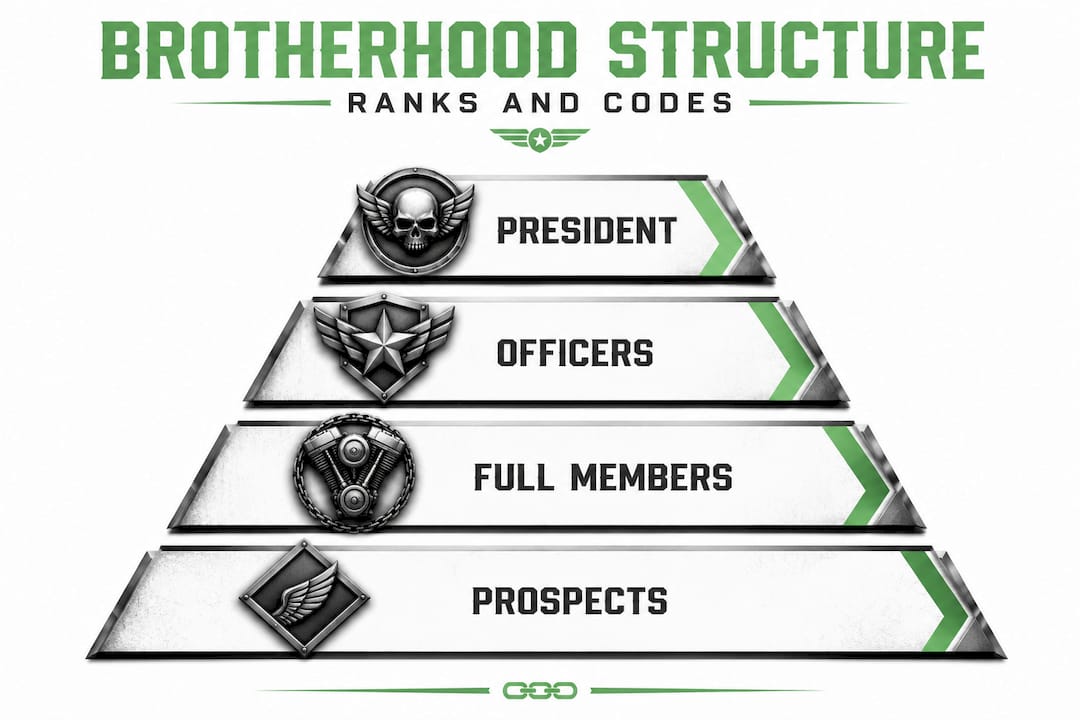
What holds the structure together is obligation. Members owe each other loyalty that runs deeper than friendship. If your brother is in trouble at 2 a.m., you show up. If a member dishonors the club, there are consequences. This mutual accountability is what separates a biker brotherhood from a riding club where people just enjoy the same hobby. You can explore how motorcycle groups vary in structure and formality to get a clearer picture of where different clubs fall on that spectrum.
The key elements that define biker brotherhood culture include:
- A formal hierarchy with named officer roles and clear chains of authority
- A code of conduct that governs behavior both inside and outside the club
- Patch and color systems that communicate membership status and rank
- Rituals and ceremonies marking transitions like the prospect-to-member advancement
- Territorial awareness and respect for other clubs' claimed regions
- Mutual obligation that functions more like family duty than social courtesy
The consequences for breaking these codes can be severe. A member who betrays the club, shares internal information, or acts dishonorably may face "being patched out," meaning they lose their colors under conditions that carry lasting social weight in the biker world. That level of consequence signals how seriously this culture treats its bonds.
The path to brotherhood: membership and the prospecting process
Joining a biker brotherhood is not a weekend decision. The process is designed to filter out people who are drawn to the image without the commitment. The prospecting period in most clubs that emphasize an earned brotherhood lasts anywhere from 6 to 18 months before a candidate earns full patch status.
During that time, a prospect is essentially an apprentice. They attend every club event, perform tasks assigned by full members, and demonstrate that their loyalty and character hold up under real conditions, not just when things are easy. A single full member can veto a prospect's advancement in many clubs, which means building trust across the entire membership is not optional.
Here is a general breakdown of how the membership path typically unfolds:
- Hang-around period: You attend club events as an observer. The club watches how you carry yourself and whether you fit the culture.
- Associate status: Informal recognition that you are being considered. You may ride with the club but carry no patch.
- Prospecting: You receive a prospect patch (often just the bottom rocker). Duties increase. You are being evaluated continuously.
- Member vote: Full members vote on your admission. A majority or unanimous approval, depending on the club's bylaws, is required.
- Patch ceremony: You receive your full colors. This is the milestone that marks your formal entry into the brotherhood, and it carries obligations from day one.
What makes this process significant beyond the ritual is what it actually builds. By the time a member earns their patch, they have demonstrated reliability, discretion, and loyalty to each person who voted for them. That shared experience creates the kind of trust that holds a brotherhood together through conflicts and crises. The rituals and patch ceremonies within biker culture are taken seriously for exactly this reason.
Pro Tip: If you are considering approaching a motorcycle club, attend their public events first. Most clubs that operate openly appreciate when prospective members show patience and genuine interest in the culture before making any approach about membership.
Biker brotherhoods versus outlaw motorcycle gangs: legal and cultural distinctions
This is where popular culture consistently gets things wrong. The terms "biker brotherhood" and "outlaw motorcycle gang" are not interchangeable, and treating them as synonyms misrepresents the enormous diversity within the biker community meaning and culture.
The biker culture overview breaks down roughly like this: most motorcycle clubs are social organizations built around riding, camaraderie, and community events. A smaller subset operate outside mainstream norms and embrace the outlaw identity through things like the 1%er patch. An even smaller subset meet the specific legal definition of a criminal street gang, which under federal law requires a group of five or more persons with a criminal purpose and a series of qualifying offenses sustained over time.
The "1%er" label itself has a specific origin. After the 1947 Hollister motorcycle rally drew national media attention, the American Motorcyclist Association reportedly stated that 99% of riders were law-abiding citizens, implying the other 1% were not. Outlaw clubs adopted that framing as a badge of identity. But even within that 1%er world, not every member has a criminal record, and not every club meets the federal legal standard for a gang.
Here is how the major categories compare:
| Club type | Patch style | Legal status | Typical focus |
|---|---|---|---|
| Riding club (RC) | One-piece patch | Fully legal | Social rides, events |
| Motorcycle club (MC) | Three-piece patch | Mostly legal | Brotherhood, territory, tradition |
| 1%er outlaw MC | Three-piece with 1% patch | Varies | Outlaw identity, independence |
| Outlaw motorcycle gang | Three-piece with 1% patch | Criminal classification | Associated with organized crime |
The important distinctions to remember:
- Legal status is not determined by patch style alone. A three-piece patch club can be entirely law-abiding.
- Outlaw identity is cultural, not automatically criminal. Many clubs use the term to signal independence from mainstream norms, not law-breaking.
- Law enforcement classification is based on documented criminal activity, not aesthetics or reputation.
- The majority of riders who identify with types of motorcycle groups have no affiliation with criminal organizations of any kind.
Confusing cultural outsider identity with criminal behavior is both inaccurate and unfair to the millions of riders whose biker brotherhood values center on loyalty, charity, and community.
The significance of patches and colors in biker brotherhood culture
Nothing in biker culture is more misunderstood by outsiders than patches. To someone outside the world, they look like embroidered decoration. To anyone inside it, patches and colors are the visual language of status, loyalty, and earned identity.
The distinction between a one-piece and three-piece patch is not cosmetic. Patches and colors function as earned status markers tied directly to a member's position in the club hierarchy and their standing within the broader brotherhood. A one-piece patch typically identifies a riding club, a looser social group without the rigid structure of a full MC. A three-piece patch, consisting of a top rocker (club name), center patch (club logo or insignia), and bottom rocker (territory or chapter location), signals a full motorcycle club with all the hierarchy and obligations that entails.
Key facts about patches and what they communicate within biker club culture:
- Top rocker: The club's name, worn across the top of the back panel of a cut or vest
- Center patch: The club's logo or insignia, often the most visually distinctive element
- Bottom rocker: The chapter's location or territory claim
- Side patches: Additional markers indicating rank, years of service, or special designations
- Prospect patch: A partial patch worn during the prospecting period, signaling work-in-progress status
Wearing patches you did not earn, or colors that belong to a club you have no affiliation with, is one of the most serious social violations in biker culture. It signals disrespect for the brotherhood that earned those colors and can result in confrontation. This is not posturing. Inside the culture, the integrity of the patch system is what makes it meaningful.
Pro Tip: If you are new to riding and want to express your identity through patches, start with individual commemorative or event patches rather than anything that mimics a club's rocker-style design. It shows awareness of the culture and avoids unintentional disrespect.
Real-world examples: prominent biker brotherhoods and their community roles
No discussion of what are biker clubs is complete without looking at real organizations and the complexity they carry. The Hells Angels Motorcycle Club is the most widely known example globally, and it illustrates exactly why biker brotherhood culture resists simple categorization.
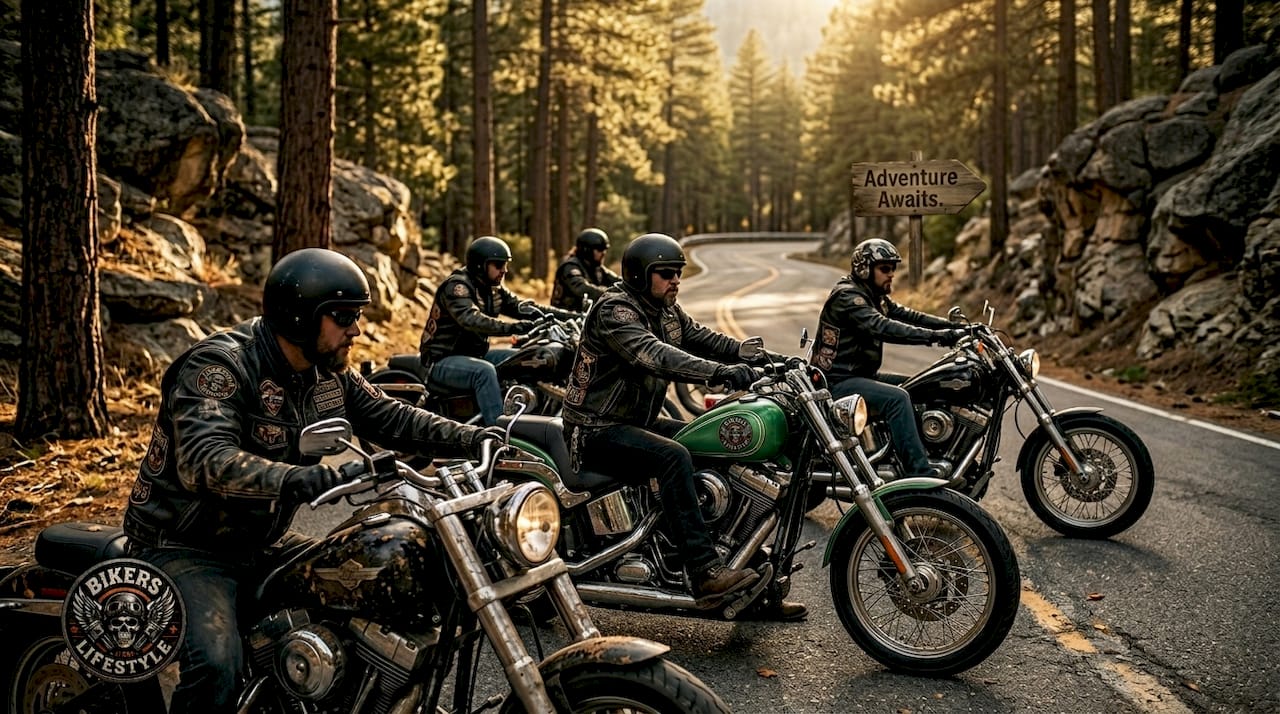
Founded in 1948 in Fontana, California, the Hells Angels now operate with charters across dozens of countries and thousands of members worldwide. The club's own narrative centers on motorcycle passion, freedom, and brotherhood. Members point to charity rides, community events, and decades of riding culture as the core of their identity.
Law enforcement in the United States and several other countries classifies the organization as an outlaw motorcycle gang and associates it with drug trafficking, extortion, and other serious offenses. That law enforcement view is backed by prosecutions and documented investigations. Both narratives exist simultaneously, and both are based in documented reality.
This dual existence is not unique to one club. It reflects a broader tension inside biker brotherhood culture. Consider this breakdown of how major clubs engage with their communities:
| Aspect | Member perspective | Law enforcement perspective |
|---|---|---|
| Club purpose | Motorcycle enthusiasm, brotherhood | Criminal enterprise (for some clubs) |
| Events | Charity rides, rallies, social gatherings | Potential coordination opportunities |
| Hierarchy | Earned leadership and order | Criminal organizational structure |
| Colors | Identity and loyalty symbols | Gang insignia (for classified clubs) |
Community engagement from biker brotherhoods, regardless of classification, often includes:
- Charity toy runs collecting gifts for children during the holidays
- Veterans support rides honoring military service members
- Fundraiser events for local families facing medical crises
- Memorial rides honoring fallen riders or community members
- Motorcycle community events that bring together hundreds of local riders
The importance of biker brotherhood as a social institution shows up most clearly in these moments. Whatever legal debates surround specific clubs, the community function of organized riding groups is real, consistent, and often quietly generous in ways that never make headlines.
What the biker lifestyle actually teaches us about belonging
Here is the perspective that most mainstream articles miss entirely: biker brotherhoods have solved a problem that modern society handles very poorly. They have created genuine belonging for people who do not fit the standard template of community, the neighborhood association, the church group, the corporate team-building retreat.
The biker lifestyle explained in its truest form is about accountability to people who chose you and whom you chose. That is rare. Most social structures today are passive. You belong to a neighborhood because you live there. You belong to a workplace because you need a paycheck. Brotherhood requires active, repeated choice. You show up when it is inconvenient. You vouch for someone with your own reputation. You accept accountability to people who will actually call you out.
The criticism that biker clubs are exclusionary misses the point of why the prospecting process works. The months of observation and task completion are not hazing for its own sake. They are a mechanism for building the kind of trust that makes the bond real rather than ceremonial. A brotherhood where membership is automatic produces nothing. A brotherhood where membership is earned produces people who genuinely look out for each other.
We think the most important thing outsiders could understand about biker brotherhoods is this: the rituals, the patches, the hierarchy, none of it is theater. It is infrastructure. It is how a group of people maintains trust and obligation across years and geography. The motorcycle is almost secondary. The bike gets you to the meeting. The brotherhood keeps you coming back.
That said, the culture is not without its shadows. The same structures that build genuine loyalty can also protect bad actors when the code of silence overrides accountability to the broader community. Understanding biker brotherhood values honestly means holding both truths at once.
Find your community on BikersLifestyle.com
If reading this sparked a genuine interest in finding your own riding community, you do not have to start from scratch.
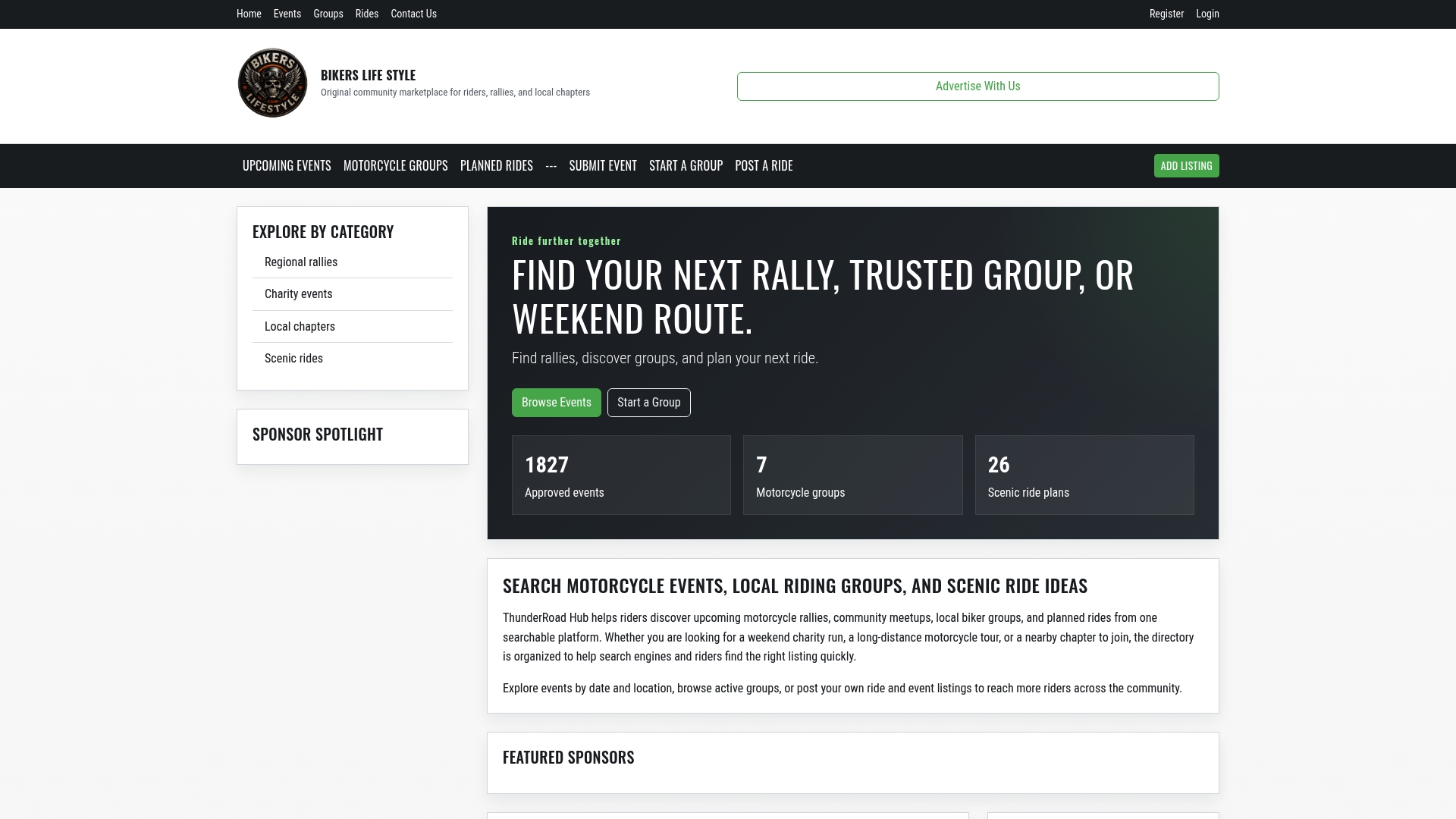
BikersLifestyle.com connects riders with local motorcycle groups, upcoming rallies, scenic routes, and community events across the country. Whether you are a new rider still figuring out where you fit or a seasoned member looking to expand your network, the platform makes it easier to find groups that match your riding style and values. Browse local riding groups in your area, check out upcoming motorcycle events, or list your own event for the community to find. The brotherhood starts with showing up.
Frequently asked questions
What exactly does "biker brotherhood" mean?
Biker brotherhood refers to the close-knit loyalty bond shared by motorcycle club members, built around hierarchy, earned patches, rituals, and a code of conduct that functions more like family obligation than casual friendship.
How long does it take to become a full member of a biker brotherhood?
Most clubs require a prospecting period of 6 to 18 months before a candidate earns their full patch and colors, with the timeline depending on club bylaws and the candidate's demonstrated loyalty.
Are all biker brotherhoods outlaw gangs?
No. The vast majority of motorcycle clubs are law-abiding social organizations. Only groups meeting specific federal criminal criteria, including documented criminal purpose and repeated offenses, qualify as outlaw motorcycle gangs under U.S. law.
What do patches and colors represent in biker brotherhoods?
Patches and colors are earned status markers that communicate a member's club affiliation, rank, and loyalty obligations within the brotherhood. They are not decorative and carry serious social weight inside the culture.
What does the "1%er" patch mean in biker culture?
The 1%er patch originated after the 1947 Hollister Riot and signals membership in outlaw clubs that deliberately distinguish themselves from the mainstream majority of law-abiding riders, embracing an outsider identity as a point of pride.