
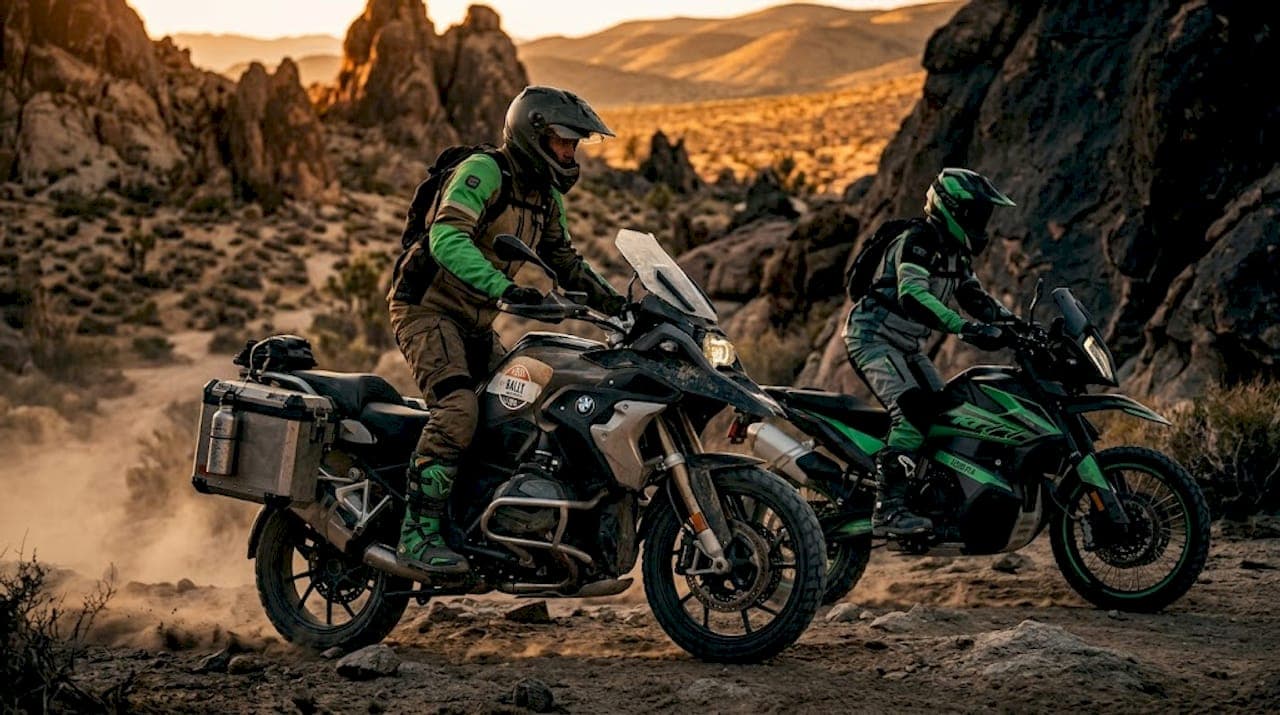
California desert motorcycle rallies look simple from the outside. You show up, you ride, you camp, you repeat. But riders who've actually tried to organize or attend one of these events know the truth: there are layers of permits, environmental rules, cultural expectations, and logistical puzzles that can make or break your weekend before you ever throw a leg over the bike. This guide cuts through the noise and gives you the real picture, from what makes these rallies culturally distinct to the paperwork you absolutely cannot ignore.
Table of Contents
- What makes California desert rallies unique?
- Permits, rules, and rally reality: What riders need to know
- Iconic rallies: The LA-Barstow-to-Vegas ride and more
- How environmental rules shape rally culture today
- A rider's reality: Why navigating permits is as important as skill
- Find your next California rally adventure
- Frequently asked questions
Key Takeaways
| Point | Details |
|---|---|
| Permits are essential | Even iconic rides often require advance permits and rule checks to participate legally. |
| Legendary events, real rules | Famous rallies like LA-Barstow-to-Vegas blend challenge and bureaucracy—knowing both is key. |
| Regulations shape every ride | Conservation policies and permit systems directly influence which events and routes stay open. |
| Preparation is survival | Understanding up-to-date rules keeps you on the road and rallies running for years to come. |
What makes California desert rallies unique?
With an understanding that California rallies aren't just simple rides, let's explore how multiple forces shape them.
California's desert landscape is unlike anywhere else in the country for riding. The Mojave, the Sonoran, and the high desert of the Great Basin all offer terrain that ranges from punishing hardpack to loose sand to rocky switchbacks. That variety alone draws riders from across the West every single year. But geography is only one piece of the puzzle.
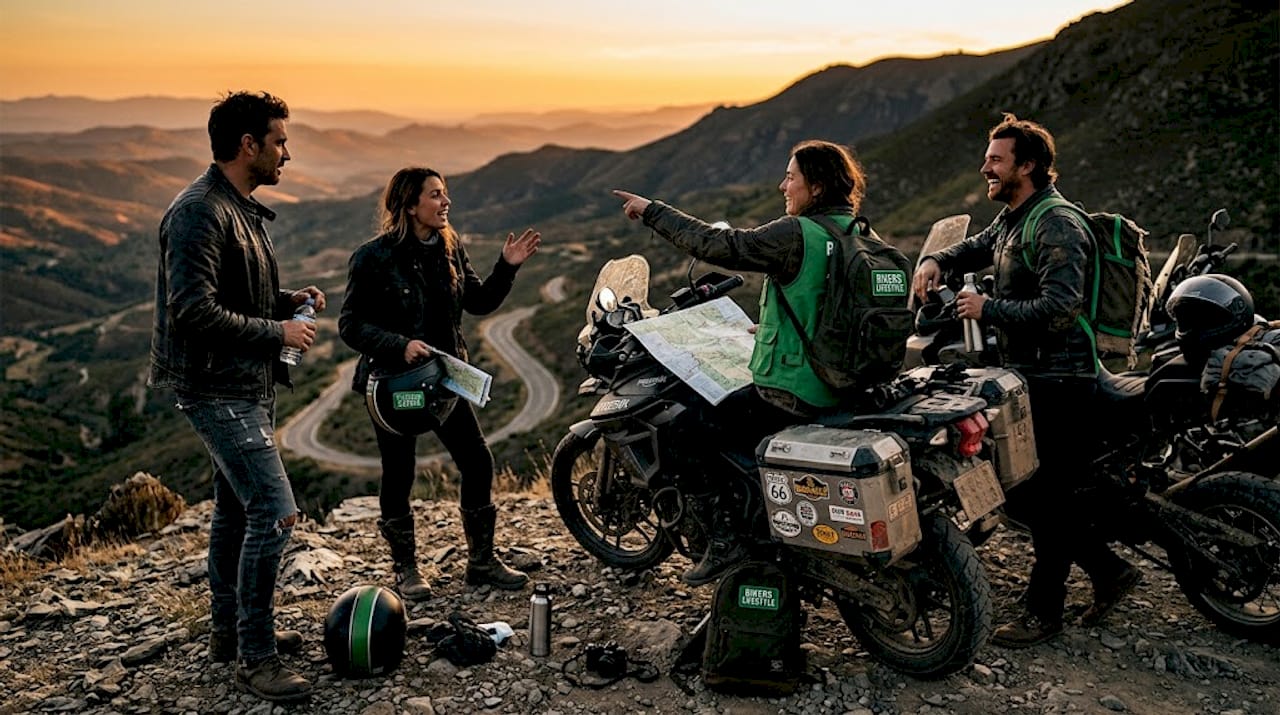
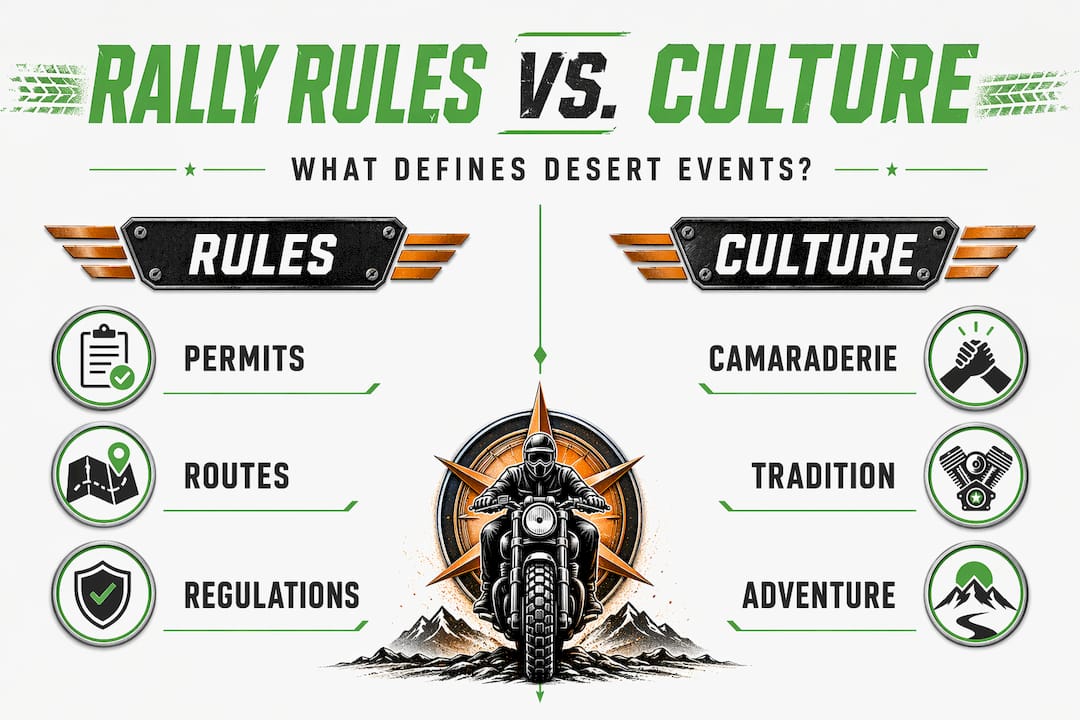
The culture that's grown up around these events is something you feel more than describe. There's a deep sense of camaraderie that forms when a group of riders is 200 miles from the nearest town, sharing a campfire and comparing road rash. The adventure element is real and constant. You're not just riding a route; you're testing your judgment, your gear, and your ability to adapt. That shared challenge is what keeps people coming back year after year.
What truly sets California desert rallies apart from other motorcycle events, though, is the governance layer underneath all the fun. Desert-rally culture in California has a long-running ethics and regulation dimension: rules about permits, protected species, and route compliance influence how events evolve or get cancelled entirely, not just rider skill. The famous Barstow-to-Vegas race became a cultural symbol of the ongoing tension between off-road recreation and desert conservation under Bureau of Land Management oversight.
Here's what sets California desert rallies apart from most other motorcycle events:
- Geography: Vast, remote terrain spanning multiple desert ecosystems
- Environmental sensitivity: Protected species, fragile soil crusts, and restricted corridors
- Historical weight: Decades of organized rides that shaped modern off-road culture
- Regulatory complexity: BLM, NPS, and state land agencies all have overlapping jurisdiction
- Community identity: A tight-knit culture that values both freedom and responsibility
- Street-legal requirements: Many routes cross public roads, requiring compliant bikes
"The desert doesn't care how skilled you are. But the agency managing it cares deeply whether you have the right paperwork." This captures the governance reality every California desert rider eventually learns.
Exploring California motorcycle event traditions reveals just how much this culture has evolved over decades, shaped equally by rider passion and regulatory pressure. The desert riding routes that remain open today exist because past generations of riders learned to work within the system rather than against it. And the rally community highlights from neighboring states show how similar tensions play out across the Southwest.
Permits, rules, and rally reality: What riders need to know
Understanding the unique culture, the next key layer is legality and logistics, where paperwork matters as much as horsepower.
Let's be direct: ignoring permit requirements in California's desert riding zones is not a minor oversight. It can mean fines, confiscated equipment, and event cancellations that affect hundreds of other riders. The rules exist because the desert ecosystem is genuinely fragile, and land managers are watching more closely than ever.
Here's a breakdown of common desert routes and their permit requirements:
| Route | Permit required | Notes |
|---|---|---|
| White Rim Road (Canyonlands NP) | Yes, day-use permit | Issued via Recreation.gov, 8am MT day before |
| Elephant Hill Road (Canyonlands NP) | Yes, day-use permit | Each motorcycle needs a separate permit |
| Potash Road | No | No day-use permit required |
| Shafer Trail | No | No day-use permit required |
| BLM open desert (Mojave) | Varies by area | Check current BLM field office notices |
| State vehicle recreation areas | Yes, OHV permit | California Green Sticker or Red Sticker required |
The NPS is clear that you must have a day-use permit for all vehicles, motorcycles, and bicycles on certain roads inside Canyonlands National Park, including White Rim Road and Elephant Hill Road. Permits are issued online starting at 8am mountain time the day before your trip. Critically, each vehicle or motorcycle needs its own separate permit. You cannot share one permit across a group.
Why does this matter so much for rally planning? Because a group of 40 riders arriving at a trailhead without individual permits can face a complete shutdown. That's not a hypothetical. It happens every season, and it poisons the relationship between the riding community and land managers for years afterward.
Pro Tip: Always check the latest BLM or NPS field office notices within two weeks of your rally date. Routes can be temporarily closed for wildfire recovery, tortoise nesting seasons, or flash flood damage, and those closures often aren't posted with much advance notice.
Common permit pitfalls and best practices for rally riders:
- Assuming group permits cover everyone: They usually don't. Each bike often needs its own permit.
- Relying on last year's route: Land access changes frequently. Confirm every segment.
- Missing the permit window: Some permits open only 24 hours in advance and sell out in minutes.
- Crossing adjacent roads with different rules: A route can shift from no-permit to permit-required at a single fence line.
- Ignoring seasonal closures: Tortoise habitat restrictions, fire closures, and flood damage all create temporary no-go zones.
- Not carrying proof: Having a permit but not being able to show it can still result in a citation.
Exploring permitted scenic rides ahead of time, and reviewing group ride permitting tips from experienced organizers, can save your group from a very expensive and frustrating experience at the trailhead.
Iconic rallies: The LA-Barstow-to-Vegas ride and more
Once you understand permit rules, it's time to look at what the most famous events offer and how logistics, culture, and legend come together.
No conversation about California desert motorcycle rallies is complete without talking about the LA-Barstow-to-Vegas ride. This is the event that defines what a serious California desert rally looks and feels like. The LA-B-to-V ride covers 400-plus miles over two days, traditionally starting after Thanksgiving. It uses creative routing from the Los Angeles area through Barstow and on to Las Vegas, with an overnight stop in Barstow. Street-legal bikes are the baseline requirement for all entrants, because significant portions of the route cross public roads.
What makes this event legendary isn't just the distance. It's the combination of challenge, community, and tradition. Riders plan for months. Groups form around shared experience levels. And finishing the full route carries genuine bragging rights in the California dual-sport community.
| Feature | LA-Barstow-to-Vegas | Mojave Road Rally | High Desert Scramble |
|---|---|---|---|
| Distance | 400+ miles | 130 miles | 50-80 miles |
| Duration | 2 days | 1 day | 1 day |
| Bike type | Street-legal dual-sport | Off-road capable | Off-road |
| Overnight stop | Barstow | No | No |
| Permit complexity | Moderate | Low to moderate | Low |
| Skill level | Intermediate to advanced | Beginner to intermediate | All levels |
Here's what to expect when you commit to a major California desert rally like LA-B-to-V:
- Pre-ride prep (weeks out): Confirm your bike is street-legal, check all fluid levels, and verify your route permits are secured.
- Registration and briefing: Most organized rallies require pre-registration. Attend the rider briefing without exception.
- Day one riding: Expect long hours in the saddle, variable terrain, and the need for fuel planning in remote areas.
- Overnight in Barstow: This isn't just rest. It's where the community bonds, stories get told, and mechanical issues get sorted.
- Day two push to Vegas: The second day often hits harder physically. Pace yourself from the start.
- Post-rally debrief: Many riders gather informally at the finish. This is where friendships form and next year's plans begin.
These events are a rite of passage for California riders in a way that a track day or a weekend canyon run simply cannot replicate. The combination of distance, desert conditions, and community creates an experience that sticks with you. Events like the Motorcycle Run to the Ranch offer a different but equally compelling version of that community experience, and browsing desert rally events gives you a sense of the full calendar available to California riders.
How environmental rules shape rally culture today
With legendary events and their operational needs in mind, it's vital to see how environmental policies shape the future of the sport.
The relationship between California's desert riding community and environmental regulators has never been simple. It's a push and pull that's been going on for decades, and it directly determines which events survive and which ones quietly disappear from the calendar.
The Barstow-to-Vegas race became a symbol of this tension, representing the broader conflict between off-road recreation access and desert conservation under BLM oversight. What happened to that race, and how riders responded, shaped the political and cultural landscape of California desert motorcycling for a generation.
Today, the most common environmental restrictions affecting rally culture include:
- Desert tortoise habitat buffers: Seasonal closures in known tortoise zones, typically spring and fall
- Cryptobiotic soil crust protection: Fragile biological soil crusts can take decades to recover from tire damage
- Wash and riparian corridor restrictions: Many desert washes are protected from motorized use
- Air quality permit requirements: Large events in some desert counties require dust control plans
- Noise ordinances: Some desert communities near rally routes have strict decibel limits
- Wilderness area boundaries: Motorized vehicles are prohibited in designated wilderness, and boundaries aren't always obvious
Pro Tip: Follow your regional BLM field office on social media and sign up for their email alerts. They post temporary closures, permit changes, and public comment periods that directly affect your riding access. Being an informed rider is the most effective form of advocacy for keeping routes open.
The riders who engage with off-road event challenges and participate in public comment processes are the ones who actually influence land management decisions. Showing up only to ride and never to advocate is how communities lose access over time.
A rider's reality: Why navigating permits is as important as skill
Here's the contrarian take most experienced California desert riders eventually arrive at: the hardest part of these rallies isn't the terrain. It's the paperwork.
Raw riding skill matters. Nobody's arguing otherwise. But skill gets you through the desert. Permits get you into it. We've seen genuinely talented riders, people who could handle any terrain you put in front of them, get turned around at access points because they didn't have the right documentation. That's not a failure of riding ability. It's a failure of preparation.
The real mastery in California desert rally culture today is understanding the ever-shifting regulatory landscape and adapting your plans accordingly. Routes that were open last season may be closed this one. Permits that were available walk-up are now reservation-only. Events that ran for 30 years can be cancelled with 60 days notice if a land management agency changes its position.
"The desert rider who survives long-term isn't just the one who can handle sand washes and rocky climbs. It's the one who treats permit research with the same seriousness as bike maintenance."
This isn't a complaint about regulation. It's a reality check. The riders who thrive in this environment are the ones who build permit research into their prep process as a non-negotiable step, not an afterthought. They check BLM notices. They confirm NPS access windows. They know which roads require individual permits and which ones don't.
Staying legal also protects the future of the sport for everyone. Every rider who gets caught on a closed route gives land managers a reason to restrict access further. Every organized group that runs a permitted, responsible event builds goodwill that translates into continued access. The rally series insights from well-organized events show exactly what responsible rally culture looks like in practice.
The bottom line is this: in California desert motorcycling, your permit game needs to be as sharp as your riding game. Both matter. Neither is optional.
Find your next California rally adventure
If you're ready to test your skills on the road and in the world of permits, here's where your next rally adventure starts.
Bikers Life Style exists to take the guesswork out of finding your next ride. Whether you're looking for a major multi-day desert event or a local group ride through the high desert, the platform connects you with organized events, experienced groups, and detailed route information. The Red White and Bikes Rally Series is a great starting point for riders who want a well-organized, community-driven event experience. And browsing upcoming motorcycle events gives you a full picture of what's happening across California and beyond. Stop planning in the dark. Find your next rally, connect with your group, and ride with confidence.
Frequently asked questions
Do all California desert motorcycle rallies require permits?
Not all, but most rallies on or through protected lands do require permits for every bike or vehicle. The NPS requires individual day-use permits for motorcycles on certain roads inside national park boundaries, while some BLM routes remain open without permits.
Can I join a rally if my motorcycle is not street-legal?
Major rallies like LA-Barstow-to-Vegas typically require street-legal bikes for all public road segments. The LA-B-to-V uses street-legal motorcycles as a baseline requirement for all entrants, since significant portions cross public roads.
Why do some events get canceled or rerouted last minute?
Cancellations usually happen due to permit issues, environmental concerns, or new land management restrictions. Permitting and environmental constraints can materially change what riders can legally do, sometimes with very little advance notice.
How do I find out if a specific desert route is open for rallies?
Check official BLM, NPS, or event organizer communications close to your ride date, as access can change suddenly. Permits and road access can vary dramatically even between adjacent roads, so always verify each specific segment of your planned route.