

TL;DR:
- Planning weekend motorcycle rides around realistic mileage and flexible routes enhances safety and enjoyment. Using tools like dedicated GPS apps, pre-ride inspections, and community resources helps riders adapt to conditions and build memorable trips. Focusing on one region with contingency plans ensures a relaxed, fulfilling experience rather than rushed exhaustion.
Every rider has planned a weekend ride that looked perfect on paper and fell apart by noon Sunday. The problem is usually the same: too many miles, too little margin, and zero flexibility when the weather turns or a road is closed. When you plan a weekend motorcycle route with intention, though, the whole dynamic shifts. You balance scenic beauty against rider stamina, lock in fuel stops before you need them, and leave room for the unexpected detour that becomes the best story of the trip. This guide covers every layer of that process.
Table of Contents
- Key takeaways
- How to plan a weekend motorcycle route around your riding limits
- Choosing scenic and safe routes
- Pre-ride inspection and gear
- Timing, breaks, and arriving safely
- My honest take on weekend route planning
- Ride smarter with Bikerslifestyle
- FAQ
Key takeaways
| Point | Details |
|---|---|
| Match miles to your skill level | Beginners should cap daily mileage at 150–200 miles; experienced riders do best at 200–300 miles per day. |
| Plan by riding time, not distance | Six to seven hours of riding per day is a smarter target than a fixed mileage number. |
| Inspect before every ride | The T-CLOCS check takes under 10 minutes and catches the issues that end trips early. |
| Build flexibility into your itinerary | One anchor destination per day and alternate route options keep the trip enjoyable when conditions change. |
| Use community resources | Platforms like Bikerslifestyle connect you to group rides, events, and curated scenic routes that solo planning misses. |
How to plan a weekend motorcycle route around your riding limits
Before you open a map app, you need an honest conversation with yourself about what you can actually handle. Weekend rides have a way of punishing ambition, and nothing kills the experience faster than pulling into your destination so exhausted you can barely enjoy it.
Setting realistic daily mileage
Experienced riders manage 300–400 miles per day, but experts consistently recommend building your plan around riding time rather than a fixed number. The sweet spot for most weekend riders is six to seven hours of actual seat time, which typically lands somewhere between 200 and 300 miles depending on the road type. If you are newer to long rides, cap your daily distance at 150–200 miles until you know how your body responds to sustained riding.
Here is a practical framework for setting your Saturday and Sunday mileage targets:
- Start with your riding time budget. Decide how many hours you want to spend on the bike each day, subtracting time for meals, fuel stops, and sightseeing.
- Factor in terrain. Hilly or winding roads slow your average speed and add physical effort. Elevation gains increase fatigue the same way an extra 20 to 30 flat miles would.
- Adjust for your setup. Carrying luggage or a passenger changes everything. Reduce your planned daily mileage by roughly 25% and add more frequent stops when riding two-up.
- Check the forecast. Riding into a headwind or through rain for four hours is far more taxing than the same distance on a clear day. Build a buffer so weather does not force you to push through conditions you should stop for.
- Leave the last hour loose. Do not schedule anything critical in the final stretch of each day. That window is your recovery margin if anything earlier runs long.
Pro Tip: Write your daily mileage target on a piece of paper and tape it to your tank bag. Riders consistently underestimate how much they have ridden mid-day and keep pushing when they should stop.
The goal here is not to rack up impressive numbers. The goal is to arrive at each destination feeling good enough to enjoy it.
Choosing scenic and safe routes
Good route selection is where weekend ride planning separates riders who have great trips from riders who have stressful ones. The tools available today make this far easier than it used to be, but knowing what to look for matters as much as which app you use.
Tools that actually help
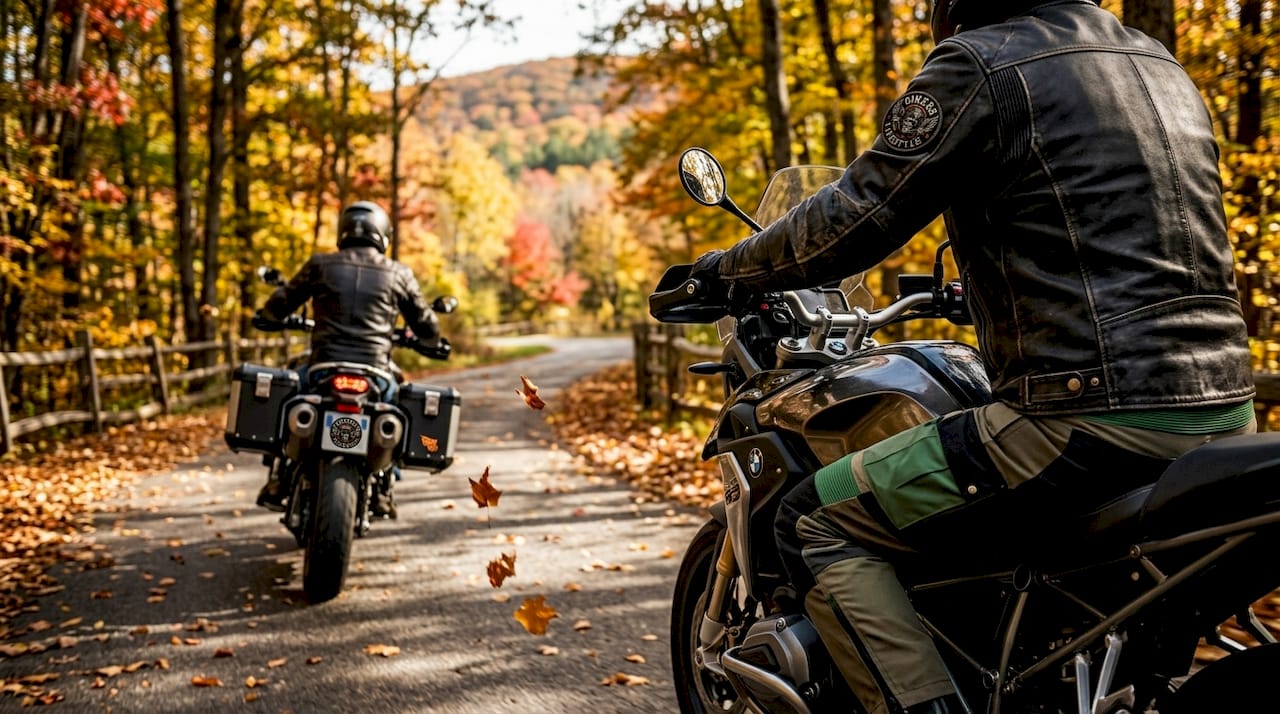
Dedicated motorcycle GPS apps like Scenic, Kurviger, and TomTom Rider prioritize twisty, low-traffic roads over the fastest route. Load your planned roads as offline maps before you leave. Cell coverage in the scenic areas you actually want to ride is notoriously unreliable, and discovering that at a fork in the road is a problem you can entirely avoid.
When selecting your route, consider these factors:
- Fuel range management. Plan fuel stops every 100–150 miles and carry a 15 to 20% fuel buffer. In remote regions, stop whenever the tank reaches the halfway mark.
- Road conditions and construction. Check state DOT websites and apps like Waze the night before departure. A single lane closure on a mountain road can add 45 minutes to your timeline.
- Rush hour avoidance. If your route passes through any metro area, time that stretch for mid-morning or early afternoon. Sitting in traffic on a bike in full gear is miserable and burns fuel faster.
- Alternate route identification. For every major segment, know the detour before you need it. Mark it in your GPS app as a waypoint so switching is a one-tap decision.
- Share your itinerary. Text your planned route and overnight stop to someone at home. This is non-negotiable on solo rides.
Pro Tip: Pick one "anchor destination" per day: a specific overlook, town, or landmark you are riding toward. It gives the ride a narrative arc and prevents the trap of trying to pack in too much. One region, one clear goal consistently produces better weekend rides than an ambitious multi-region sweep.
Here is a quick reference for route planning decisions based on ride type:
| Ride type | Recommended daily miles | Fuel stop frequency | Suggested terrain |
|---|---|---|---|
| Beginner solo | 100–175 miles | Every 80–100 miles | Flat to moderate hills |
| Experienced solo | 200–300 miles | Every 100–150 miles | Any, including mountain roads |
| Two-up with luggage | 150–225 miles | Every 80–120 miles | Moderate, avoid technical roads |
| Group ride | 150–250 miles | Every 100 miles | Scenic backroads, low traffic |
Planning your route around community events adds a layer most riders overlook. Check the upcoming events calendar at Bikerslifestyle to find rallies, charity rides, and group meetups that might fall along your path or give you a compelling destination to build the trip around.
Pre-ride inspection and gear
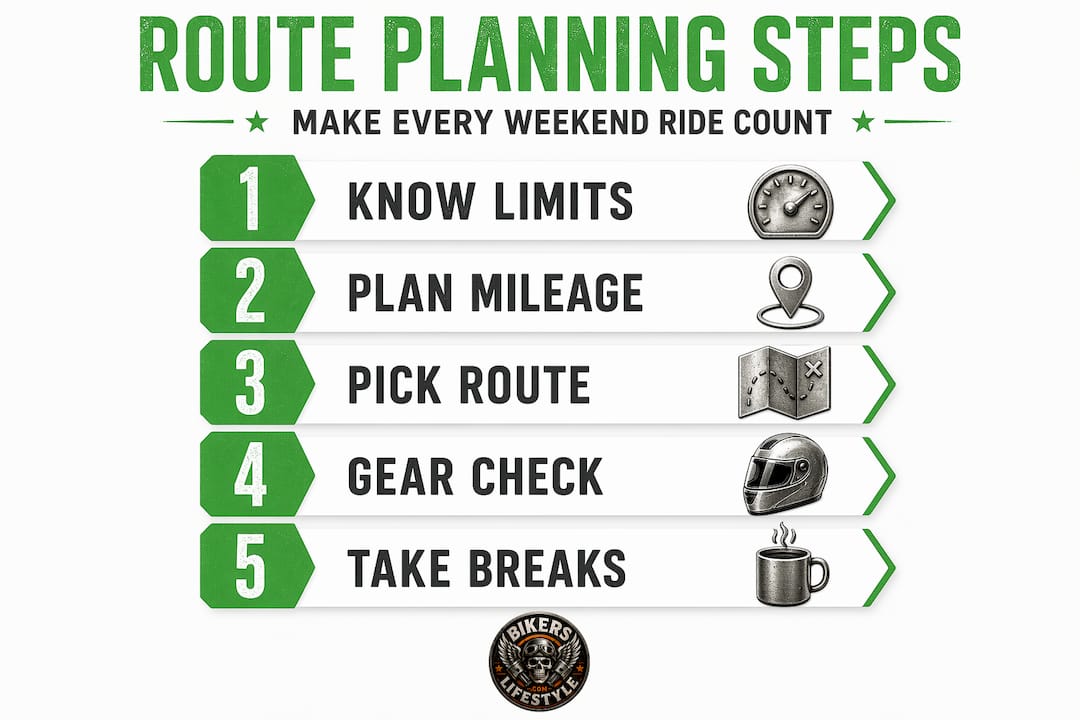
A clean route plan and realistic mileage targets mean nothing if your bike develops a problem you could have caught in the driveway. The T-CLOCS inspection is the industry standard for good reason: it takes five to ten minutes and covers every system that can leave you stranded.
The T-CLOCS breakdown
T-CLOCS stands for Tires, Controls, Lights, Oil, Chassis, and Stands. Here is what to check in each category:
- Tires. Check cold tire pressure every single morning. Hot tires read higher pressure and give you an inaccurate number. Tires naturally lose about 1 PSI per month, and overnight temperature drops accelerate that. Look for cuts, embedded debris, and sidewall cracking.
- Controls. Squeeze the front and rear brakes. Both should feel firm with no sponginess. Check throttle for smooth operation and snap-back. Inspect clutch cable for fraying.
- Lights. Turn on headlights, brake lights (both front lever and rear pedal), and turn signals. A burned-out brake light is a rear-end collision waiting to happen.
- Oil and fluids. Check engine oil level and look under the bike for any fresh drips. Check coolant if your bike is liquid-cooled.
- Chassis. Check chain tension and lubrication. Look for loose bolts on luggage racks, footpegs, and mirrors. Any loose fastener will vibrate out on the highway.
- Stands. Confirm the sidestand retracts fully and the centerstand (if equipped) locks securely. A dragging sidestand on a right-hand curve ends trips permanently.
Pro Tip: Do the T-CLOCS check in the same order every time so it becomes muscle memory. Riders who "just look it over" miss things. The ATGATT philosophy applies to inspections too: do the full check, every time, no shortcuts.
On gear, the ATGATT principle (All The Gear, All The Time) is not just about crash protection. Proper riding gear directly reduces fatigue by blocking wind noise, managing body temperature, and reducing the physical effort of fighting wind blast at highway speeds. Pack a set of lightweight tire plugs, a portable inflator, and a small toolkit with the wrenches and screwdrivers specific to your bike's fasteners.
Timing, breaks, and arriving safely
How you structure the hours of your ride matters as much as the route itself. Fatigue is the biggest variable most riders underestimate on weekend trips, and it compounds quickly.
Building a schedule that keeps you sharp
Schedule a break every 90 to 120 minutes regardless of whether you feel tired. By the time fatigue registers consciously, your reaction time has already degraded. Get off the bike, walk around, eat something, and hydrate before you need to.
Here is a sample Saturday schedule for a 220-mile scenic route starting at 8:00 AM:
- 8:00 AM. Depart after T-CLOCS check and a full breakfast.
- 9:30 AM. First rest stop, 15 minutes. Fuel up if needed.
- 11:15 AM. Arrive at anchor destination (overlook, historic site, or town center). Spend 45 to 60 minutes.
- 1:00 PM. Lunch stop. Off the bike for at least 30 minutes.
- 2:45 PM. Second fuel stop and 15-minute break.
- 4:30 PM. Arrive at overnight stop. Unpack, hydrate, and recover before dinner.
Arriving before dark is not optional for safe riding. Night riding significantly increases cognitive load and reduces your ability to spot hazards like debris, animals, and unmarked turns. Build your entire Sunday return leg around a target arrival time at least 90 minutes before sunset.
"The best rides I have ever planned had one thing in common: I had left myself enough time to stop when something surprised me, and something always does."
Hydration deserves specific attention. In summer heat, riders lose fluids rapidly through sweat without feeling thirsty because wind evaporates perspiration before it registers. Drink water at every stop, not just when you feel like it. In cold weather, dress in thermal base layers under your riding jacket and plan for an extra stop to warm up if temperatures drop below 50°F.
If your route passes near any local motorcycle events or group rides, consider timing your day to cross paths. Motorcycle rallies near you are often discoverable with a quick search, and they make natural rest stops with good food, good company, and excellent fuel for the second half of the day.
My honest take on weekend route planning
I have watched riders pack a three-state ambition into a 48-hour window and spend Sunday afternoon riding through a beautiful region they were too exhausted to appreciate. The mistake is always scope.
What I have learned over years of weekend rides is that constraint produces better trips. Pick one state. Pick one mountain range or one river valley or one coastal stretch. Then pick the two or three roads within that area that you most want to experience, and plan everything else around those. That focus changes the character of the whole trip. You stop treating the ride as a transit problem and start treating it as the experience itself.
The flexibility piece matters just as much. My best rides had backup plans for the backup plans. When a road I had been looking forward to was closed for construction, I had already scoped the alternate. The ability to adapt without stress comes entirely from preparation. Do the T-CLOCS check, file your route with someone at home, and know where the next fuel stop is at all times.
Community resources changed how I plan entirely. Finding a rally or group ride that aligns with my route adds a social dimension that solo planning rarely generates on its own. When I started using Bikerslifestyle to find events along my intended path, the trips became less about covering ground and more about belonging to something. That shift is worth more than any extra miles.
— Trevor
Ride smarter with Bikerslifestyle
If you are ready to take your weekend ride planning beyond a map app and a fuel calculator, Bikerslifestyle is built for exactly that. The platform connects riders to curated scenic routes and riding groups across the country, with searchable listings for upcoming rallies, charity events, and community rides that can anchor your next weekend itinerary.
Whether you want to ride with a local chapter, discover a vintage motorcycle showcase worth building a weekend around, or check out the 2026 European Motorcycle Rally for your bucket list, Bikerslifestyle has the community and the resources to make your next trip genuinely memorable. Browse motorcycle groups near you and find your next ride before the weekend gets here.
FAQ
How many miles should I ride per day on a weekend trip?
Most riders manage 200–300 miles per day comfortably; beginners should stay closer to 150–200 miles. Planning by riding time (six to seven hours max) is more reliable than a fixed mileage target.
How often should I take breaks on a weekend motorcycle ride?
Take a break every 90 to 120 minutes even if you feel fine. Fatigue degrades reaction time before you consciously notice it.
What is the T-CLOCS inspection?
T-CLOCS stands for Tires, Controls, Lights, Oil, Chassis, and Stands. The full inspection takes 5 to 10 minutes and should be completed before every ride to catch mechanical issues before they become roadside emergencies.
When should I check my tire pressure?
Always check tire pressure when the tires are cold, before you ride. Hot tires read higher than actual pressure, which gives you a false reading and can lead to unsafe riding conditions.
How do I find motorcycle events to include in my weekend route?
Use the Bikerslifestyle events calendar to find rallies, group rides, and community stops near your planned route. Building your itinerary around a local event gives the trip a natural anchor destination.