
TL;DR:
- Motorcycle groups have structured hierarchies, social codes, and formation rules that are crucial for safety and social cohesion. Different group types, from formal MCs to open social rides, demand varying levels of commitment, hierarchy, and patch significance. Effective communication through hand signals and proper formation protocols ensures rider safety and promotes group trust on the road.
Most people picture motorcycle groups as a loose collection of friends who happen to ride the same direction on a Sunday morning. That picture is wrong. Motorcycle group dynamics explained properly reveal a world of structured hierarchies, earned identities, strict on-road formation rules, and unspoken social codes that govern everything from where you position your bike in traffic to whether you can wear a specific patch on your jacket. Whether you are considering joining a club or simply want to ride with a group safely, understanding these dynamics changes everything.
Table of Contents
- Key takeaways
- Motorcycle group dynamics explained: types and structures
- On-road formations and riding safety
- Communication methods in group rides
- Patch significance and social protocols
- Practical advice for joining a group
- My take on group riding culture
- Find your riding community on Bikerslifestyle
- FAQ
Key takeaways
| Point | Details |
|---|---|
| Groups have real structure | Motorcycle clubs range from formal hierarchical MCs to casual open groups, each with different rules and commitments. |
| Formation riding saves lives | Staggered formation with one-second intervals is standard practice and requires pre-ride agreement from every rider. |
| Patches are earned, not bought | Wearing unearned colors in MC culture carries serious social and sometimes physical consequences. |
| Communication is a shared contract | Hand signals remain critical even when helmet intercoms are in use, because technology fails and people get hurt. |
| Research before joining | Visiting rides and understanding a group's culture before committing protects you from mismatched expectations. |
Motorcycle group dynamics explained: types and structures
Not every group of riders wearing matching gear is the same kind of organization. The dynamics of motorcycle riding shift dramatically depending on which type of group you are dealing with, and confusing them is one of the most common mistakes new riders make.
Full motorcycle clubs, commonly called MCs, operate with formal hierarchies that include officer ranks such as President, Vice President, Sergeant at Arms, Road Captain, and Treasurer. Entry into these clubs is not casual. Significant variation exists across group types, from tightly structured MCs to open volunteer clubs, but full MCs sit at the most regimented end of that spectrum. Prospective members go through a prospect period that typically runs 6 to 18 months, during which they handle club tasks, attend mandatory events, and hold no voting rights. A single "no" vote by any full member is enough to end a prospect's bid for membership.
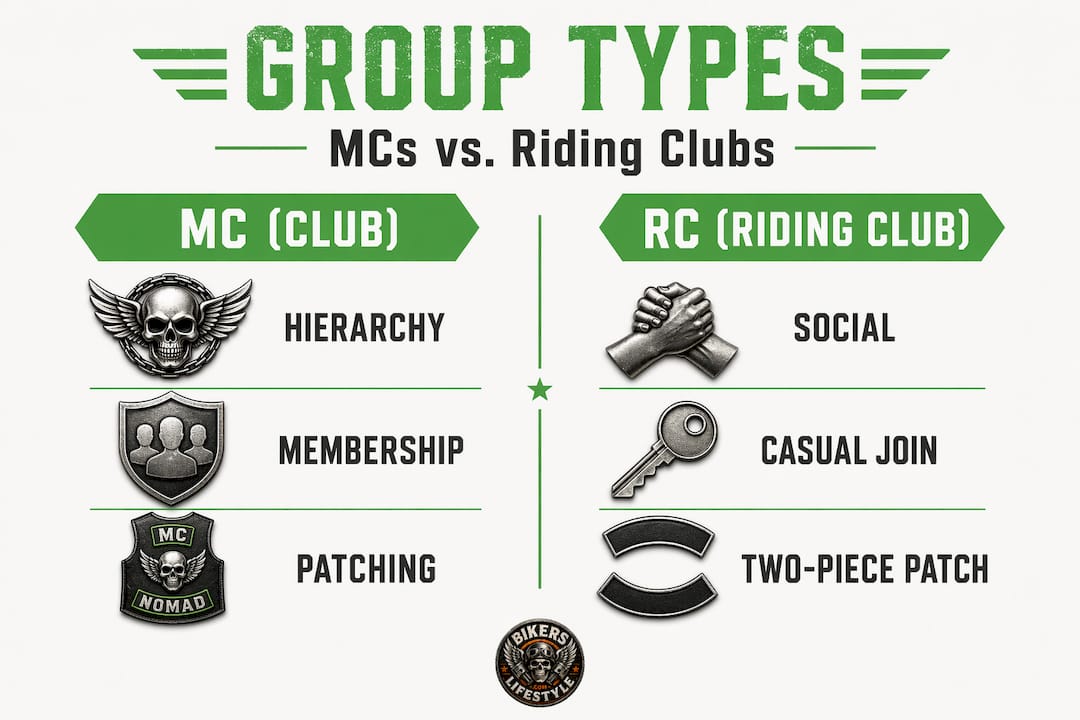
Riding clubs, or RCs, operate with much lighter structure. Membership is typically open, financial commitment is minimal, and there are no territorial claims attached to wearing their colors. The Chicago United Riders group is a good example of this model. They use military-style volunteer leadership with titles like Point Person and Alpha Team Leaders while maintaining open membership and using radio communication, all without the exclusivity of a traditional MC.
Open riding groups occupy the most informal end of the spectrum. Leadership is often rotating or situational, and membership carries no formal obligations. These groups are common on apps and social platforms where riders connect around a shared route or event rather than a shared identity.
Here is a quick comparison of the three main group types:
| Feature | Full MC | Riding Club | Open Group |
|---|---|---|---|
| Membership process | Prospecting period, vote required | Application or open invitation | No formal process |
| Hierarchy | Formal officer structure | Informal or volunteer-based | None or situational |
| Patch significance | Earned, territorial, protected | Club-specific, fewer restrictions | Usually none |
| Commitment level | High, mandatory attendance | Moderate, optional participation | Low, ride-by-ride |
| Territory claims | Yes, via bottom rocker | Rarely | Never |
Pro Tip: Before attending your first group ride, ask the organizer directly what type of group they are. The answer shapes everything from what you wear to how you address senior members.
On-road formations and riding safety
Understanding riding groups means understanding what happens the moment everyone kicks their bikes to life. Formation is not a preference. It is a safety protocol backed by real consequences when ignored.
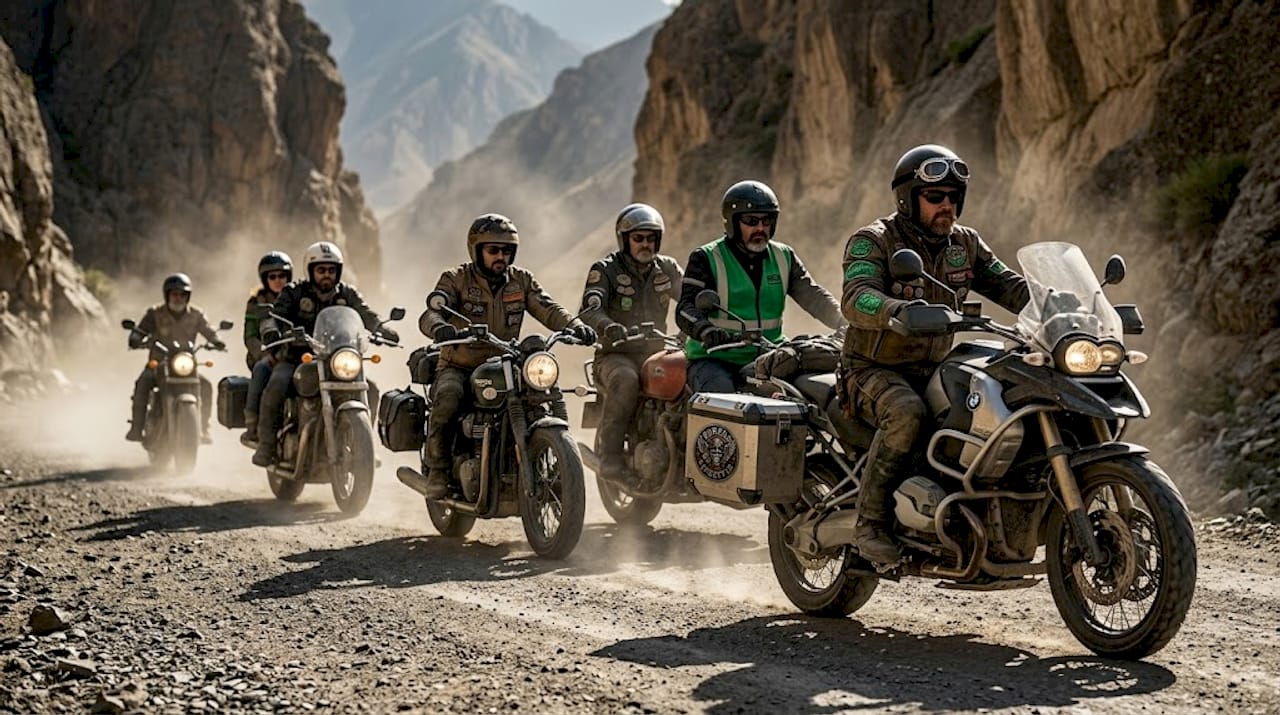
The standard approach is the staggered formation. Riders alternate between the left and right thirds of their lane, with one-second intervals between each rider. This spacing gives each rider a two-second buffer to the bike directly ahead while maintaining a tight, visible group to surrounding traffic. The lead rider controls the pace, the sweep rider closes the rear, and the road captain manages the overall flow from wherever they are positioned.
The Road Captain role carries genuine weight. This person plans the route, makes on-road decisions, and manages hazard responses. A poor road captain is not just an organizational problem. A poor road captain causes accidents.
Groups switch to single-file formation in specific situations:
- Entering curves or winding roads where staggered spacing becomes unsafe
- Merging onto highways or through narrow construction zones
- Passing through intersections where the group must stay together across signal changes
- Any situation where road debris or hazards demand maximum individual lane space
Group size matters more than most new riders realize. Ideal group size runs 5 to 9 riders. Above that number, larger groups should split into sub-groups, each with its own lead and sweep. A group of 20 bikes trying to navigate a city intersection together is a liability for everyone involved, including the vehicles around them.
Pre-ride meetings are not optional. A proper pre-ride covers the route, emergency contacts, hand signals being used that day, pace expectations, and any known road hazards. Skipping this step is how miscommunication turns into near-misses.
Pro Tip: If you are new to group riding, position yourself toward the middle of the formation, not at the rear. The sweep rider is experienced by design. Tucking in the middle means experienced riders ahead and behind you.
For more on the safety reasoning behind specific formations, the Bikerslifestyle guide on riding in formation covers the structural and social reasoning in detail.
Communication methods in group rides
Group riding techniques live or die on communication. You cannot shout across a multi-bike formation at highway speed. You cannot assume everyone can read your body language. You need a shared communication system, and every rider in the group needs to know it cold before the ride starts.
Standard hand signals form the backbone of group communication. Here are the most commonly used:
- Left arm extended straight out: Turn left
- Left arm bent upward at elbow: Turn right
- Left arm bent downward at elbow: Slow down or stop
- Left fist raised: Hazard on the left
- Right foot pointed down: Hazard on the right
- Circular motion with left hand: Speed up
- Tapping helmet with open palm: Police ahead
- Left arm extended with thumb and fingers opening and closing: Stop for fuel
Hand signals stay critical even when the group uses helmet intercoms, because technology fails. Batteries die. Connections drop. Wind noise overwhelms audio at speed. Groups that treat intercoms as a replacement for hand signals instead of a supplement to them will eventually have a moment where no one knows what is happening and someone gets hurt.
The chain of communication is just as important as the signals themselves. The lead rider spots a hazard and signals. The rider directly behind them mirrors the signal. That signal passes backward through the group rider by rider until the sweep confirms it. This chain takes practice, and communication discipline is a shared contract that every rider in the group is responsible for upholding.
Even groups with full radio communication maintain predefined meeting spots and hand signals as backup systems because redundancy is the only real safety net in a formation of moving vehicles.
Pro Tip: Run through the hand signals you will use as a group at the pre-ride meeting and have each rider physically demonstrate them. Watching someone repeat a signal back to you reveals exactly who needs more practice before the ride starts.
Patch significance and social protocols
If you want motorcycle club relationships explained honestly, start with the patch. Nothing in MC culture carries more weight than the vest or cut and the patches on it. Understanding this system is not about memorizing rules for their own sake. It is about understanding the identity architecture that holds the entire social structure together.
Three-piece patches, called colors, are the hallmark of full MCs. The top rocker displays the club name. The center patch shows the club logo. The bottom rocker marks the territory the club claims. Bottom rockers represent de facto social control over a geographic region and require permission from the dominant clubs in that area to wear legitimately.
Patches are earned through the prospecting process and a formal vote. They are not purchased, gifted, or assumed. Wearing unearned patches draws immediate attention in MC circles and can result in demands to remove them. The consequences for refusing escalate quickly depending on whose territory you are in. This is not theater. It is a system of social trust built over decades.
Respecting established clubs' areas means more than not wearing their specific patch. When riding into an established club's territory, protocol requires introduction and acknowledgment of that club's presence. Showing up in full colors without that communication is read as a challenge, regardless of your intention.
Riding clubs and open groups operate with far less tension around patches. An RC patch is typically a two-piece design without a bottom rocker, which signals no territorial claim and removes the friction that comes with it. The key distinctions between patch types:
| Patch type | Design | Territorial claim | Who wears it |
|---|---|---|---|
| Three-piece colors | Top/center/bottom rocker | Yes, specific region | Full MC members |
| Two-piece patch | Top/center only | No | Riding club members |
| One-piece patch | Single emblem | No | Social or open clubs |
| Support patch | Specific support insignia | Reflects the MC's claim | MC supporters |
For a deeper read on patch meaning and club colors, Bikerslifestyle covers the full protocol breakdown riders should understand before interacting with established MCs.
Practical advice for joining a group
Knowing how to ride in a group starts before you ever throw a leg over your bike for a group ride. The social and riding preparation you do in advance determines whether your first group experience is smooth or awkward.
-
Research the group before committing. Attend a public event or open ride before making any membership inquiry. Watch how members interact, how the ride is organized, and what the pace and culture feel like. Every group has a personality and not every personality fits every rider.
-
Learn the hand signals cold. Do not show up to a group ride planning to figure them out as you go. Practice the standard signals until they are automatic. The group's safety depends on every rider passing them correctly and without hesitation.
-
Know your skill level honestly. Most groups have an expected pace and riding standard. Joining a group that rides significantly beyond your current skills puts everyone at risk. Many groups offer beginner-friendly rides. Start there.
-
Ask about expectations upfront. If you are considering a formal MC, ask what the prospecting process involves before you start it. The prospect period carries real obligations that affect your schedule and finances. Going in uninformed leads to resentment on both sides.
-
Dress and gear appropriately. Show up with proper riding gear. Showing up to a group ride in a t-shirt signals a lack of seriousness and, in some groups, disrespect for the group's safety culture.
-
Contribute to pre-ride meetings. Do not just stand there during the pre-ride briefing. Ask questions. Confirm your understanding of signals and the route. Active participation marks you as someone worth riding with.
-
Ride predictably. Group riding requires predictability. Signal every move, maintain your position in formation, and do not make sudden speed changes. Unpredictability is the fastest way to lose a group's trust.
Pro Tip: After your first group ride, debrief with one of the experienced riders. Ask what you did well and what could improve. This kind of direct feedback loop accelerates your development faster than any number of solo practice sessions.
My take on group riding culture
I have watched a lot of riders walk into their first group situation with the wrong map in their head. They expect a social club with bikes, and they find a social structure with real consequences for failing to respect it. That gap between expectation and reality creates unnecessary friction, and most of it is avoidable.
What I have learned is that the structure is not about control for its own sake. The hierarchy, the formations, the patch protocols, the communication chains. All of it serves a purpose. On the road, it keeps people alive. Off the road, it creates the kind of trust that makes a group of individuals function as a unit. When you understand why the rules exist, following them stops feeling restrictive and starts feeling like competence.
The thing most outside observers miss is that the social code and the riding code reinforce each other. A rider who is disciplined enough to hold formation under pressure is usually also the rider who respects the group's social protocols. The two are not separate skills. They are expressions of the same underlying commitment to the people riding with you.
My honest advice: stop trying to figure out which rules you can skip and start asking what the rules are telling you about what this group values. That shift in perspective is what separates riders who last in a group from riders who wash out in the first six months.
— Trevor
Find your riding community on Bikerslifestyle
Bikerslifestyle connects riders with local riding groups, upcoming rallies, charity rides, and scenic routes all in one place. If you are ready to put what you have learned about group dynamics into practice, the platform makes it straightforward to find groups that match your riding style and commitment level. Check out the ADV Riding Clinic attached to the Great Adventure Rally to sharpen your group riding skills in a structured setting. For riders who want to ride with purpose, the Ride 4 Their Lives charity event brings the community together around something that matters. Start exploring motorcycle events and rides on Bikerslifestyle today.
FAQ
What does "motorcycle group dynamics" actually mean?
Motorcycle group dynamics refers to the social structures, riding formations, communication systems, and cultural protocols that govern how riders interact with each other on and off the road. It covers everything from staggered formation rules to patch significance in MC culture.
How is a motorcycle club different from a riding club?
A motorcycle club (MC) has a formal hierarchy, a prospecting membership process, and territorial patch claims, while a riding club (RC) uses a more casual structure with open membership, no territorial claims, and fewer mandatory obligations.
What is the safest formation for group riding?
The staggered formation is the standard safety approach, with riders alternating left and right positions in the lane and maintaining one-second intervals between each bike. Groups larger than nine riders should split into smaller sub-groups for safer management.
Can I wear a motorcycle club patch if I am not a member?
No. Wearing unearned patches, especially three-piece colors, is a serious protocol violation in MC culture and can result in demands to remove them with potentially serious consequences. Patches in established MCs are earned through a formal vote after a prospecting period.
Why do motorcycle groups use hand signals if they have intercoms?
Hand signals remain the non-negotiable backbone of group communication because intercoms can fail due to dead batteries, poor connections, or wind interference. Groups maintain hand signals as a redundant communication system to ensure safety when technology stops working.