
TL;DR:
- Effective motorcycle route planning requires thorough preparation, including understanding road surfaces, fuel, weather, and rest needs. Utilizing technology and community-shared routes enhances scenic discovery and safety, while maintaining flexibility prevents over-scheduling and stress. Balancing detailed planning with open time allows riders to enjoy memorable experiences and adapt to unforeseen circumstances.
Most riders think planning a motorcycle trip means picking a start point, choosing a destination, and finding roads in between. That version of motorcycle route planning explained leaves out almost everything that matters. Real route planning covers road surface types, fuel stop intervals, weather windows, daily mileage limits, and the kind of spontaneous detours that turn a good ride into a great one. Whether you are prepping for a cross-country haul or a weekend escape, the difference between a frustrating trip and a memorable one almost always comes down to how thoughtfully you planned before you ever swung a leg over the bike.
Table of Contents
- Key Takeaways
- Motorcycle route planning foundations every rider should know
- Using technology to plan smarter routes
- Safety and comfort inside route planning
- Building scenic and experiential routes that actually deliver
- My take on flexibility vs. over-planning
- Find your next ride on Bikerslifestyle
- FAQ
Key Takeaways
| Point | Details |
|---|---|
| Planning takes real time | Long-distance trips need 2–4 weeks of prep; even weekend rides benefit from a structured approach. |
| Technology amplifies your options | GPS apps and AI tools surface scenic routes and points of interest you would never find manually. |
| Safety lives in the margins | Fuel buffers, rest breaks every 2 hours, and contingency time protect you when things go sideways. |
| Flexibility beats a rigid schedule | Locking every hour of a route kills spontaneity and accelerates fatigue on long rides. |
| Community routes add real value | Shared GPX tracks and rider-reviewed routes shorten your research time and improve route quality. |
Motorcycle route planning foundations every rider should know
Good planning starts with an honest conversation you have with yourself before you open any app. What do you actually want from this ride? A personal-record mileage push is a completely different trip from a relaxed coastal cruise with two planned detours per day. Both are valid. Both require different frameworks.
Trip goal clarity changes everything. Long-distance motorcycle travel, say a cross-country run of 3,000 or more miles, demands logistics that a weekend ride simply does not. For touring challenges like multi-day trips, most experienced riders recommend a planning window of at least a few weeks. Thorough route planning typically requires 2–4 weeks for long-distance trips, though flexible riders can compress that timeline significantly by staying open on accommodations.
Road surface matters far more to motorcyclists than it does to car drivers. A gravel fire road might show up as a shortcut on a standard mapping app. On a loaded touring bike, that same road can mean a blown schedule, a dropped bike, or worse. Before committing to any route, check satellite imagery and rider forums to confirm surface conditions.
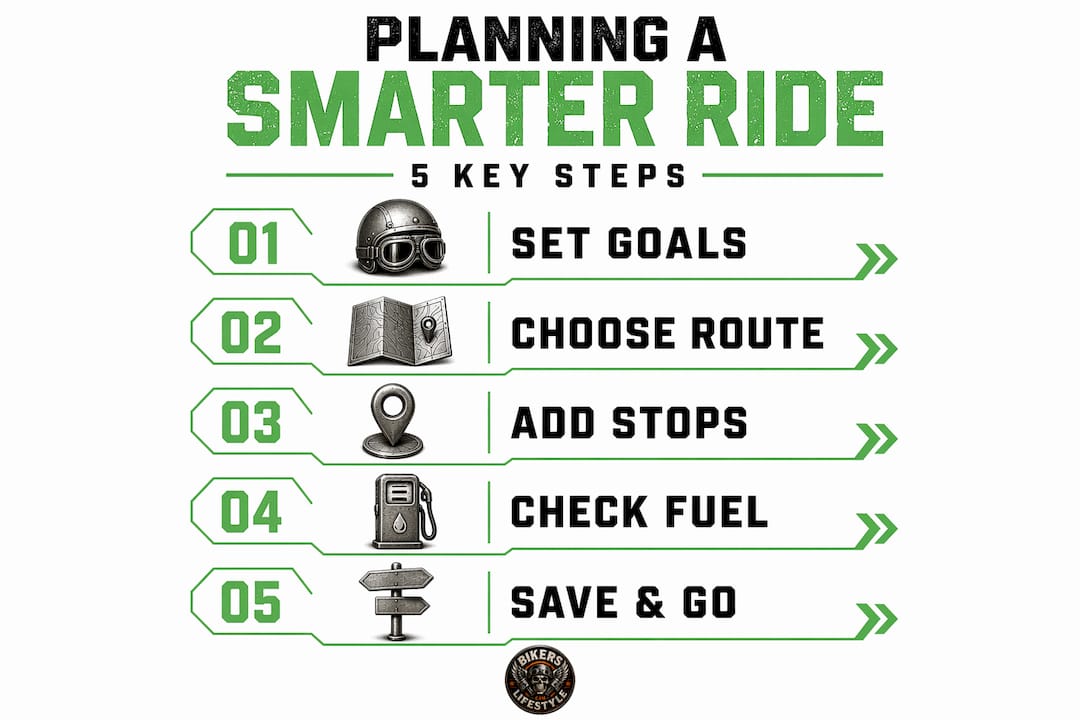
Here are the key foundational factors to account for early in your planning:
- Daily mileage cap. Most riders perform best at 300–400 miles per day on long trips. Pushing past that without rest compounds fatigue and degrades decision-making.
- Fuel stop spacing. Loaded touring bikes lose 10–20% fuel efficiency compared to manufacturer estimates. Plan fuel stops every 150–200 miles, not based on the tank's theoretical maximum range.
- Weather windows. Mountain passes close, monsoon seasons flood roads, and summer heat on desert highways creates genuine safety risks. Check seasonal patterns, not just the daily forecast.
- Border crossings. If your route crosses international boundaries, border crossings can drain hours from your day and require local insurance purchases at the crossing itself. Never plan a border crossing at the tail end of a riding day.
- Rest scheduling. Physical endurance is a real planning variable, not just a concern for beginners.
Pro Tip: Build at least one "buffer day" into any trip longer than 5 days. Use it for mechanical surprises, a stretch of road so good you need to ride it twice, or simply recovery. You will almost always use it.
Using technology to plan smarter routes
The best motorcycle navigation apps do not just show you roads. They help you discover the kind of routes you would never find by staring at a map for three hours. That shift has been significant.
What the top apps actually do
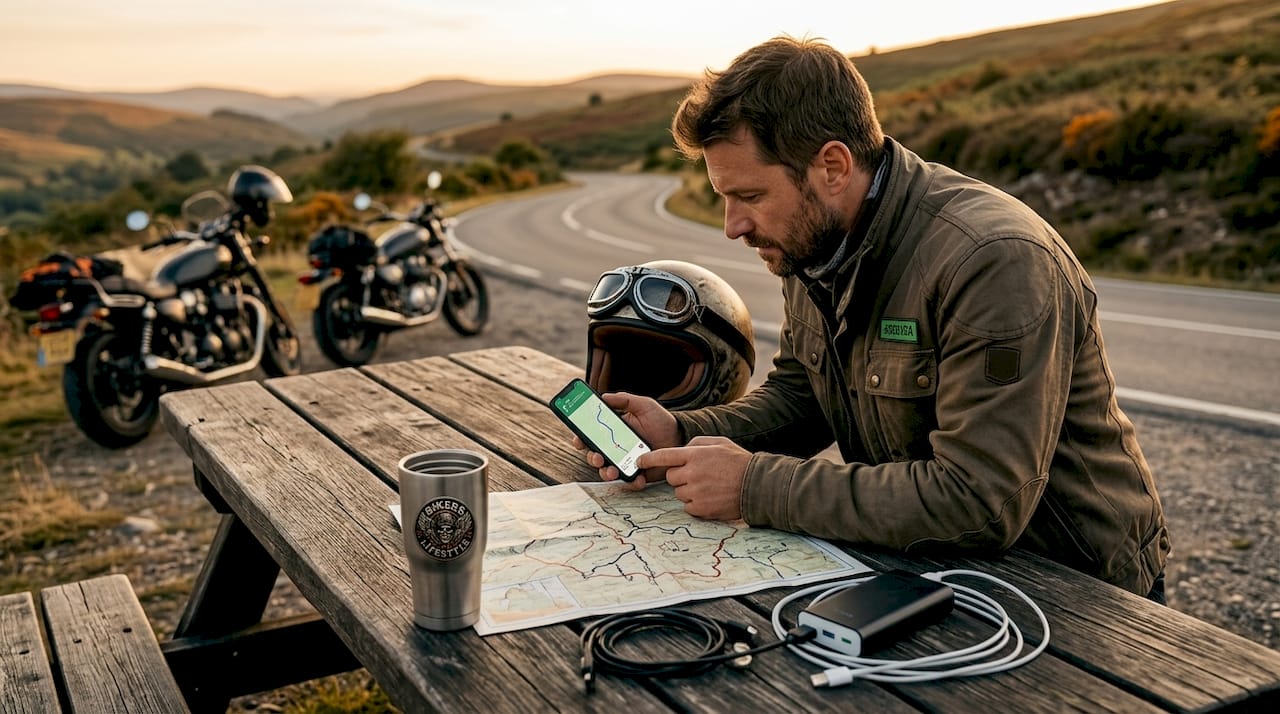
Digital route planners like REVER, Calimoto, and Kurviger offer turn-by-turn navigation, offline mapping, and GPX file management. That offline capability is not optional equipment. Cell coverage vanishes in mountain passes, rural stretches, and international corridors. Offline GPS with GPX track management keeps you on course when your signal drops to nothing.
The bigger leap in recent years has come from AI-assisted planning. AI-powered planners like Vroom GPS curate themed points of interest, arranging stops around history, gastronomy, scenic viewpoints, or adventure terrain. This is where tech genuinely outperforms the manual approach. When you plan by hand, you find the places you already know to look for. AI surfaces the ones you did not know existed.
Here is a direct comparison of planning approaches:
| Factor | Manual planning | Tech-assisted planning |
|---|---|---|
| Time investment | High (research, forums, maps) | Moderate (review and adjust suggestions) |
| Route personalization | Based on known preferences | AI-curated by theme or riding style |
| Offline reliability | Paper maps only | GPX tracks on dedicated apps |
| Community input | Forum digging | Built-in rider ratings and shared routes |
| Scenic discovery | Limited to known highlights | Broader, including hidden gems |
| Flexibility | Rigid without prep | Easy to reroute on the fly |
Community route sharing deserves its own mention. Platforms where riders upload and rate GPX tracks have become one of the most practical tools in any biker's planning kit. When a rider who has done the exact stretch of highway you are planning uploads a track with notes about road quality, fuel availability, and must-stop viewpoints, that information is worth more than any automated suggestion.
For planning a weekend route you'll love, start with a community-reviewed GPX track as your base, then layer in your own preferred stop types using an AI tool. That combination gets you the best of both approaches without hours of manual research.
Pro Tip: Always download offline maps before you leave your Wi-Fi zone. Even if your planned route has coverage, detours rarely do.
Safety and comfort inside route planning
Riders talk a lot about gear as the safety variable. Route planning is just as important, and it gets far less credit. The decisions you make on a map directly determine how tired, stressed, and exposed you will be once you are on the road.
Rest breaks are not optional. Experts recommend rest breaks every 2 hours and postural adjustments every 20 minutes on long rides. A 15-minute stop every two hours is not wasted time. It is what keeps you sharp through the last hour of a long riding day when most mistakes happen.
Here is what a safety-conscious route plan covers beyond just waypoints:
- Fuel buffers. Never plan to arrive at a fuel stop on fumes. In remote stretches, plan stops at the 60–70% tank-empty mark, not the warning light. Realistic fuel consumption estimates prevent breakdowns in locations where help is hours away.
- Night riding avoidance. Night riding creates hazards from unmarked potholes, animals on the road, and reduced visibility of pedestrians. Plan your daily segments to arrive at your destination before sunset, with a 30-minute buffer.
- Contingency budget. Most riders underestimate trip costs by 30–40%. A 15% contingency buffer on top of your projected spend covers the unexpected mechanical stop, the weather delay hotel night, and the permit fees nobody mentions online.
- Accommodation selection. Rider-friendly hotels and motels with covered or secured parking matter more than price per night. A locked, covered parking spot protects your bike and your peace of mind.
- Emergency contacts. Know where the nearest repair shops are along your planned corridor. If you are traveling internationally, verify that your insurance covers you in each country you enter.
Pro Tip: Screenshot your planned fuel stops and save them offline before you leave. If navigation fails in a remote area, you still know exactly where the next station is.
The mental side of comfort rarely shows up in planning guides. Decision fatigue is real. Long rides in unfamiliar territory require constant attention, and a route that packs too many demanding choices into a single day will grind you down faster than the miles will.
Building scenic and experiential routes that actually deliver
The most technically correct route is not always the best route. Scenic motorcycle rides deliver something that a fast direct line cannot: the feeling of being somewhere, not just passing through it.
Experienced tour guides recommend following world-class scenic highways as a baseline strategy for riders who want memorable routes without complex logistics. Routes like the Pacific Coast Highway, the Going-to-the-Sun Road in Montana, or the Blue Ridge Parkway exist in a category where professional tour guides use publicly available GPS tracks to make the most of every mile. What makes them special is not just the views. It is the cadence of curves, the elevation changes, and the density of worthwhile stops per mile.
Here is how to build a scenic route that holds up from start to finish:
- Choose a thematic filter first. Decide whether the trip centers on natural scenery, historical sites, food culture, or technical riding. That filter shapes every stop selection. A history-focused route through the American South looks nothing like a canyon-road technical ride through Arizona.
- Anchor around two or three signature stops. These are the moments the whole trip is built around. Everything else is context. Trying to make every stop a highlight is how you end up with a ride that feels scattered.
- Use AI tools for gap-filling. Once your anchors are set, AI route planners are excellent at surfacing lesser-known stops that fit your theme and connect your major waypoints without forcing detours.
- Leave room for community-recommended detours. Check Bikerslifestyle and rider forums for your corridor before you finalize the route. A single tip from a rider who did it last month can redirect you to a 20-mile stretch that beats everything you planned.
- Plan day segments around experiences, not just mileage. A 200-mile day through canyon roads with two worthwhile lunch stops is a better riding day than 400 miles of straight interstate. Build the segments around what you want to feel, not how far you want to go.
- Connect your route to local events. Mapping scenic routes like a pro includes checking what is happening along your corridor. A regional rally, a bike night, or a charity ride along your route turns a solo trip into a community experience without redirecting your whole plan.
The customizing tour itineraries principle applies directly to motorcycle touring. Every rider has a different version of the perfect day on a bike. Building a route that reflects your actual preferences, rather than copying someone else's highlight reel, is what separates a genuinely rewarding trip from one that looks great on paper and feels forgettable in real life.
My take on flexibility vs. over-planning
I have talked with enough riders and studied enough trip reports to say this with confidence: the most common mistake in motorcycle route planning is not under-planning. It is planning so tightly that the route stops being a ride and starts being a schedule.
I have seen riders stress through some of the most beautiful roads in the country because they were behind on a self-imposed itinerary. They blew past viewpoints because stopping would cost them a hotel deposit. They pushed into night riding, which is exactly the situation you want to avoid, because they had mapped themselves into a corner. Over-planning reduces trip enjoyment, and experienced riders have known this for years. The real skill is planning enough to be safe and comfortable, then stopping before you plan the life out of the trip.
What I find actually works is building a solid framework then leaving 20–30% of each day genuinely unscheduled. You know where you are sleeping. You know where your fuel stops are. You know your anchor experiences. Everything else is open. That open space is where the best stories come from.
Technology is a tool, not a co-pilot. The apps are excellent at surface-level optimization. They cannot tell you that the locals are gathering for a Sunday morning ride at the diner you just pulled into, or that the side road on your left leads to a viewpoint that will stop you in your tracks. Rider intuition, built from miles in the saddle, fills that gap. Use the apps, trust your GPX track, and then ride with your eyes open.
For Alpine motorcycle adventures or any technically demanding region, this balance matters even more. Over-reliance on navigation in mountainous terrain can put you on roads the app cleared but your bike cannot handle. Know your machine, know your limits, and let the route serve both.
— Trevor
Find your next ride on Bikerslifestyle
If you have done the planning work and you are ready to put it into action, Bikerslifestyle is built for exactly this moment. The platform connects riders with upcoming rallies, local riding groups, and scenic ride listings across the country, all searchable and built around your region and riding style.
Whether you are looking for a group ride or rally near you or want to sharpen your skills at an event like the ADV Riding Clinic at the Great Adventure Rally, Bikerslifestyle has the listings to match your next trip with the right community. For riders who want to ride with purpose, the Ride 4 Their Lives charity event brings together community and meaningful miles in the same weekend. Stop planning in isolation. The community, the routes, and the events are already there.
FAQ
How long does motorcycle route planning actually take?
Long-distance trips typically need 2–4 weeks of planning time, covering mapping, research, and booking. Weekend rides can be planned in a few days if you stay flexible on accommodations.
What are the best apps for motorcycle route planning?
Apps like REVER, Calimoto, and Kurviger offer turn-by-turn navigation, offline maps, and GPX track management, making them strong choices for both long-distance travel and weekend rides.
How often should I stop on a long motorcycle ride?
Experts recommend stopping every 2 hours for at least 15 minutes, with small postural adjustments every 20 minutes while riding to reduce fatigue and maintain focus.
How do I plan fuel stops on a motorcycle trip?
Plan stops every 150–200 miles rather than relying on your tank's theoretical range. Loaded touring bikes run 10–20% less efficiently than manufacturer estimates, especially in mountains or headwinds.
Should I leave free time in my motorcycle route plan?
Yes. Leaving 20–30% of each day unscheduled gives you room for weather changes, mechanical issues, and the kind of spontaneous detours that make trips memorable rather than stressful.