
TL;DR:
- Choosing the right motorcycle customization style depends on your riding needs, budget, and skill level, with bobbers, choppers, and cafe racers each offering distinct aesthetics and handling characteristics. Bobbers emphasize minimalism and are beginner-friendly, choppers feature radical frame modifications for bold looks, and cafe racers focus on speed and agility with performance-oriented designs. Ensuring legal compliance during customization is essential to avoid fines and unsafe conditions, and engaging with riding communities can provide valuable insight and inspiration.
Walk into any motorcycle rally and you'll see it immediately: two riders, same base model, completely different machines. That's the power of knowing your types of bike customization styles before you start spending money. The style you choose doesn't just change how your bike looks. It changes how it handles, how comfortable you are after two hours in the saddle, how much you'll spend, and whether it passes a roadside inspection. This guide walks you through the three dominant styles, how they compare, and exactly how to pick the one that fits your riding life.
Table of Contents
- How to choose a bike customization style: key criteria
- Bobbers: stripped-down vintage minimalism
- Choppers: radical custom builds with dramatic style
- Cafe racers: sleek, performance-driven minimalism
- Comparing bobbers, choppers, and cafe racers side by side
- Staying street legal: compliance tips for custom bike builds
- Which bike customization style is right for you?
- Why conventional wisdom on bike customization styles can mislead
- Explore biker events and communities to enhance your customization journey
- Frequently asked questions
Key Takeaways
| Point | Details |
|---|---|
| Customization affects riding experience | Choosing the right bike style impacts comfort, handling, and your personal expression on the road. |
| Bobbers offer simplicity | Bobbers feature minimal mods, moderate cost, and a vintage look suited for relaxed riding with good maneuverability. |
| Choppers prioritize style | Choppers demand extensive work, longer build times, and higher budgets to achieve their bold, stretched aesthetics. |
| Cafe racers focus on performance | Cafe racers balance lightweight design and aggressive ergonomics for speed and quick handling, often at comfort's expense. |
| Legal compliance is critical | Planning your customization with street-legal regulations in mind avoids costly fines and ensures safer riding. |
How to choose a bike customization style: key criteria
Before you buy a single part, get clear on how you actually ride. A weekend cruiser and a daily commuter need completely different builds. Riding needs and style should drive every decision, not the other way around.
Here are the core criteria to evaluate before committing to a direction:
- How you ride: Long highway miles, tight city streets, and weekend show-and-shine events each favor a different style.
- Ergonomics: Your height, weight, and physical comfort tolerance matter. An aggressive forward lean works at 25. It's punishing at 50.
- Budget: Styles range from a $300 DIY bobber refresh to a $30,000 professional chopper build.
- Maintenance appetite: Radical custom builds need more frequent attention and specialized knowledge.
- Street legality: Some modifications require compliance checks before you can legally ride them.
As style affects riding needs across comfort, speed, handling, and vintage feel, treating customization as purely decorative is a mistake riders make repeatedly.
Pro Tip: Before you research parts, write down three words that describe how you want your bike to feel to ride, not just how you want it to look. Those three words will filter out 80% of the wrong choices.
Once you're clear on your criteria, the three main styles become much easier to evaluate. Now that you understand the key factors that shape your choice, let's explore the core bike customization styles you can choose from.
Bobbers: stripped-down vintage minimalism
The bobber is the original American custom. Born out of post-World War II practicality, riders stripped their bikes down to reduce weight and improve performance on dirt tracks. The name comes from "bobbing" the rear fender, cutting it short so it just clears the tire.
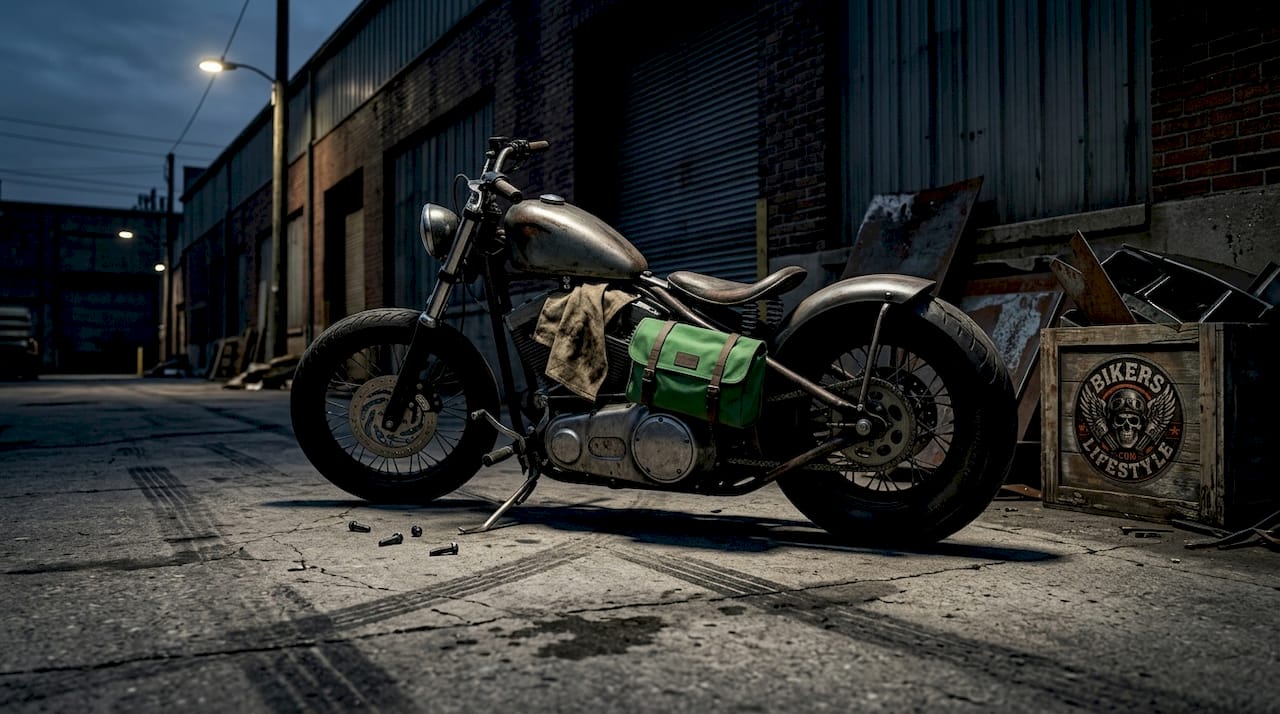
The bobber style emphasizes stripped-down styling with short rear fenders and solo seats, featuring a low, horizontal silhouette and an upright riding position that's comfortable for most body types.
Signature bobber elements:
- Bobbed (shortened) rear fender
- Solo sprung seat mounted low on the frame
- Drag bars, tracker bars, or low-rise handlebars
- Minimal or removed front fender
- Stock or near-stock frame geometry
- Blacked-out or raw metal finishes
What makes bobbers accessible is that the frame stays largely untouched. You're removing and replacing components, not rebuilding geometry. That keeps costs manageable and the project achievable for a motivated DIY builder.
| Element | Bobber approach | Cost range |
|---|---|---|
| Rear fender | Bobbed or removed | $50–$300 |
| Seat | Solo sprung seat | $100–$600 |
| Handlebars | Drag or tracker style | $80–$400 |
| Paint | Matte, flat, or bare metal | $200–$2,000 |
| Full build range | DIY to professional | $300–$5,000 |
Explore the bobber customization philosophy and you'll find a community that values function over flash, which is part of what makes the style endure across generations.
Pro Tip: If you're new to customization, start with a bobber. The learning curve is forgiving, the parts are widely available, and the results look intentional even on a modest budget. You can find solid donor bikes and bobber builds overview resources to get your project started.
Having covered the bobber style in depth, let's move on to another iconic and visually striking option: choppers.
Choppers: radical custom builds with dramatic style
If the bobber is about subtraction, the chopper is about transformation. Choppers emerged in 1960s California, and films like Easy Rider burned the silhouette into American culture. The defining feature is the extended front fork, which stretches the front end forward and creates that unmistakable long, low, raked profile.
Chopper builds feature extended forks, raked frames, and require major work that often costs $10,000 to $30,000 and takes months, producing a bold, stretched look that turns heads on any street.
Defining chopper characteristics:
- Extended front forks, often 4 to 12 inches over stock
- Raked frame geometry requiring professional modification
- Ape hanger or tall handlebars with feet-forward footpegs
- Stretched fuel tanks and custom bodywork
- Loud, custom exhaust systems
- Heavy visual presence built for attention
The riding experience is fundamentally different from a bobber. The stretched geometry creates a relaxed, feet-forward posture that feels natural on long, straight highways. Tight turns and city maneuvering are a different story. Choppers are not nimble machines.
The chopper customization philosophy is rooted in individuality. No two choppers look alike, and that's the point. But that individuality comes at a price, both financially and in build time.
Pro Tip: Never attempt a chopper frame modification without a professional fabricator. Incorrect rake angles directly affect steering stability at speed, and that's not a mistake you want to discover on the highway. Review chopper build guides before committing to a fabricator.
Next, we'll explore the third major style, famous for its speed and agile design: cafe racers.
Cafe racers: sleek, performance-driven minimalism
The cafe racer came out of 1950s and 1960s Britain, where young riders would race from cafe to cafe, timing their runs against the jukebox. The goal was simple: go fast, look fast. Every modification served that purpose.
Cafe racers prioritize speed, agility, and streamlined design with clip-on handlebars and rear-set footpegs producing an aggressive forward-lean posture that puts your weight over the front wheel.
Core cafe racer elements:
- Clip-on handlebars mounted low on the fork tubes
- Rear-set footpegs that push your body forward
- Elongated fuel tank with a knee-grip shape
- Humped or flat seat unit, often fiberglass
- Minimal bodywork for reduced weight
- Tuned engine with performance exhaust
The cafe racer trades comfort for responsiveness. In city traffic and on winding roads, the handling reward is real. On a four-hour interstate run, your back will remind you of every mile. Riders who gravitate toward performance-focused mods typically find the cafe racer the most rewarding style to build and ride.
With the basic styles explained, let's look at a side-by-side comparison to highlight their differences clearly.
Comparing bobbers, choppers, and cafe racers side by side
Here's how the three styles stack up across the factors that matter most to real riders:
| Factor | Bobber | Chopper | Cafe racer |
|---|---|---|---|
| Frame modification | Minimal | Extensive (professional) | Moderate |
| Front end | Stock or slightly modified | Extended forks, raked | Stock or lowered |
| Riding position | Upright, relaxed | Laid-back, feet forward | Aggressive forward lean |
| Handlebars | Drag or tracker | Ape hangers or tall | Clip-ons (low) |
| Build cost | $300–$5,000 | $10,000–$30,000 | $1,500–$8,000 |
| Build complexity | Low to moderate | High (pro required) | Moderate |
| City handling | Good | Poor | Excellent |
| Highway comfort | Good | Excellent | Poor |
| Street legality | Generally easy | Requires careful planning | Generally manageable |
The custom bike style comparison data tells a clear story. Bobbers are the most accessible entry point. Choppers deliver the most dramatic visual impact but demand the most resources. Cafe racers hit the sweet spot for riders who want performance and style without the complexity of a chopper build.
Key tradeoffs to keep in mind:
- Budget vs. impact: Choppers cost the most and take the longest, but nothing else commands the same attention.
- Comfort vs. performance: Cafe racers perform brilliantly but punish you on long rides. Bobbers balance both reasonably well.
- DIY vs. professional: Bobbers and cafe racers are realistic DIY projects. Choppers almost always require professional fabrication for the frame work.
Having compared the three main styles, we'll now explore how legality and safety influence your customization choices.
Staying street legal: compliance tips for custom bike builds
This is where a lot of builds go sideways. Riders spend months and thousands of dollars on a custom, then discover it won't pass inspection. Non-compliant modifications including illegal lights, excessive exhaust noise, or missing mirrors can result in fines, failed inspections, or impoundment, and lighting must meet FMVSS 108 federal standards.
"Plan your legal compliance at the same time you plan your style, not after the build is done."
Legal checklist for custom motorcycle builds:
- Lighting: Headlight must produce a white beam. Tail and brake lights must be red. Turn signals must be amber or red and visible from 500 feet.
- Exhaust: Noise limits vary by state, but most cap at 80 to 95 decibels. Removing baffles can push you over the limit.
- Mirrors: Most states require at least one mirror with a specific minimum field of view.
- Handlebars: Many states prohibit handlebars that position your hands above shoulder height.
- Tires: Non-standard tire sizes can affect speedometer accuracy and may fail inspection.
- Horn: Required in all 50 states. Easy to overlook on a stripped build.
Pro Tip: Pull your state's motorcycle equipment regulations before you finalize your parts list. A 30-minute read can save you from a $2,000 rework. Connect with modification safety advice from riders who've already navigated your state's requirements.
Understanding legal constraints, let's explore how you can select the best customization style for your unique needs and preferences.
Which bike customization style is right for you?
Apply these steps in order and your decision becomes straightforward:
- Define your primary use case. Daily commuter, weekend cruiser, or show bike? Each points to a different style.
- Set a hard budget. If your ceiling is $5,000, choppers are off the table. That's not a limitation, it's a useful filter.
- Assess your mechanical skills. Bobbers and cafe racers are realistic DIY builds. Choppers require professional fabrication unless you have serious fabrication experience.
- Consider your community. Different styles attract different riding cultures. Attend a few local events to see which crowd feels like yours.
- Plan for legality from day one. Research your state's requirements before you buy parts, not after.
Choosing your style ultimately depends on your riding habits, personality, comfort preference, and budget, all working together to enhance your riding experience and personal expression. There's no wrong answer if the choice is informed.
With these personalized criteria in mind, here is our unique perspective on the common wisdom about bike customization styles.
Why conventional wisdom on bike customization styles can mislead
Here's the uncomfortable truth most customization content won't tell you: the majority of riders choose a style based on a photo they saw online, then spend the next two years discovering why that style doesn't fit how they actually ride.
The conventional advice is "pick a style you love the look of." That's incomplete. Style decisions cascade into fitment and safety tradeoffs, and treating them as purely decorative risks expensive rework or unsafe conditions. A chopper that looks incredible in a photo handles nothing like a stock bike. If you ride in traffic daily, that matters enormously.
The other piece of wisdom that misleads people is the idea that you can mix elements freely across styles. You can, but only if you understand the system-level consequences. Swapping to clip-on handlebars changes your weight distribution, your braking leverage, and your fatigue level on long rides. It's not just an aesthetic swap.
Chopper builds require professional geometry setup and ongoing service due to complex frame changes that directly impact ride stability. Riders who skip professional help to save money often end up spending more to fix the result. That's not an argument against building a chopper. It's an argument for budgeting honestly and finding the right fabricator.
Our actual recommendation: ride a few examples of each style before you build. Attend rallies, connect with local riding groups, and ask owners for honest feedback. The insider customization advice you get from someone who's been riding their custom for three years is worth more than any article, including this one.
Explore biker events and communities to enhance your customization journey
Your build doesn't happen in isolation. The best inspiration, parts leads, and honest feedback come from the riding community around you.
At BikersLifestyle.com, you'll find everything you need to connect your customization passion with the broader riding world. Browse motorcycle events and groups to find upcoming rallies, swap meets, and scenic rides where you can see custom styles in person and talk to the builders directly. Join motorcycle groups in your area to find riders who share your style preferences and can point you toward trusted fabricators and parts sources. And don't miss events like the motorcycle swap meets in May, where you can score parts, get build advice, and see what the community is building right now.
Frequently asked questions
What are the main differences between bobber, chopper, and cafe racer customization styles?
Bobbers focus on stripped-down minimalism with bobbed fenders and solo seats; choppers feature extended forks and radical frame modifications for bold looks; cafe racers prioritize sleek, lightweight designs for speed and handling with aggressive riding positions. As motorcycle customization styles show, each carries a fundamentally different riding character beyond just appearance.
How much does it typically cost to build a chopper versus a bobber?
Choppers can cost $10,000 to $30,000 in professional shops and take months to complete, while bobbers are faster and lower-cost projects that ambitious DIY builders can complete for $300 to $5,000.
What legal considerations should I keep in mind when customizing my motorcycle?
You must follow regulations for lighting color and beam pattern, exhaust noise limits, mirror placement, and handlebar and tire sizes. Illegal lighting and non-compliant exhausts can cause fines and impoundment, with lighting required to meet FMVSS 108 federal standards.
Can I customize my bike for performance as well as appearance?
Yes. Modifications fall into appearance and performance categories, and both affect handling and safety, so style choices should account for these factors together rather than treating them separately.