
TL;DR:
- Biker meetups organize motorcycle riders to socialize, ride, or support causes through various event formats. Bike nights are the most accessible, low-pressure gatherings that foster organic networking and community building. Structured events like group rides, charity rides, and dealer functions challenge riders' skills and deepen their involvement in the riding community.
A biker meetup is any organized gathering where motorcycle riders come together to ride, socialize, or support a cause. The types of biker meetups available today span everything from low-key Thursday night bike nights at local dealerships to police-escorted charity rides covering 60 miles across multiple counties. Whether you are new to the riding community or a seasoned veteran looking to expand your social circle, understanding the different formats helps you find events that match your riding style, experience level, and schedule. Events like the HBOT4Heroes Ride 4 Their Lives and the Pike Peak Harley-Davidson H.O.G. 5 in 1 Poker Ride show just how structured and rewarding these gatherings can be.
1. What are bike nights and why are they the most popular meetup type?
Bike nights are recurring social events, typically weekly or monthly, held at restaurants, bars, or dealerships. They are the most accessible of all motorcycle club gatherings because they require no registration, no riding formation, and no prior club membership. You show up, park your bike in a designated area, grab a discounted meal, and talk to other riders.
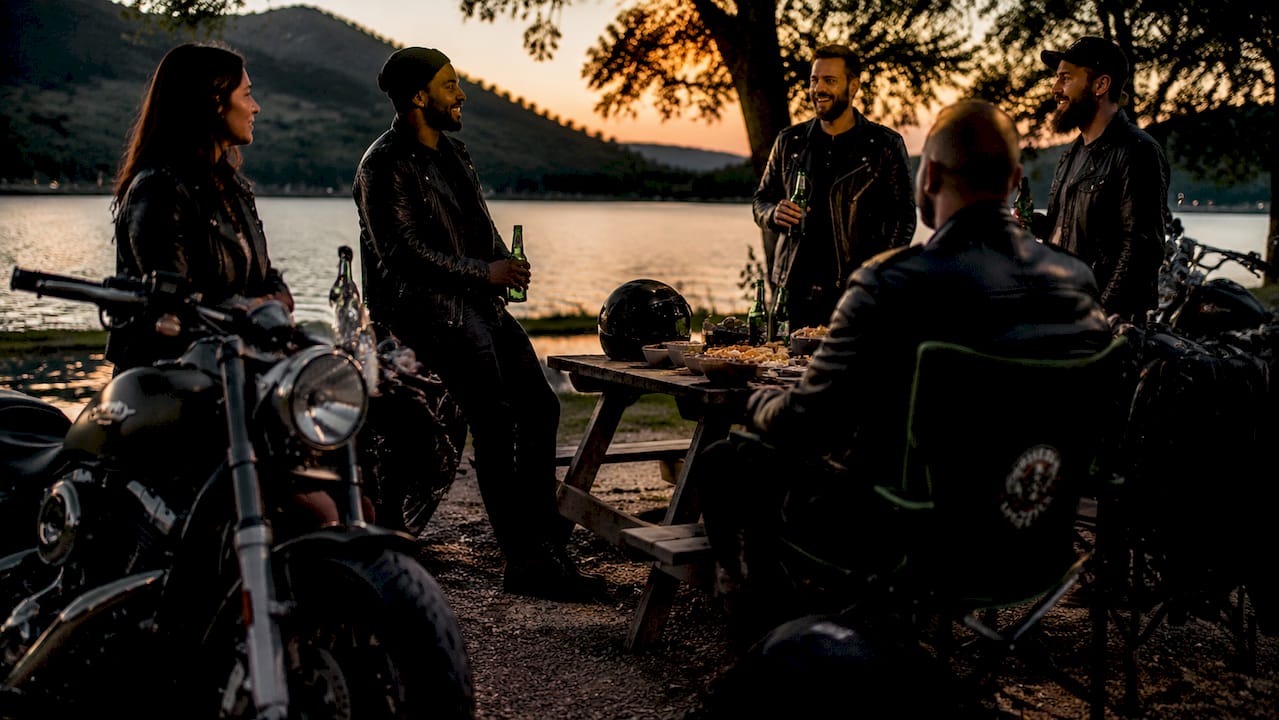
The format is deliberately low-commitment. Bike Night at Bubba's 33, hosted by Roanoke Valley Harley-Davidson, runs every Thursday from 5:30 to 7:30 pm and features designated bike parking, food discounts, and prize giveaways. That structure, two hours with clear perks and zero pressure, is exactly why bike nights draw consistent crowds week after week. Events like the TMC Bike Night Social and Riders Harley-Davidson Bike Night follow the same proven formula.
What makes bike nights particularly valuable is the organic networking they produce. You will meet riders from every background, riding style, and experience level in one relaxed setting. Conversations that start over a plate of wings often turn into group ride invitations, club memberships, or lifelong riding friendships.
- Typical duration: 2 to 3 hours
- Common perks: food discounts, giveaways, bike show judging, and vendor tables
- No registration required in most cases
- Held rain or shine at covered venues
Pro Tip: If you are new to the riding community, a bike night is the single best first step. You can observe the culture, ask questions without pressure, and leave whenever you want. Attend the same one three weeks in a row and you will already know a dozen riders by name.
2. How do group rides work and what makes them safe?
A group ride is a scheduled motorcycle event where a defined group of riders travels a planned route together, led by a designated lead rider and supported by a sweep rider at the back. The structure exists specifically to keep everyone safe and together, not just to look impressive on the road.
The San Francisco Tour de Bay Pre-Meet at Mel's Drive-In is a textbook example of how organized group rides operate. Breakfast begins at 7:30 am, the safety speech runs at 8:30 am, and lead riders are in position by 9:00 am. That 90-minute window before kickstands up (KSU) is not wasted time. It is where the ride actually gets built, through route review, hand signal practice, and rider introductions.
Safety formation is the backbone of every well-run group ride. The Montana Motorcycle Safety Foundation identifies staggered formation with one to two second following distances as the foundational safety standard for group motorcycling. Staggered riding gives each rider a clear sightline ahead and a buffer zone on both sides without spreading the group across the full lane width.
Pre-ride briefings cover riding formation, hand signals, and route overview before every departure. Skipping the briefing is not just bad etiquette. It is a safety risk for the entire group.
Here is what a standard group ride sequence looks like:
- Riders arrive at the designated meeting point 15 to 20 minutes early
- Lead rider conducts a safety briefing covering hand signals and formation rules
- Route overview is shared, including fuel stops and rest points
- Riders are assigned positions, with experienced riders near the front
- Sweep rider confirms all riders are ready before KSU
- The group departs in staggered formation at the designated time
- Post-ride gathering at the destination for food, conversation, and route recap
Pro Tip: Punctuality at group rides is non-negotiable. Arriving late means missing the safety briefing, which means you ride without knowing the hand signals or the route. Most lead riders will not hold the group for latecomers. Arrive early, not on time.
3. What are charity rides and poker runs, and how do they combine riding with fundraising?
Charity rides and poker runs are structured motorcycle events that combine long-distance riding with fundraising for a specific cause. They are among the most socially meaningful types of motorcycle communities in action, turning a day on the road into direct community support.
A charity ride typically features a police escort, a fixed route, and a start and finish point at a sponsor location. The HBOT4Heroes Ride 4 Their Lives is a 60-mile police-escorted ride starting and ending at Raging Bull Harley-Davidson in North Carolina, complete with live music and raffles. The escort and fixed route remove navigation stress entirely, letting riders focus on the experience and the cause.
Poker runs add a competitive layer. Riders stop at five or more checkpoints, drawing a playing card at each stop. The best poker hand at the end wins a cash prize. The Sturgeon Electric Charity Ride and Rally charges $35 per rider registration, runs five stops, and offers prizes up to $1,500. Prize winners must be present to claim their winnings, which means attendance at the ceremony is built into the event strategy for anyone playing to win.
| Feature | Charity Ride | Poker Run |
|---|---|---|
| Route structure | Fixed, often police-escorted | Multi-stop with checkpoints |
| Competitive element | None, participation-focused | Card draw at each stop, prizes for best hand |
| Entry fee | Donation-based or flat fee | Per-rider registration fee |
| Prize structure | Raffles and giveaways | Cash prizes for top poker hands |
| Duration | Half-day to full-day | Half-day to full-day |
| Community perks | Live music, food, raffles | Awards ceremony, post-ride rally |
Both formats share common features that make them standout biker rally events:
- Live entertainment at start and finish locations
- Food vendors and sponsor booths
- Raffle prizes and silent auctions
- Organized registration with rider kits or wristbands
- Strong charitable or community cause at the center
The fundraising angle also attracts riders who might not attend purely social events. Charity rides and poker runs pull in riders from across a region, which makes them excellent opportunities to meet people outside your usual riding circle.
4. What are adventure and skill-focused meetups, and who should join them?
Adventure meetups are organized rides designed around challenging terrain, mixed road surfaces, and skill development rather than socializing or fundraising. They attract riders who want to push their abilities on routes that include pavement transitions to dirt roads, fire roads, and elevation changes.
The South Coast BMW Riders Club ADV ride from Pioneertown to Big Bear is a clear example of how these events are structured. The route combines pavement and fire road sections, lists an intermediate skill level as the minimum requirement, and provides a GPX route file so riders can load the course onto their GPS before departure. A rider briefing covers the terrain transitions and pace expectations before the group moves out.
These meetups differ from casual group rides in one critical way: the route itself is the challenge. You are not riding to a destination and having lunch. You are testing your bike's capability and your own skill set across surfaces that demand active riding decisions at every turn.
- Skill level is stated upfront, typically beginner, intermediate, or advanced
- GPX files are provided for navigation on mixed terrain
- Rider briefings cover terrain type, pace, and turnaround options
- Participants are expected to have appropriate gear and tires for off-pavement sections
- Group size is often smaller to allow for tighter coordination on technical sections
Adventure meetups are also where types of motorcycle communities online become most useful. Forums, Facebook groups, and platforms like ADVrider.com are where these rides get organized, discussed, and recapped. The online community and the physical meetup reinforce each other constantly.
Pro Tip: Before joining an adventure ride, assess your skill level honestly against the listed difficulty. Riding a fire road on street tires at intermediate pace is a very different experience from doing it on dual-sport tires. Ask the organizer about surface conditions and tire recommendations before you commit.
5. How do dealer and club chapter events create a full-day biker experience?
Dealer and club chapter events are the most logistically complex of all motorcycle club gatherings. They combine elements of poker runs, group rides, and social events into a single structured day, often with multiple departure waves, registration packets, and formal awards ceremonies.
The Pike Peak Harley-Davidson H.O.G. 27th Annual 5 in 1 Poker Ride demonstrates exactly how these events scale. Departures run every 15 minutes to prevent congestion on the route, registration packets include route maps and player kits, and the event closes with poker-run awards and GPS route options for riders who want to navigate independently. Multi-wave departures at large chapter rides manage traffic flow and allow riders to select a departure group that matches their pace preference.
The registration packet is a detail worth noting. Receiving a physical kit with your route map, event swag, and player card at check-in signals a level of organization that builds rider confidence. You know the organizers have planned the day carefully, which makes the experience feel worth the entry fee.
| Aspect | Dealer/Club Chapter Events | Casual Group Rides |
|---|---|---|
| Organization level | High, with packets, waves, and awards | Moderate, with briefing and lead/sweep |
| Duration | Full day | Half-day |
| Entry requirement | Registration and fee | Usually free or donation |
| Competitive element | Poker scoring, awards | None |
| Community scale | Regional, draws large crowds | Local, smaller groups |
| Swag and perks | Event kits, prizes, post-ride gathering | Minimal |
The community-building value of these events comes from shared challenge. Riders who complete the same 80-mile route, collect cards at the same five stops, and sit down together for the awards ceremony share a specific experience that casual meetups cannot replicate. That shared reference point is what turns acquaintances into riding partners.
Key takeaways
The most rewarding biker meetup format depends entirely on what you want from riding: connection, challenge, purpose, or competition.
| Point | Details |
|---|---|
| Bike nights are the entry point | Low-commitment, no registration, and ideal for new riders building community connections. |
| Group rides require preparation | Attend the safety briefing, know the hand signals, and arrive early or risk missing the group. |
| Charity rides and poker runs serve dual purposes | They combine riding with fundraising, offering competitive elements and community entertainment. |
| Adventure meetups demand honest self-assessment | Skill level, tire type, and terrain familiarity all determine whether you belong on a given route. |
| Dealer events offer the most structured experience | Multi-wave departures, registration kits, and awards ceremonies make these full-day community events. |
Why the variety of meetup types actually matters
I have been covering the motorcycle community long enough to know that riders who stick to only one type of meetup tend to plateau, both socially and as riders. The person who only attends bike nights knows everyone at their local dealership but has never ridden with a sweep rider or navigated a fire road. The adventure rider who only does ADV meetups often misses the broader community that charity rides and club events build.
What I find genuinely underappreciated is how well each format serves a different rider need. Bike nights build your local network. Group rides teach you how to ride with others safely, which is a skill most solo riders never develop. Charity rides give you a reason to ride that goes beyond personal enjoyment, and that shift in motivation changes how the day feels. Adventure meetups push your technical limits in ways that flat highway rides simply cannot.
The riders I have seen build the richest community lives are the ones who rotate through formats. They show up to a bike night at the Motor Co one week, join a group ride the next, and sign up for a poker run when a good cause comes along. That variety keeps riding fresh and keeps the community connections growing in multiple directions at once.
My honest recommendation: pick one format you have never tried and commit to attending one event in that category before the end of the riding season. The discomfort of showing up somewhere new wears off within 20 minutes. The connections you make last much longer.
— Trevor
Find your next ride with Bikerslifestyle
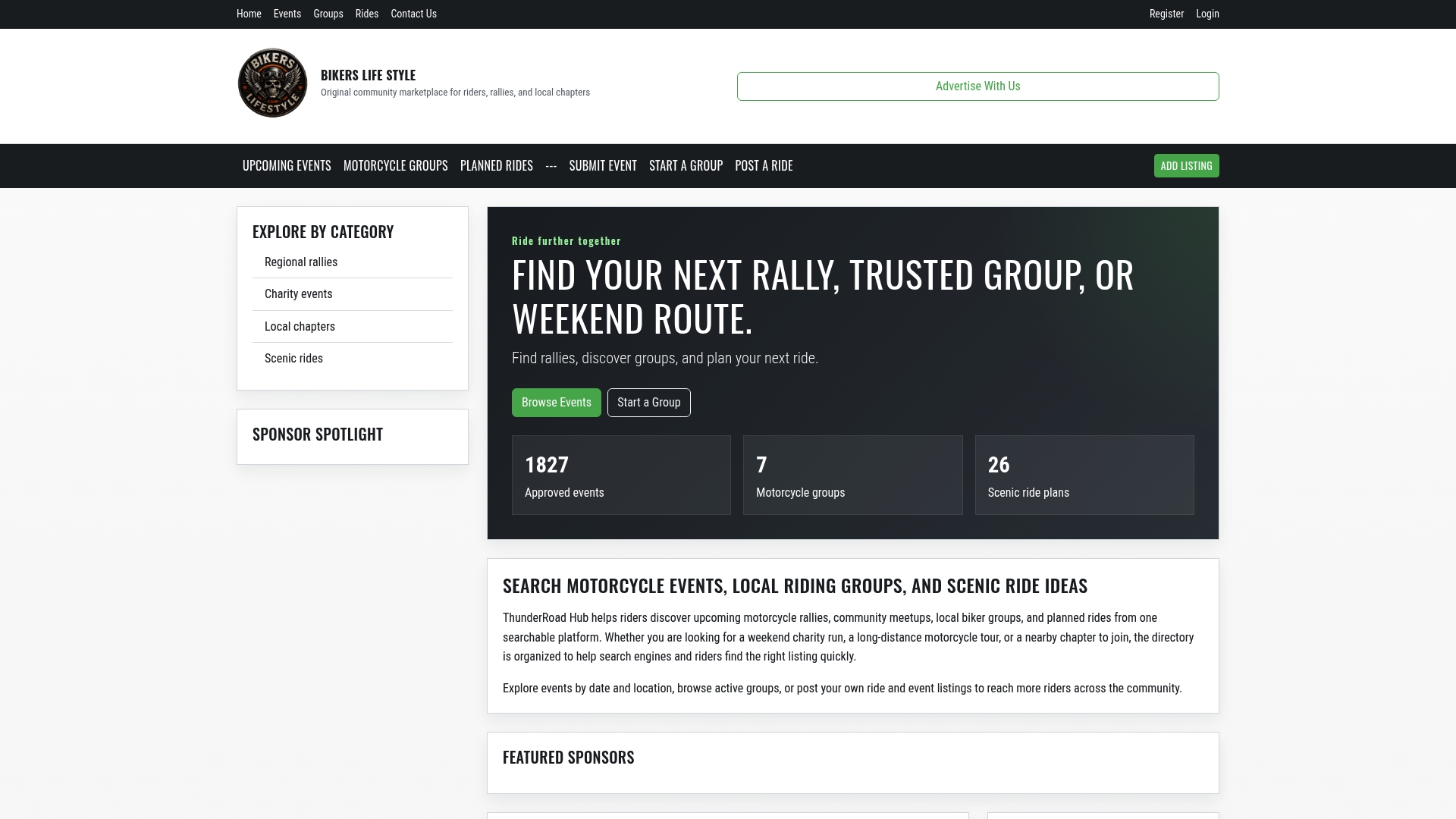
Bikerslifestyle is built specifically for riders who want to find the right event without spending hours searching across forums and social media. The platform lists motorcycle events and rides across every format covered in this article, from recurring bike nights and local group rides to charity poker runs and club chapter events. You can browse by event type, location, and date to find meetups that match your schedule and riding style. If you are looking for a cause-driven ride, the Ride 4 Their Lives page connects you directly to one of the most well-organized charity rides in the Southeast. Check the event calendar to see what is coming up in your area and get your spot secured before registration fills.
FAQ
What is a biker meetup?
A biker meetup is an organized gathering of motorcycle riders centered on riding, socializing, or supporting a cause. Formats range from informal weekly bike nights at dealerships to structured charity rides with police escorts and prize ceremonies.
What types of biker meetups are best for beginners?
Bike nights are the most beginner-friendly format because they require no registration, no riding formation, and no prior club membership. Events like Bike Night at Bubba's 33 offer a relaxed, low-pressure environment where new riders can meet the community at their own pace.
How do poker runs differ from standard charity rides?
Poker runs add a competitive card-draw element at multiple checkpoints, with cash prizes for the best poker hand at the end. Standard charity rides focus on participation and fundraising without a competitive scoring component.
What safety practices apply to group ride meetups?
The Montana Motorcycle Safety Foundation identifies staggered formation with one to two second following distances as the standard for group riding safety. Pre-ride briefings covering hand signals, route overview, and lead and sweep rider assignments are required at well-organized group rides.
How do I find biker meetups near me?
Platforms like Bikerslifestyle maintain searchable event calendars listing upcoming motorcycle rallies, group rides, bike nights, and charity events by location. Dealer websites, H.O.G. chapter pages, and local riding club forums are also reliable sources for regional meetup schedules.