
TL;DR:
- The biker code of conduct is an unwritten set of principles emphasizing respect, loyalty, and mutual aid among motorcycle riders. It uniquely influences rider behavior on and off the road, fostering a community based on shared values rather than formal rules. Living this code through consistent, respectful actions ensures genuine acceptance and continuation of biker culture.
The biker code of conduct is a set of unwritten ethical principles governing how motorcycle riders treat each other, behave on the road, and represent their community. Known more formally as the Biker's Code, it centers on five core values: respect, loyalty, integrity, mutual aid, and personal responsibility. These principles are not written into any single document. They are passed down through experience, observation, and the culture of riding itself. Understanding this code is the difference between being tolerated in a biker community and being genuinely welcomed into it.
What is the biker code of conduct and why does it exist?
The Biker's Code exists because motorcycle culture developed outside mainstream social structures. Historically, biker culture arose as a social contract among groups who relied on loyalty and mutual protection rather than institutional support. That origin shaped a culture where your word, your reliability, and your actions toward fellow riders carry more weight than any title or patch.
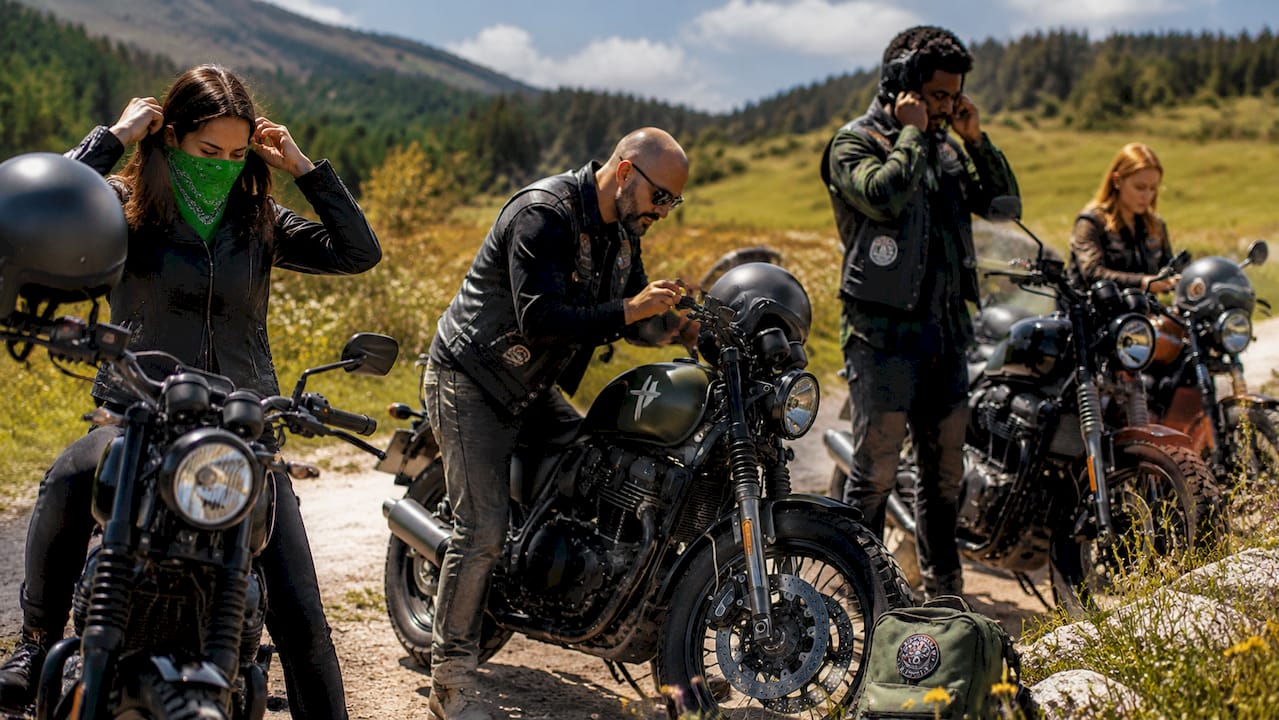
The code is not exclusive to outlaw clubs or one-percenters. Riders across touring groups, sport bike communities, and charity riding organizations recognize the same core principles. What varies is how strictly they are enforced and how formally they are expressed. A weekend touring rider and a club member may follow the same unwritten rules without ever having met.
Respect is the foundation of the Biker's Code, earned through actions and loyalty rather than demanded outright. This is a critical distinction. You cannot walk into a biker gathering and command respect based on the bike you ride or the gear you wear. You earn it by showing up, following through, and treating others the way the code demands.
What are the key principles of the biker code of conduct?
The core principles of the Biker's Code function like a moral framework. Each one addresses a specific dimension of how riders relate to each other and to the broader world.
Respect operates on three levels: respect for fellow riders, respect for others on the road, and respect for your own machine. Treating another rider's bike as sacred property, giving space in traffic, and maintaining your motorcycle in proper working order all fall under this principle. A poorly maintained bike is not just a safety risk. It signals that you do not take the responsibility of riding seriously.
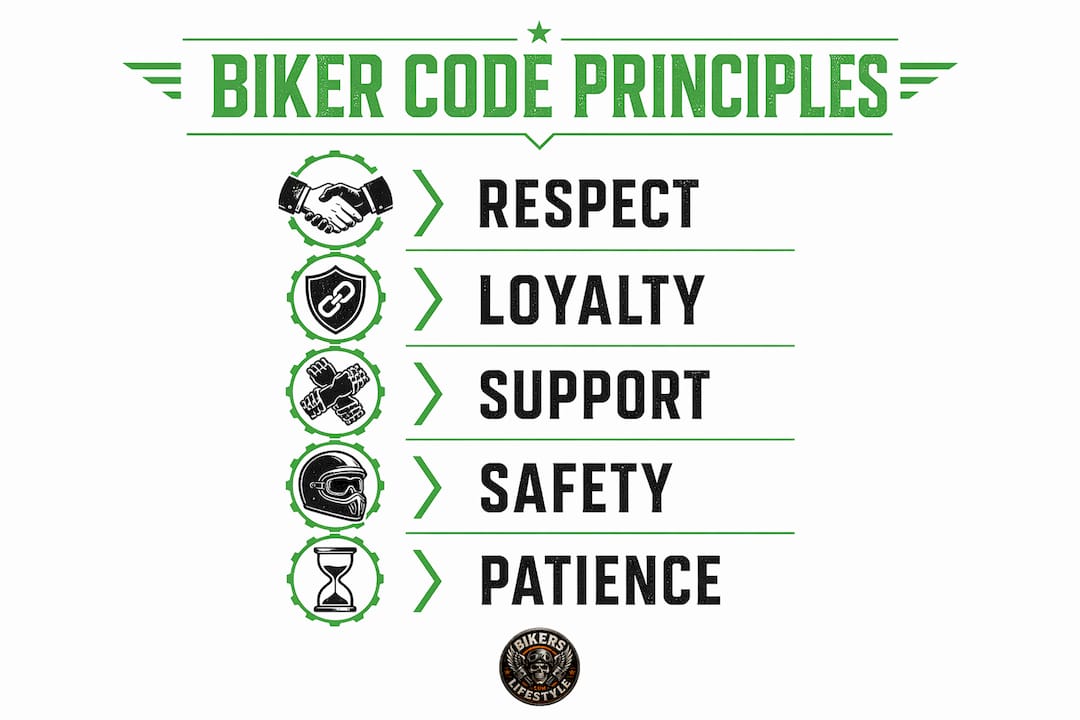
Loyalty and brotherhood mean you do not abandon a fellow rider. Mutual support is a core tenet of the Biker's Code, and departing from it is widely considered a breach of brotherhood. If you pass a stranded rider on the road without stopping to check, you have broken one of the code's most fundamental rules. This applies regardless of club affiliation, bike brand, or riding style.
Integrity covers keeping your word, not lying, and not betraying confidences. In biker culture, a person who gossips, exaggerates, or breaks promises loses credibility fast and rarely recovers it. The community is smaller and more connected than outsiders assume.
The remaining principles break down as follows:
- Attitude: No whining, no making excuses, and no expecting others to solve your problems. You handle your own business and support others when they need it.
- Standing your ground: You do not back down from your values under social pressure, but you also do not pick unnecessary fights.
- Helping others regardless of affiliation: If a rider is in trouble, you stop. Club colors, brand loyalty, and personal history do not factor into that decision.
- Representing the community well: Every rider is an ambassador. How you behave in public shapes how non-riders perceive the entire motorcycle community.
Pro Tip: When you are new to a group, demonstrate the code through small actions first. Show up on time, keep your bike road-ready, and offer help before you ask for it. These signals communicate more than any introduction.
How does the unwritten biker code differ from formal motorcycle club rules?
The Biker's Code is cultural and universal. Formal motorcycle club rules are structural and specific. Understanding the difference prevents a lot of confusion and social friction, especially for newcomers.
The unwritten code applies to any rider, anywhere. It requires no membership, no initiation, and no dues. Formal club rules, by contrast, govern the internal operations of a specific organization. They cover membership requirements, officer roles, meeting procedures, disciplinary processes, and voting rights. Violating the unwritten code damages your reputation. Violating club bylaws can get you removed from the organization entirely.
| Dimension | Unwritten biker code | Formal club rules |
|---|---|---|
| Who it applies to | All riders universally | Club members only |
| How it is enforced | Social pressure and reputation | Bylaws, votes, and officer decisions |
| Where it is documented | Nowhere. Passed through culture | Written bylaws and constitutions |
| Core focus | Ethics, respect, mutual aid | Membership, hierarchy, and meetings |
| Flexibility | Evolves with culture | Amended through formal votes |
Formal motorcycle clubs use structured meeting protocols adapted from parliamentary procedure to run orderly meetings, manage votes, and sustain respect within membership. This structure prevents the kind of emotional decision-making that tears organizations apart. Officer roles are clearly defined, annual membership is tracked, and disputes go through a process rather than erupting into personal conflict.
Resources like Robert's Rules for Motorcycle Clubs, published by Black Dragons Gear, adapt parliamentary protocols specifically for club environments. These tools exist because even the most brotherhood-driven organization needs structure to survive long-term. The Retreads International bylaws are a public example of how clubs codify everything from officer elections to the process for removing a member.
For newcomers, the practical takeaway is this: learn the unwritten code first. It applies everywhere and earns you baseline credibility. Then, if you join a club, learn that club's specific rules without assuming they mirror what you have seen elsewhere. Every club has its own culture layered on top of the universal code. Understanding motorcycle club hierarchy before you walk into a meeting saves you from making avoidable mistakes.
What riding behaviors and etiquette embody the code on the road?
Practical riding behavior is where the Biker's Code becomes visible. How you ride in a group, how you communicate with other riders, and how you respond to situations on the road all signal whether you understand and respect the code.
Group riding has its own set of non-negotiable standards:
- Ride in staggered formation. Staggered formation with two-second gaps between riders maximizes visibility and reaction time. The lead rider takes the left third of the lane; the second rider takes the right third, one position back. This is not optional in organized group rides. It is the standard.
- Respect the lead and sweep roles. The lead rider sets the pace and navigates. The sweep rider at the back ensures no one is left behind. Do not pass the lead. Do not fall so far back that the sweep loses sight of you.
- Use hand signals and helmet taps. Helmet taps and hand signals are widely recognized non-verbal communications used to warn of hazards, signal police presence, or indicate a stop. Learning these signals before your first group ride is not optional. It is basic preparation.
- Stop for stranded riders. If you see a motorcycle pulled over on the side of the road, slow down and check. A quick thumbs-up exchange confirms they are fine. If they are not, you stay.
- Control your noise in residential and urban areas. Aggressive behaviors like revving engines in city centers damage the image of all bikers. Being loud on an open highway is part of the culture. Being loud outside a hospital at 2 a.m. is not.
- Ride your own ride. Do not let peer pressure push you beyond your skill level. Keeping up with faster riders by taking risks you are not ready for endangers everyone in the group, not just yourself.
Pro Tip: Before any group ride, attend the pre-ride meeting. This is where the route, hand signals, fuel stops, and emergency protocols are covered. Skipping it signals that you do not take the group's safety seriously.
Off the bike, the code continues. How you talk about riding, how you treat non-riders who ask questions, and how you represent the community in public spaces all matter. Good manners and cooperative communication among riders directly improve road safety outcomes and the public perception of motorcycle culture. You are always representing something larger than yourself.
Understanding why bikers ride in formation goes beyond safety mechanics. It reflects the code's emphasis on collective responsibility and mutual awareness.
How can newcomers earn respect by living the biker code?
Earning respect in a biker community takes time, and the process is straightforward if you approach it honestly. The biggest mistake newcomers make is trying to accelerate it.
Newcomers are advised to listen and observe rather than speak prematurely, because misunderstanding internal politics leads directly to social friction. Every group has its own history, inside references, and unspoken hierarchies. Walking in with opinions before you understand the context marks you as someone who does not respect the culture.
The specific behaviors that build credibility include:
- Never touch another rider's bike without permission. Not sitting on or touching someone else's bike without permission is one of the most universally respected boundaries in biker culture. Violating it, even accidentally, creates immediate friction that takes time to repair.
- Show up consistently. Reliability is currency. Riders who appear at every group ride, every charity event, and every meeting build trust faster than those who show up occasionally with big personalities.
- Ask questions privately, not publicly. If you do not understand a rule or a tradition, ask someone you trust in a one-on-one setting. Questioning group norms in front of the whole group reads as a challenge, not curiosity.
- Ride at your actual skill level. Pretending to be a more experienced rider than you are is dangerous and obvious. Experienced riders can read skill level within the first few miles. Honesty about where you are earns more respect than false confidence.
- Follow through on commitments. If you say you will be at a ride, be there. If you cannot make it, communicate early. Ghosting on commitments is one of the fastest ways to lose standing in any riding group.
The biker brotherhood guide from Bikerslifestyle explains how the social contract of riding developed over decades and why these behavioral expectations are not arbitrary. They exist because the community depends on them to function safely and cohesively.
Patience is not passive. It means actively demonstrating the code through small, consistent actions while resisting the urge to demand recognition before you have earned it. The riders who integrate most successfully are the ones who treat the code as a genuine set of values rather than a checklist to perform.
Key takeaways
The Biker's Code is a living social contract built on respect, loyalty, and mutual aid, and it governs rider behavior more powerfully than any written rule ever could.
| Point | Details |
|---|---|
| Respect is earned, not given | Demonstrate reliability and integrity through consistent actions before expecting recognition. |
| Mutual aid is non-negotiable | Stopping for a stranded rider is a core obligation regardless of club affiliation or brand loyalty. |
| Unwritten code vs. club rules | The universal code applies to all riders; formal bylaws govern specific club operations and membership. |
| Group riding etiquette | Staggered formation, hand signals, and respecting lead and sweep roles are safety-critical standards. |
| Newcomer integration | Listen first, never touch another rider's bike, and build credibility through consistent presence. |
The code is the culture: my honest perspective on what it means today
I have spent years around motorcycle communities, and the one thing that consistently separates riders who thrive in those spaces from those who wash out is whether they treat the code as a genuine value system or a social performance. You can spot the difference within a few rides.
The comparison to modern knighthood is not hyperbole. The Biker's Code functions as a social contract in the truest sense. It asks you to protect people who cannot protect themselves, keep your word when it costs you something, and show up for your community without keeping score. Those are not easy standards. They are demanding ones, which is exactly why the community respects people who meet them.
What I find most interesting about the code in 2026 is how it is holding up against the influx of newer riders who came to motorcycling through social media and lifestyle branding. Some of them arrive with the aesthetic but not the substance. The community notices. The riders who stay and build real standing are the ones who eventually set the Instagram aside and start showing up for the unglamorous parts: the early morning charity rides, the roadside breakdowns, the meetings where nothing exciting happens but decisions get made.
The code also evolves. The core values are fixed, but their expression changes with each generation of riders. Women, younger riders, and people from communities that were historically excluded from biker culture are reshaping what brotherhood looks like without abandoning what it means. That is not a threat to the tradition. It is the tradition working as intended, because the code was never about who you are. It was always about how you act.
— Trevor
Find your community and live the code
Reading about the Biker's Code is the starting point. Living it means riding with people who hold the same values, showing up to events where the culture is real, and finding the groups that match your riding style and your standards. Bikerslifestyle connects riders with motorcycle rallies, riding groups, and scenic routes across the country, making it straightforward to find communities where the code is practiced, not just talked about. Check the events calendar for upcoming rides and rallies near you, or browse scenic ride listings to plan your next group outing with riders who get it.
FAQ
What is the biker code of conduct in simple terms?
The biker code of conduct is an unwritten set of ethical principles that guides how motorcycle riders treat each other and behave on the road, centered on respect, loyalty, mutual aid, and integrity. It is not written in any single document but is passed down through biker culture and community experience.
Is the biker code the same as motorcycle club rules?
No. The biker code is a universal cultural standard that applies to all riders informally, while motorcycle club rules are formal bylaws that govern a specific club's membership, hierarchy, and meetings. Every club member follows the general code, but club rules add a structured layer on top of it.
Why do bikers stop for stranded riders?
Stopping for a stranded rider is one of the most fundamental obligations in the Biker's Code. Mutual support is a core tenet of biker culture, and passing a fellow rider in trouble without checking is widely considered a serious breach of brotherhood, regardless of club affiliation.
What is the most important rule for newcomers in biker communities?
Listen more than you speak and never touch another rider's bike without permission. These two behaviors signal respect for the community's culture and boundaries, which is the foundation of earning credibility as a new rider.
How do hand signals fit into the biker code?
Hand signals and helmet taps are practical expressions of the code's emphasis on collective safety and mutual awareness. They communicate hazards, police presence, and group instructions without words, and knowing them before a group ride is a basic sign of preparation and respect for your fellow riders.