
TL;DR:
- A motorcycle rally is a large event that combines organized riding, social gathering, and motorcycle culture celebration, attracting hundreds of thousands at major festivals. These rallies feature activities like group rides, bike shows, live music, and vendor markets, creating a temporary community centered on shared values of freedom and fellowship. Preparation and respecting community norms are essential for first-timers to enjoy the diverse formats and vibrant atmosphere of these gatherings.
A motorcycle rally is a large gathering of riders and enthusiasts organized around shared riding culture, community celebration, and events that range from small local meetups to massive multi-day festivals drawing hundreds of thousands of people. The term "rally" is the widely accepted industry standard, though you'll also hear "motorcycle meet" or "moto gathering" used interchangeably for smaller, informal versions of the same concept. Iconic events like the Sturgis Motorcycle Rally in South Dakota and Laconia Motorcycle Week in New Hampshire define what a large-scale rally looks like: 10 days of riding, music, bike shows, and community celebration. Whether you've never attended one or you're trying to understand what the culture is really about, this guide covers the full picture.
What is a motorcycle rally, and what makes it different from a regular ride?
A motorcycle rally is defined by its combination of organized riding, social gathering, and cultural expression. It's not just a group ride. Rallies create a dedicated space where the motorcycle lifestyle becomes the entire event, not just the transportation. The culture centers on freedom, rebellion, and fellowship through group rides and shared presence, making rallies function more like symbolic pilgrimages than simple outings. That distinction matters because it explains why people travel across the country, or the world, just to be in the same place at the same time on two wheels.
The motorcycle rally explained simply: riders converge on a location, participate in organized and informal activities, and spend time with a community that shares their values. A regular group ride ends when you get home. A rally creates a temporary world built entirely around motorcycle culture. That's the core difference, and it's why first-timers often describe attending their first rally as a genuinely life-changing experience.
What to expect at a motorcycle rally: activities, scale, and atmosphere
The range of activities at a motorcycle rally is wider than most newcomers expect. Large events like Sturgis and Laconia span 7 to 10 days and pack in an enormous variety of programming. Smaller local meets might run a single afternoon but still deliver the same core experience in a compressed format.
Here's what you'll typically find at a mid-to-large rally:
- Group rides: Organized routes through scenic roads, sometimes led by clubs or event organizers, are the centerpiece of most rallies. These rides range from casual cruises to challenging mountain routes.
- Bike shows and competitions: Custom builds, vintage restorations, and factory bikes compete for awards. Shows like the ones at Sturgis attract builders from across the country who spend months preparing their entries.
- Live music: Major rallies feature multiple stages with national and regional acts performing across the full event duration. Music runs from classic rock to country to blues, reflecting the broad demographic of riders.
- Vendor markets and swap meets: Gear, apparel, parts, and accessories fill rows of vendor stalls. Motorcycle swap meets are a specific rally format built entirely around buying, selling, and trading motorcycle parts and memorabilia.
- Racing and stunt shows: Hill climbs, flat track racing, and professional stunt demonstrations appear at larger events and draw crowds even from non-riders.
- Food and social spaces: Bars, food vendors, and communal gathering areas create the social fabric that holds everything together between scheduled events.
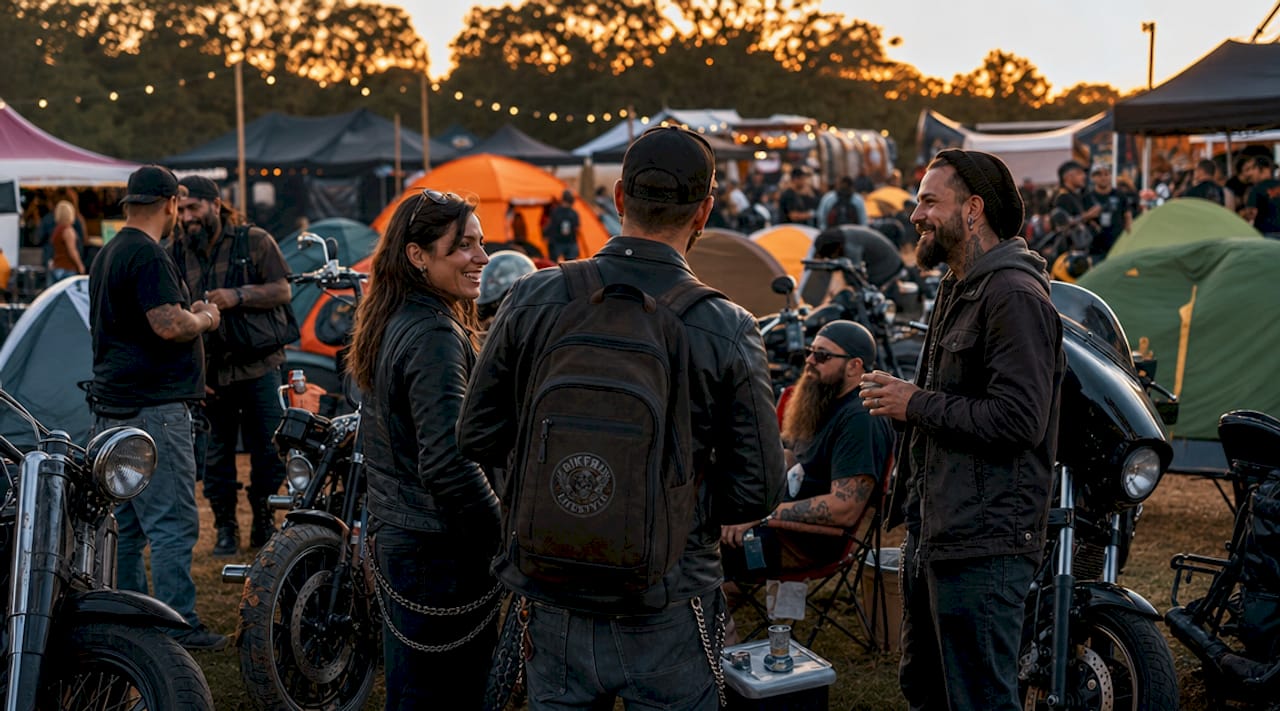
The atmosphere at a rally is unlike most other public events. There's a shared understanding among attendees that everyone present has made a deliberate choice to be part of this culture. Inclusivity at rallies is increasing, with many attendees who don't own motorcycles attending for the social atmosphere, music, and food. That shift has made rallies more accessible without diluting the riding culture at their core.
Pro Tip: If you're attending your first rally, arrive on a weekday rather than the opening weekend. Crowds are smaller, parking is easier, and you'll have more time to explore vendor areas and talk to people without the chaos of peak attendance.
What are the different types of motorcycle rallies?
Not all rallies follow the same format. Understanding the differences helps you choose the right event for your experience level and interests.
| Rally type | Scale and format | Best known examples | What makes it distinct |
|---|---|---|---|
| Large annual festival | 7 to 10 days, 100,000 to 500,000+ attendees | Sturgis, Laconia Motorcycle Week | Full programming, national acts, major vendor presence |
| Regional rally | 2 to 4 days, 5,000 to 50,000 attendees | State-level charity rides, regional club events | More intimate, stronger local community feel |
| Informal motorcycle meet | Single day or weekend, 50 to 500 riders | Nuremberg Motorcycle Meet, local bike nights | No official organizer, organic gathering culture |
| Motorcycle camping rally | Multi-day, camping-centered | Various club-organized camping events | Overnight stays, campfire culture, extended community time |
| Swap meet rally | Single day or weekend, vendor-focused | Long Beach Motorcycle Swap Meet | Buying, selling, and trading parts and gear |
Motorcycle rallies range from informal meets of 50 to 500 local riders to massive annual events with hundreds of thousands of attendees. That range is not just about size. It reflects fundamentally different experiences. A motorcycle camping rally, for example, creates a slower, more personal atmosphere where riders share campsites, cook together, and spend evenings around fires talking about bikes and roads. A massive festival like Sturgis operates more like a city that appears for 10 days and then disappears.
The Nuremberg Motorcycle Meet is a useful example of the informal meet format. It grew to 25,000 participants without any official organizer, driven entirely by word of mouth and tradition. That kind of organic growth is common in motorcycle culture, but it also creates friction when local governments respond with ordinances on vending and noise. Understanding which type of rally you're attending shapes everything from your packing list to your expectations.
For riders in the western United States, California motorcycle rallies span all of these formats, from large organized festivals in the Central Valley to informal coastal meets that have run for decades on nothing but community momentum.
Motorcycle rally etiquette and community culture explained
Motorcycle rally culture operates on a set of unwritten rules that experienced riders understand intuitively. First-timers who ignore these norms don't just inconvenience others. They mark themselves as outsiders in a community that values respect above almost everything else.
The core cultural values are freedom, fellowship, and mutual respect. These aren't abstract ideals. They translate into specific behaviors that define how people interact at rallies.
- Respect the parking hierarchy. Motorcycles park in designated areas, and how you park matters. Don't block other bikes, don't park in a way that makes it hard for others to exit, and never touch another person's bike without permission. That last rule is absolute.
- Keep noise in context. Revving engines in campgrounds at 2 AM is not a celebration of motorcycle culture. It's a violation of the shared space. Most rallies have quiet hours, and experienced riders follow them without being asked.
- Engage with vendors honestly. Vendor stalls at rallies are small businesses. Browsing is welcome, but if you spend 20 minutes asking questions about a product you have no intention of buying, you're taking time from paying customers.
- Don't assume everyone rides. Many attendees come for the atmosphere, music, and community rather than the riding itself. Treating non-riders as lesser participants misreads what rallies have become.
- Learn the club patch etiquette. Motorcycle club patches, particularly three-piece patches worn by outlaw clubs, carry specific meaning. Don't touch, comment on, or photograph patches without invitation. This is a safety consideration as much as a cultural one.
Pro Tip: Before attending a rally associated with a specific motorcycle club or organization, spend 30 minutes reading about that club's culture and history. Knowing the difference between an AMA-sanctioned event and an independent club rally changes how you dress, how you interact, and what you can expect from the atmosphere.
The road camaraderie that defines motorcycle culture reaches its peak expression at rallies. Strangers become temporary neighbors. Riders who've never met share tools, directions, and stories. That culture is real, but it requires participants to show up with the right attitude.
How to get involved and what to bring to your first rally
Preparation separates a great rally experience from a frustrating one. Logistics like camping noise levels and parking require planning, and first-timers consistently underestimate how much the practical details affect their enjoyment.
Start with registration and timing. Many larger rallies don't require pre-registration for general attendance, but camping spots, guided rides, and special events often sell out months in advance. Check the rally registration process early and book accommodations or camping before you finalize travel plans.
Your packing list should include:
- Cash in small bills. Many vendors at swap meets and rally markets accept only cash, and ATMs at large events run out of money quickly. Bring more than you think you'll need, in denominations of $5 and $20.
- Rain gear. Multi-day outdoor events get rained on. Packing a quality rain suit takes 10 minutes and saves a miserable afternoon.
- Ear protection. Extended exposure to live music stages and open pipes causes real hearing damage. Foam earplugs cost almost nothing and make the experience more enjoyable, not less.
- A basic tool kit. For riders, carrying a small kit with tire plugs, zip ties, and basic hand tools is standard practice. Breakdowns happen, and the community will help, but having your own tools is faster.
- Sunscreen and hydration. Outdoor rallies in summer heat are physically demanding. Dehydration and sunburn are the two most common reasons people cut their rally experience short.
For swap meets specifically, arriving at gate opening secures the best parking and first access to parts. The best finds go early, and experienced swap meet regulars treat the opening hour as non-negotiable. A detailed rally packing checklist covers the full range of gear and supplies worth bringing for different rally formats.
Safety at rallies comes down to two things: riding within your skill level on group rides and staying aware of your surroundings in crowded vendor areas. Large rallies attract a full cross-section of society, and the vast majority of attendees are there for the same reasons you are. Situational awareness and common sense handle the rest.
Key takeaways
A motorcycle rally is defined by its combination of riding culture, community gathering, and shared values. The format, size, and activities vary widely, but the core experience remains consistent across all types.
| Point | Details |
|---|---|
| Core definition | A rally combines organized riding, social gathering, and cultural expression in one dedicated event. |
| Scale varies dramatically | Events range from 50-person local meets to festivals drawing over 300,000 attendees like Laconia. |
| Multiple rally formats exist | Camping rallies, swap meets, informal meets, and large festivals each offer a distinct experience. |
| Etiquette is non-negotiable | Respecting bikes, noise rules, and club culture determines how you're received by the community. |
| Preparation drives enjoyment | Cash, timing, registration, and packing decisions directly affect your first-timer experience. |
Why rallies are more than just a gathering of bikes
I've been around motorcycle culture long enough to watch rallies evolve from events that felt exclusive and intimidating to gatherings that genuinely welcome anyone curious about the lifestyle. That shift is real, and it matters. But I've also watched first-timers show up unprepared and spend their first rally frustrated by logistics they could have solved with 20 minutes of research.
The thing most articles get wrong about rallies is framing them purely as entertainment. They're not. The best rallies function as a temporary community where people who spend most of their lives scattered across highways and time zones find each other in one place. The rides are great. The music is loud. The bikes are extraordinary. But what people remember years later is the conversation they had at 11 PM with a stranger who turned out to know the same mountain road they'd been riding alone for a decade.
Rallies are also getting more diverse in ways that strengthen the culture rather than dilute it. Women riders, newer riders, and riders from backgrounds that weren't historically represented at large events are showing up in growing numbers. That's not a threat to the culture. It's the culture doing what it was always supposed to do: make room for anyone who loves the road.
My honest advice for a first-timer is this: go with a plan, but leave room for the plan to fall apart. The best rally moments are rarely the ones on the schedule.
— Trevor
Find your next rally with Bikerslifestyle
Ready to put this into practice? Bikerslifestyle connects riders with motorcycle events, riding groups, and scenic rides across the country, from large annual festivals to local swap meets and charity rides.
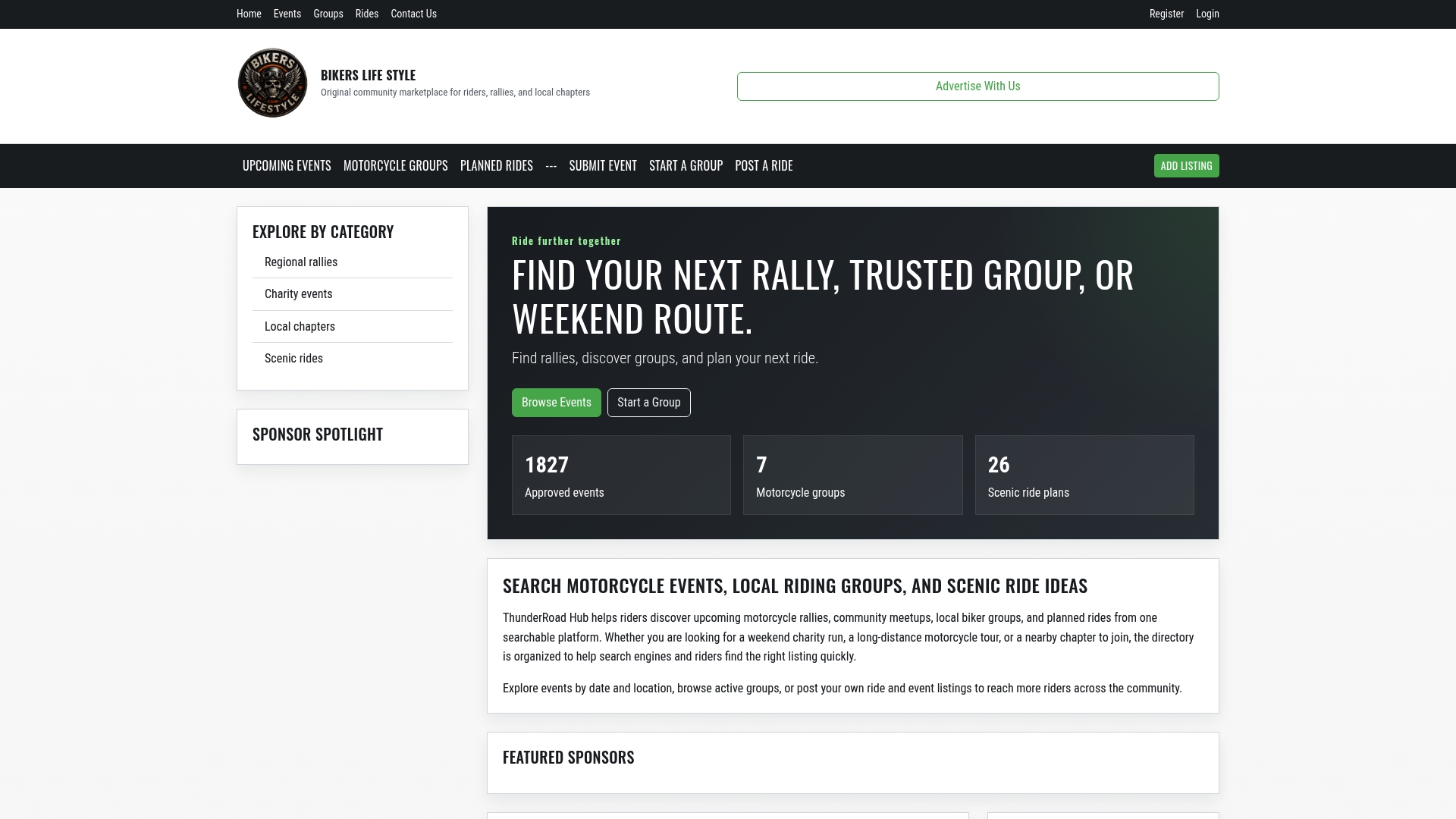
The Bikerslifestyle events calendar lists current and upcoming rallies, rides, and community events so you can plan ahead and register before spots fill. If swap meets are your focus, the dedicated swap meet listings include vendor details and event-specific tips. Whether you're looking for your first rally or your fiftieth, Bikerslifestyle makes finding the right event straightforward.
FAQ
What is a motorcycle rally in simple terms?
A motorcycle rally is an organized gathering of riders and enthusiasts centered around riding, socializing, and celebrating motorcycle culture. Events range from small local meets to multi-day festivals drawing hundreds of thousands of attendees.
How long do motorcycle rallies typically last?
Most large rallies like Sturgis and Laconia last 7 to 10 days, while smaller regional rallies run 2 to 4 days and informal local meets often take place over a single day or weekend.
Do you need to own a motorcycle to attend a rally?
No. Many attendees come for the live music, food, vendor markets, and social atmosphere rather than the riding itself. Inclusivity at rallies has grown significantly, and non-riders are welcome at most events.
What is a motorcycle camping rally?
A motorcycle camping rally is a multi-day event where attendees camp on-site, creating an extended community experience built around campfires, shared meals, and overnight camaraderie alongside the standard rally activities.
What should a first-timer bring to a motorcycle rally?
Bring cash in small bills, rain gear, ear protection, sunscreen, and a basic tool kit if you're riding. For swap meets specifically, arrive at gate opening for the best parking and first access to vendor inventory.