
TL;DR:
- Motorcycle clubs offer bikers safety, friendships, skill development, and a sense of community beyond solo riding. They provide protective benefits like group visibility, mechanical support, and shared responsibilities, fostering strong social bonds and purpose. Choosing the right club depends on personal goals, with many members valuing community service and shared experiences over mythologized stereotypes.
Spend five minutes watching any Hollywood biker film and you walk away thinking motorcycle clubs exist purely for rebellion and leather-clad intimidation. That version sells movie tickets. It does not explain why bikers join riding clubs in numbers that keep climbing year after year. The real motivations are far more grounded: safety on open highways, friendships that hold through hard times, skills passed down from riders who have logged serious miles, and a sense of purpose that solo riding simply cannot provide. This article breaks down every major reason, without the mythology.
Table of Contents
- Key takeaways
- Why bikers join riding clubs: the real motivations
- Safety in numbers: how clubs protect their members
- Brotherhood, belonging, and the social heart of clubs
- Skill development inside a riding club
- Riding with purpose: charity, events, and identity
- My honest take on what actually draws riders in
- Find your club with Bikerslifestyle
- FAQ
Key takeaways
| Point | Details |
|---|---|
| Safety drives early interest | Group riding reduces individual risk through shared visibility, navigation, and roadside support. |
| Brotherhood is built through routine | Strong bonds form via regular meetings, rides, and shared rituals, not dramatic loyalty oaths. |
| Clubs accelerate skill growth | Mentorship from experienced members shortens the learning curve for new and intermediate riders. |
| Purpose extends beyond riding | Many clubs run charity events and community programs that give members a meaningful role off the bike. |
| Fit matters more than reputation | Choosing the right club type, riding club versus full MC, determines how much the experience enriches your life. |
Why bikers join riding clubs: the real motivations
Most people outside the culture assume motorcycle clubs are monolithic. They are not. Riding clubs vs. motorcycle clubs represent genuinely different levels of commitment, symbolism, and obligation. A riding club might be a loose group of coworkers who meet on weekends, while a traditional motorcycle club has officers, bylaws, patches with real significance, and expectations around attendance and loyalty. Understanding that spectrum matters before you can understand the motivations behind joining either.
What those two worlds share is the pull toward community. Riders describe a specific kind of loneliness that comes with solo riding. The road is incredible on your own, but there is nobody to debrief with at the end of a long stretch, nobody who instinctively understands why a particular mountain pass moved you. Clubs offer belonging and backup in ways that casual riding friendships rarely do.
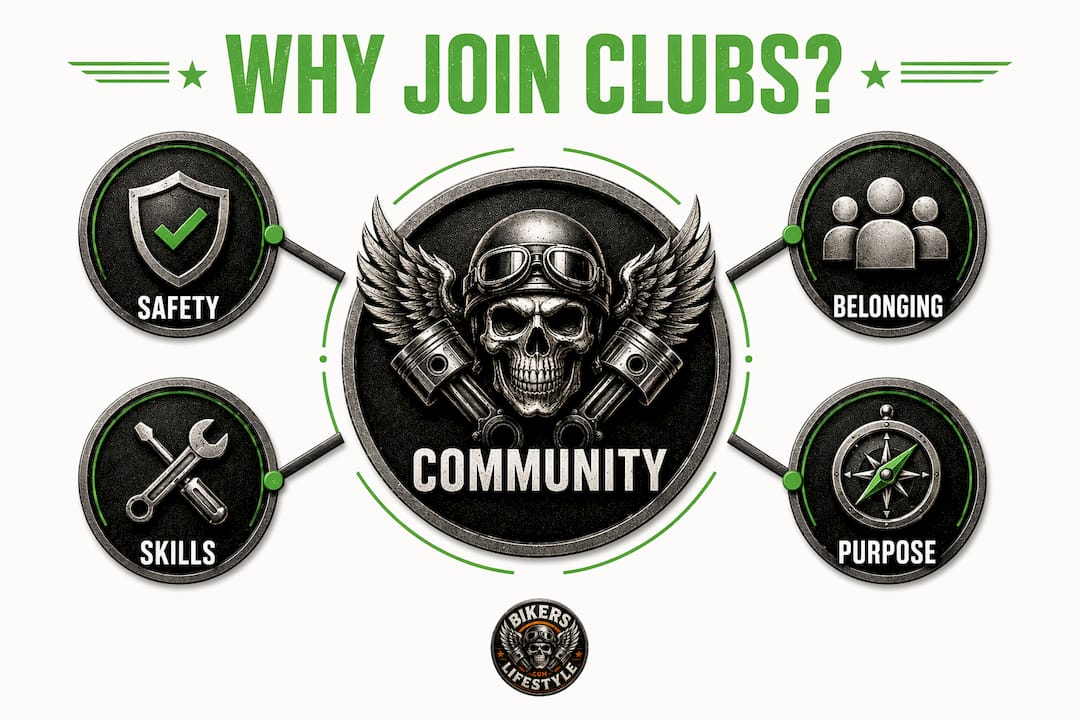
The reasons bikers join clubs fall into four overlapping categories: practical safety, social bonds, skill development, and purposeful engagement. None of these exist in isolation. A rider who joins for safety quickly discovers the social layer. A rider who joins for the community ends up learning things about their bike they never would have figured out alone.
Safety in numbers: how clubs protect their members
Group riding is not just more fun. It is statistically safer in several concrete ways, and group visibility is one of the most underestimated benefits of riding clubs. A single motorcycle disappears in traffic. A formation of ten bikes commands attention from drivers, trucks, and intersections alike. That visibility translates directly to fewer dangerous close calls.
Here is what the safety picture actually looks like inside an active riding club:
- Shared navigation: Long-distance trips become less mentally taxing when a road captain handles routing. Riders focus on the road rather than splitting attention between GPS updates and traffic.
- Immediate mechanical assistance: When your bike breaks down on a remote highway at night, having ten riders who know their machines around you is not a luxury. It is the difference between a bad story and a dangerous night. Reciprocity in trusted clubs creates low-friction access to roadside help that no roadside assistance app can replicate.
- Psychological backup: Riding involves real risk. Knowing a network of experienced riders has your back changes how you handle stress, fatigue, and the unexpected. Club membership provides psychological safety that solo riders do not have.
- Emergency response: When an accident happens, club members act fast. Someone manages traffic, someone calls for help, someone stays with the injured rider. That coordinated response matters in the critical minutes before professionals arrive.
Beyond the obvious motorcycle safety benefits of group riding, there is the steady accumulation of learned caution. New riders pick up risk-awareness habits from veterans just by observing how they approach corners, weather changes, and congested urban riding. That transfer of knowledge happens organically without any formal instruction.
Pro Tip: When evaluating a riding club for safety culture, watch how the road captain runs a pre-ride briefing. A club that skips this or makes it perfunctory treats safety as optional. A club that runs it seriously invests in keeping members upright.
Brotherhood, belonging, and the social heart of clubs
Brotherhood is one of those words that gets thrown around until it loses meaning. In the context of motorcycle clubs, brotherhood is built through daily fellowship and loyalty norms rather than dramatic mythology. It shows up in text messages checking in after a hard ride, in someone showing up with a trailer when your engine seizes three states away, in the kind of friendship that does not require explanation or maintenance between conversations.
The social aspects of biking through club membership create something genuinely rare in modern adult life: a recurring social context. Most adults struggle to maintain friendships because there is no built-in reason to gather. Clubs solve that immediately. Weekly meetings, monthly rides, annual rallies, and impromptu meetups create a social rhythm that keeps relationships alive without effort.
"The first time you ride in a 40-bike formation through your hometown and people stop to watch, you understand something about collective identity that you cannot get from a gym or a book club. You are part of something visible, something that has history."
That visibility matters to members in ways that are easy to underestimate. Large club ride-outs during funerals, charity events, and community celebrations demonstrate solidarity in a form that every observer can see. When 150 members ride together to honor a fallen rider, that is not performance. That is brotherhood made tangible.
The family-like bonds that form within clubs are a significant reason why the biker community importance is difficult to communicate to outsiders. You share risk with these people. You spend long hours in conditions that demand trust. You celebrate milestones together: first long-distance ride, first cross-country trip, first time leading a formation. Those shared experiences create the kind of loyalty that is very hard to walk away from.
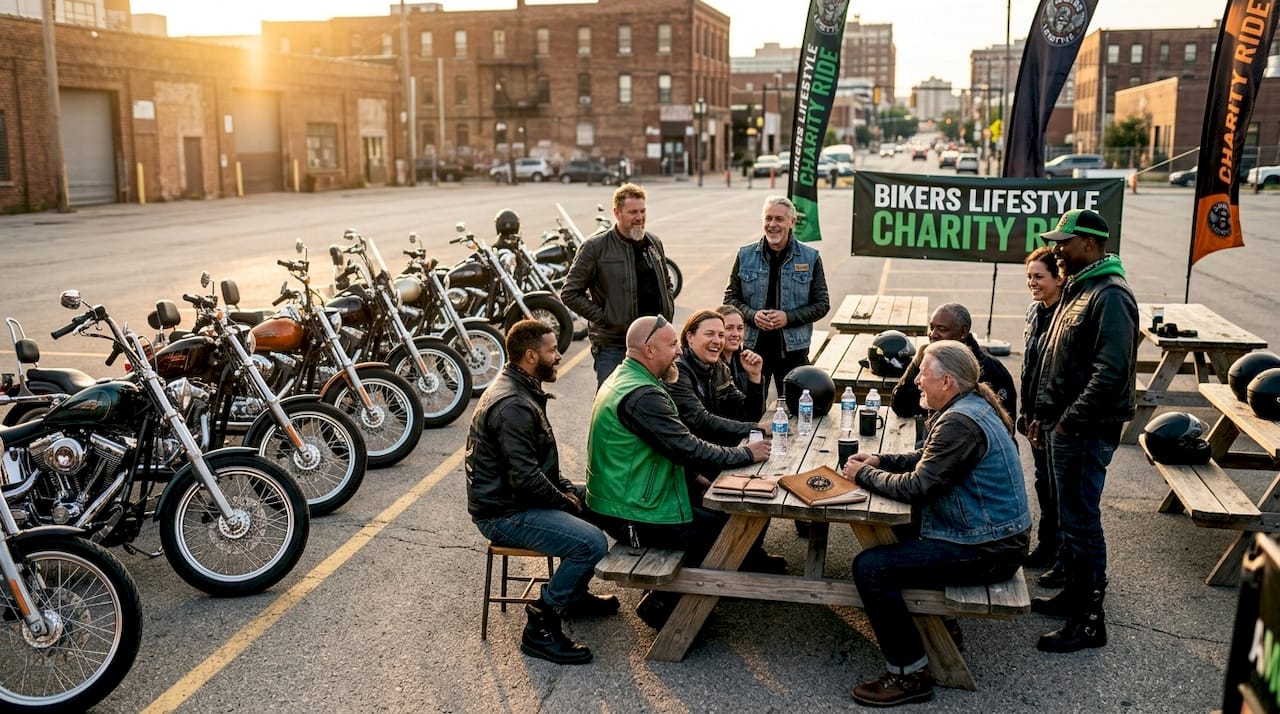
Clubs also provide a social structure that works across age groups and backgrounds in a way that few communities manage. A 55-year-old accountant and a 28-year-old mechanic are both just riders in a club. The motorcycle strips away the social filters that usually keep those two people from ever having a real conversation.
Skill development inside a riding club
One of the most practical advantages of riding groups that new riders discover quickly is the accelerated skill curve. Learning to ride well on your own is possible. Learning inside a club is faster, more structured, and significantly more honest about where your weaknesses are.
Here is how skill development typically unfolds for a new club member:
- Observation on group rides: Watching experienced riders handle the same corner you just struggled with is a faster teacher than any YouTube video. You see the line they take, where they brake, how they position their body, and you immediately have context to apply.
- Direct mentorship: Most clubs have riders who genuinely enjoy passing on what they know. These are not formal coaches. They are people who have made every mistake on the road and want to save you from repeating them. That informal mentorship is one of the strongest benefits of riding clubs for newer members.
- Mechanical knowledge transfer: Bike maintenance is an area where club knowledge-sharing pays off enormously. Understanding your machine at a mechanical level makes you a safer and more confident rider. In a club, that knowledge lives in the group. Someone always knows why your carburetor is behaving strangely.
- Structured skill events: Many clubs organize riding clinics, track days, or off-road skill sessions. The ADV riding clinics attached to rallies are a perfect example. These structured events give riders specific feedback in a low-pressure environment surrounded by people at similar skill levels.
- Honest feedback culture: Solo riders have no feedback loop beyond their own perception of how they are doing. Club members get real feedback from people who have watched them ride. That honest input is uncomfortable sometimes, but it makes you better faster.
The cumulative effect of riding regularly with skilled, experienced riders cannot be overstated. Your standard of what "good riding" looks like gets recalibrated constantly upward.
Riding with purpose: charity, events, and identity
Beyond the ride itself, many clubs build their identity around something larger than the miles they log. Charity rides and community service are core activities for a significant number of clubs across the country, and they function as far more than good optics. They give members a meaningful role in their community that has nothing to do with how fast they can corner.
The contrast between club types becomes clear when you look at how purpose shapes membership:
| Club focus | Member experience | Community impact |
|---|---|---|
| Pure riding and skills | Strong personal growth, tight bonds through shared challenge | Minimal beyond presence on roads |
| Social and events-based | Broad friendships, regular gatherings, accessible entry | Local visibility and connection |
| Charity and service-driven | Deep sense of purpose, community respect, long-term pride | Direct, measurable contributions |
| Mixed purpose | Balanced experience with skill, community, and meaning | Moderate to significant |
Clubs that organize toy drives, fundraisers for local shelters, memorial rides for fallen first responders, and hospital visits for injured riders do something important for their members. They create a narrative around club membership that transcends ego. You are not just a biker. You are someone who shows up for the community, who uses the visibility of the club to draw attention to causes that matter.
Purposeful community actions also reinforce internal cohesion. When a club completes a successful charity event together, the shared accomplishment deepens the bonds between members in ways that a regular ride cannot. It adds a layer of shared pride to the group identity.
For riders seeking reasons to join a motorcycle club beyond the riding itself, the service dimension is often the most compelling long-term motivator. The ride eventually becomes routine. The sense of contributing something real does not.
My honest take on what actually draws riders in
I have seen riders join clubs for every reason you can name, and the ones who stay the longest are almost never the ones who joined for the image. They joined because something was missing in their riding life, and the club filled it. That is the honest answer.
What surprises most new members is not the brotherhood or the safety backup, though both are real. It is how quickly a good club recalibrates your entire relationship with riding. You go from being a person who rides to being a rider who belongs to something. That shift is subtle and significant at the same time.
My observation is that the stereotypes hurt the people they are supposed to describe most. Riders who would thrive in a club avoid them because they assume every club comes with baggage they do not want. The reality is that most clubs today are full of professionals, veterans, teachers, and parents who ride because it matters to them and gather because community matters to them.
The question worth asking is not "why would anyone join a riding club?" It is "what kind of club actually fits who I am?" A casual riding group with monthly meetups serves a completely different person than a structured MC with patch requirements and mandatory events. Neither is wrong. They are just different commitments, and the fit matters more than the category.
If I were advising a rider considering membership, I would tell them to ride with a group three times before making any decision. Three rides shows you how they handle disagreement, how they treat the least experienced person in the group, and whether the energy after the ride feels like something you want more of or something you are glad to leave.
— Trevor
Find your club with Bikerslifestyle
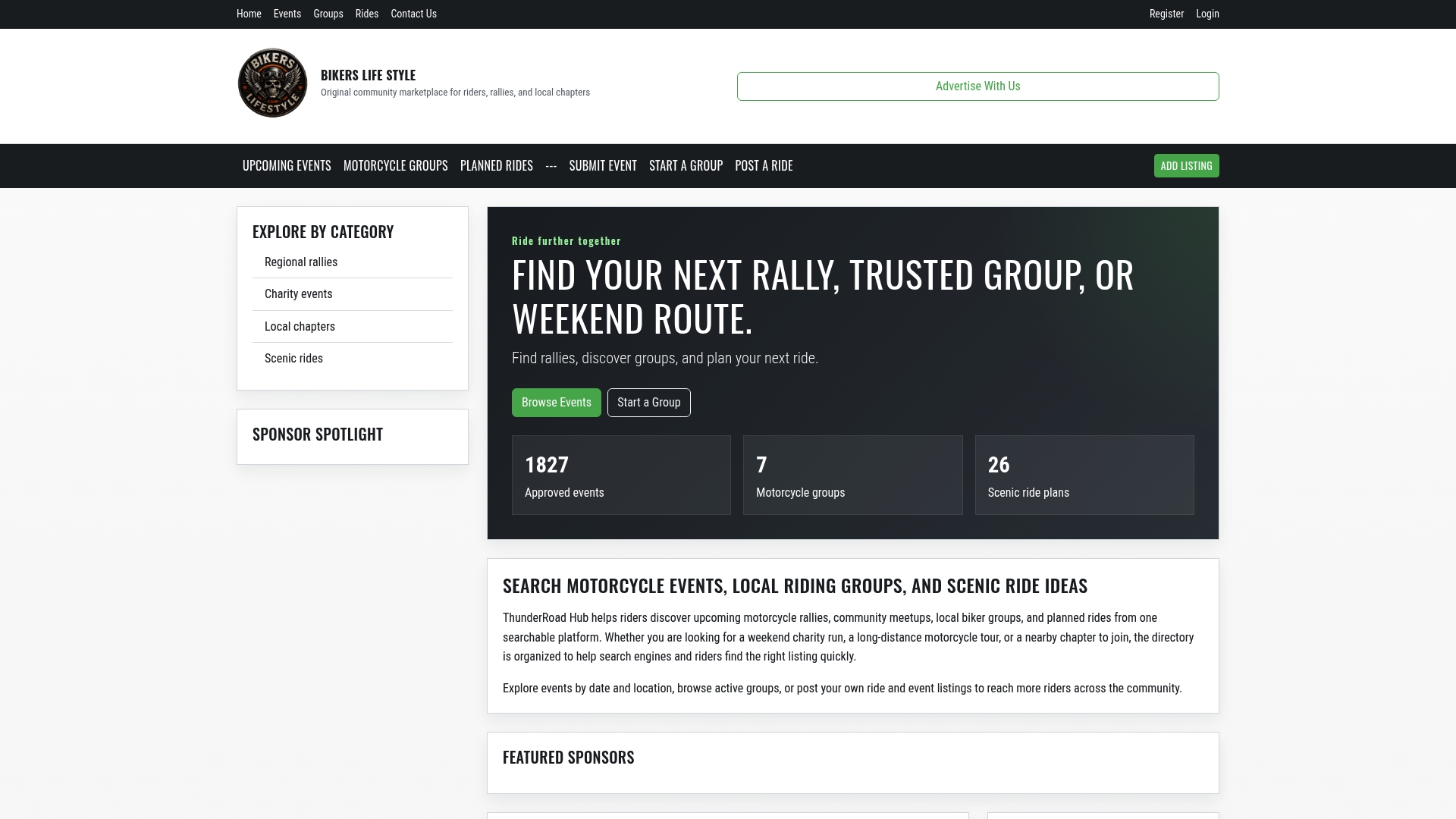
You now know the real reasons riders seek out clubs: the safety net, the friendships, the skills, and the sense of purpose that riding alone cannot give you. The next step is finding the right community to actually ride with. Bikerslifestyle is built specifically to make that search easy. The platform connects riders with local riding groups, upcoming rallies, charity rides, and skill-building events across the country. Whether you are looking for a low-key weekend group or a structured club with serious mileage, Bikerslifestyle has searchable listings that match your style and location. You can also explore the event blog for upcoming rides or browse the full directory at Bikerslifestyle.com and start connecting with riders who share your priorities.
FAQ
Why do bikers join riding clubs in the first place?
Riders join clubs primarily for safety in numbers, mechanical support on the road, social connection, and skill development. The practical benefits combine with the social ones to create a membership experience that solo riding cannot replicate.
What is the difference between a riding club and a motorcycle club?
A riding club is typically informal, with no patch requirements or strict obligations, while a motorcycle club has officers, bylaws, and a formal patch with real cultural significance. Commitment levels differ significantly between the two, and choosing the right type for your lifestyle matters.
Do you have to be an experienced rider to join a club?
Most clubs welcome riders at various experience levels, especially riding clubs focused on community rather than competition. Mentorship from experienced members is actually one of the strongest benefits for newer riders who join early.
How do clubs contribute to rider safety?
Group riding improves safety through increased road visibility, shared navigation responsibilities, and immediate roadside assistance when breakdowns or accidents occur. Formation riding also reduces the cognitive load on individual riders during long-distance trips.
Are motorcycle clubs only about the riding?
Not at all. Many clubs center their identity around charity rides, community events, and service projects that give members a meaningful role beyond the road. Purpose-driven participation is one of the strongest long-term motivators for staying active in a club.