
TL;DR:
- Motorcycle camaraderie provides emotional and practical support through shared experiences, safety protocols, and cultural traditions.
- Long-term community bonds are built through recurring events, structured club memberships, and active social investment, which enhance rider retention and confidence.
Most riders can tell you about the wave. That subtle two-finger salute exchanged between passing motorcyclists. It's one of the most recognized symbols of biker culture, yet it barely scratches the surface of why bikers value road camaraderie as deeply as they do. The real story runs much deeper than a greeting. It involves psychology, tradition, operational safety, and a sense of belonging that non-riders rarely see. This article breaks down the full picture, from the science behind social riding to the club structures that make it stick.
Table of Contents
- Key Takeaways
- Why bikers value road camaraderie: the social science behind it
- Tradition and identity: rallies and clubs that make it last
- The operational side of camaraderie
- Supporting riders who need community most
- My take on why camaraderie is the real engine of biker culture
- Find your community and start riding together
- FAQ
Key Takeaways
| Point | Details |
|---|---|
| Camaraderie supports mental health | Riding together reduces isolation and delivers measurable psychological well-being benefits backed by research. |
| Tradition builds stronger bonds | Recurring events like annual rallies create repeat interactions that turn strangers into lifelong riding partners. |
| Group protocols are part of camaraderie | Hand signals, road captains, and regroup points are social contracts that keep everyone safe and connected. |
| Clubs formalize the bond | Organized groups like HOG chapters give camaraderie structure, accountability, and a consistent social rhythm. |
| Camaraderie empowers diverse riders | Community support helps underrepresented riders, including women and newcomers, build confidence and stay connected. |
Why bikers value road camaraderie: the social science behind it
The technical term for what riders experience on group rides is social cohesion, and the research on it is surprisingly strong. A 2026 Frontiers review found that social well-being outcomes from group cycling activities were positive in 100% of studies reviewed, with community engagement and a reduced sense of isolation cited repeatedly. While that review focused on cycling broadly, the mechanisms translate directly to motorcycle riding. Shared risk, shared purpose, and shared road create the same psychological conditions.
What makes group riding uniquely effective is the combination of physical stimulation and social interaction happening at the same time. Your brain is getting an endorphin release during rides while simultaneously processing social cues from your fellow riders. That pairing strengthens emotional bonds faster than most casual social settings. Think about it: you rarely experience genuine vulnerability alongside another person during a dinner conversation. On a motorcycle, you do.
The social aspects of biking go beyond just enjoying the company. Riders report that group rides give them something to look forward to, a reason to show up consistently, and a group that notices when someone is absent. That structure addresses one of the core drivers of loneliness in modern life: the absence of a recurring, meaningful social ritual.
Here is what the research confirms about the specific social benefits:
- Sense of belonging: Regular group riding creates an "in-group" identity that riders carry even off the bike.
- Reduced anxiety: Social interaction during rides has documented links to anxiety reduction through neurobiological changes in neurotransmitter activity.
- Increased community engagement: Riders in organized groups are more likely to participate in charity events, local rides, and mentorship of newer riders.
- Stronger social support networks: The group ride dynamics that develop over time create friendships that extend well beyond the road.
Pro Tip: During group rides, make a conscious effort to check in on quieter riders during fuel stops or lunch breaks. Those small moments of genuine attention are where real biker friendships form, not on the road itself.
Tradition and identity: rallies and clubs that make it last
The word "camaraderie" gets used a lot, but what actually makes it durable? Repetition. Shared identity. And the kind of tradition that gives riders a reason to return year after year.
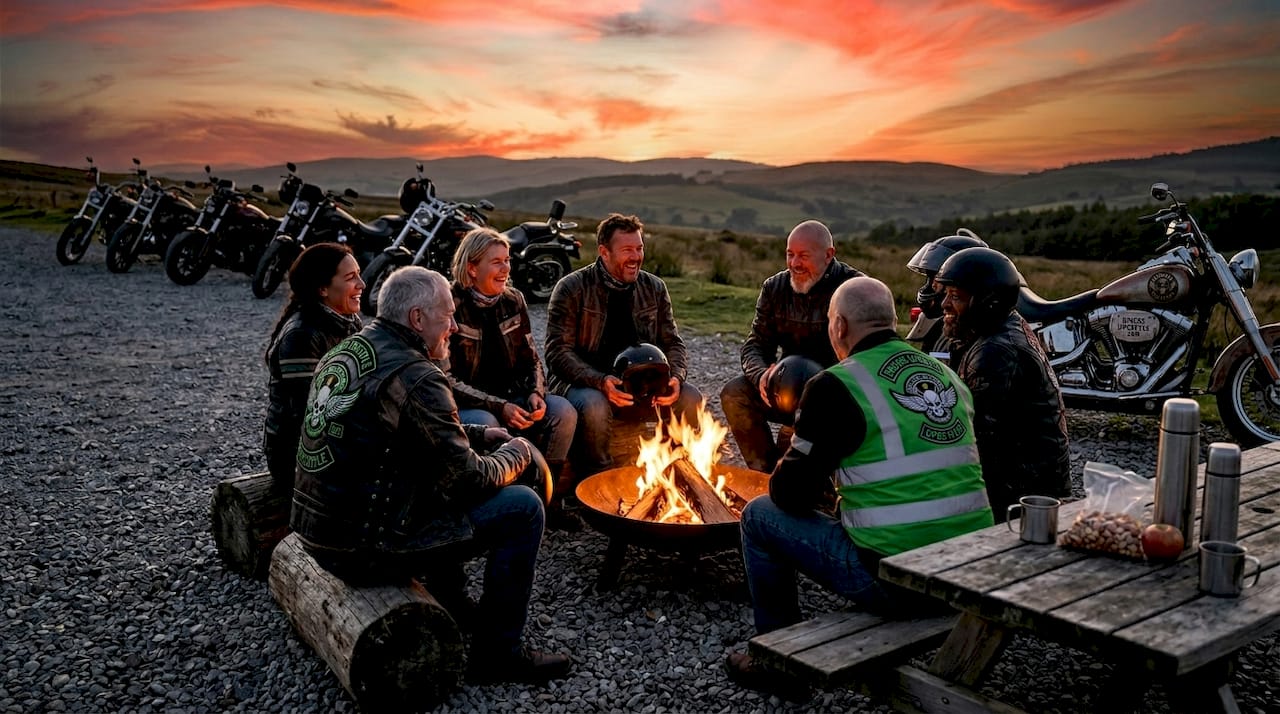
The Spring Bike Rally's camaraderie focus, running annually since 1975, is a textbook example of how recurring events turn casual acquaintances into a genuine community. Attendees report that faith, familiarity, and the feeling of being among people who "get it" are the primary reasons they return. The 87th iteration of that rally drew thousands of riders who described camaraderie as the central reason for attending. That is not accidental. It is the result of decades of intentional community building through consistency.
Organized motorcycle clubs formalize this in a different but equally powerful way. Groups like the Harley Owners Group build structure around the bond. Their scheduled rides and road captain roles mean that every participant has a defined role in the group experience. You are not just a rider showing up. You are a member with responsibilities, a place in the formation, and people counting on you. That accountability deepens the sense of brotherhood in ways that solo rides simply cannot replicate.
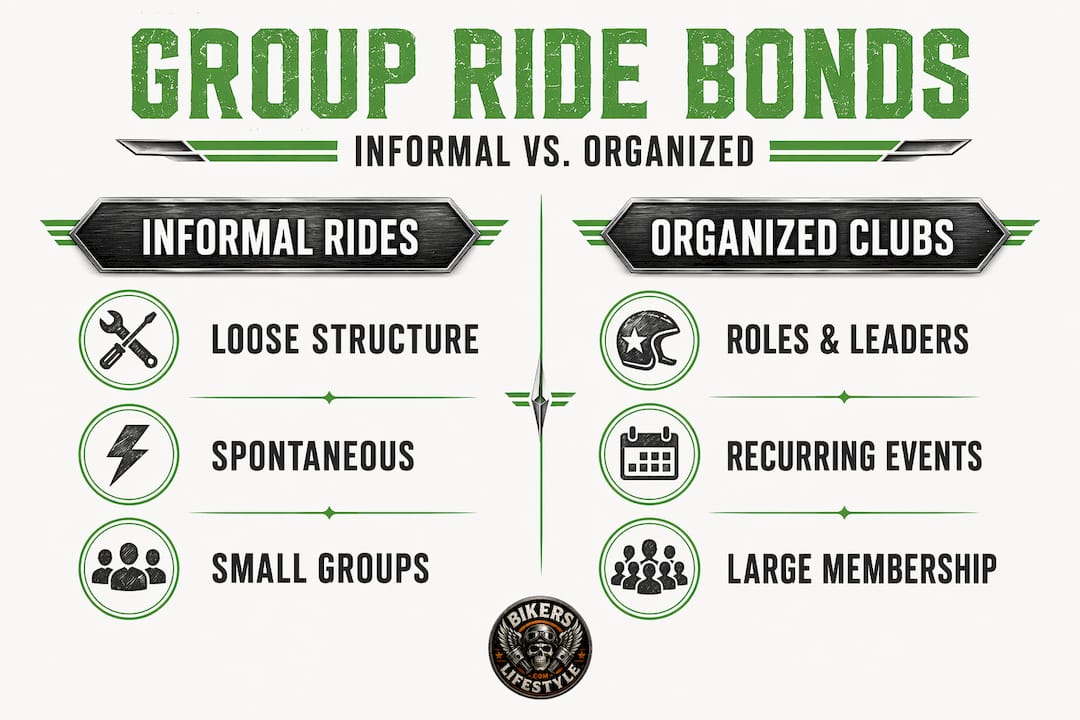
Understanding the difference between informal and organized riding helps clarify which environment suits your needs at different stages of your riding life.
| Feature | Informal group rides | Organized club rides |
|---|---|---|
| Social structure | Loose, self-organizing | Defined roles (road captain, sweep rider) |
| Consistency | Variable, depends on group | Scheduled, predictable |
| Accountability | Low to moderate | High, built into membership |
| Camaraderie depth | Strong situationally | Deep and sustained over time |
| Entry barrier | Very low | Moderate (membership, dues, commitment) |
| Best for | Newcomers, casual riders | Riders seeking lasting community |
The biker community benefits of belonging to a club go beyond the rides themselves. Members share mechanical knowledge, travel tips, emergency contacts, and personal history. They show up at funerals and hospital rooms. They help members move. That level of support does not come from a single group ride. It comes from the accumulated trust built through structured, repeated shared experience.
Pro Tip: If you are new to organized riding, attend a club ride as a guest before committing to membership. Most chapters welcome guests warmly, and that first ride often tells you everything you need to know about whether the group's culture fits yours.
You can read more about what drives riders toward organized communities in this breakdown of why bikers join clubs.
The operational side of camaraderie
Here is something most people outside motorcycle culture do not realize: camaraderie on a group ride is not purely emotional. It is operational. The social bond between riders is expressed through a shared language of signals, positions, and responsibilities that keep everyone safer on the road.
Group riding protocols are the infrastructure of camaraderie. When they are practiced well, they feel invisible. When they break down, the consequences can be serious. The operational details from structured rides show how much intentional design goes into a well-run group ride, including staggered formations, designated road captains, and pre-ride briefings that cover emergency procedures.
Here is how operational camaraderie typically works in practice:
- Pre-ride briefing: The road captain reviews the route, identifies fuel stops and regroup points, and assigns responsibilities like sweep rider.
- Hand signals: Turn signals, road hazard alerts, fuel stops, and speed changes are all communicated silently through standardized hand gestures.
- Staggered formation: Riders maintain a staggered pattern to maximize sightlines and reaction time while keeping the group cohesive.
- Regroup points: At intersections or after long stretches, riders stop and wait so the group stays together through traffic lights and turns.
- Sweep rider: The last rider in the formation keeps an eye on the full group and is often the most experienced member. They stay back to assist anyone who breaks down or gets separated.
This structure also directly addresses safety. Research confirms that riders adopt protective group behaviors as a community safety net, even when they perceive individual crash risks as external. In other words, the group dynamic actively compensates for the vulnerabilities of solo riding.
Pro Tip: Before joining a new group ride, ask the road captain about their hand signal conventions. Groups sometimes have variations on the standard signals, and knowing the group's specific language before you roll out prevents confusion and improves your safety and integration into the pack.
Supporting riders who need community most
Bonding among motorcycle riders is most visible in the moments it works for someone who really needs it. Not every rider shows up to a group ride from a position of confidence. For many, particularly women riders and those brand new to motorcycling, the community aspect of riding is what makes the difference between continuing and quitting.
Historically, women in motorcycling have faced a narrower path into the culture. The Route 66 ride organized for women riders is one documented example of how community structure creates access. That ride used a formal chapter model with organizational backing, which gave participants not just companionship but confidence-building mentorship, route planning support, and a visible group identity that helped them claim their place in a traditionally male-dominated space.
The community support that reduces barriers for underrepresented riders does not happen by accident. It requires intentional design. What that looks like in practice:
- Dedicated chapters or rides: Groups specifically organized around shared identity give riders a starting point that feels less intimidating.
- Mentorship pairing: Experienced riders matched with newcomers creates a direct transfer of confidence and knowledge.
- Skill clinics tied to social events: Combining riding technique instruction with group rides gives newer riders a reason to practice in a supportive context.
- Charity rides as entry points: Events like a community charity ride provide a purpose-driven setting where the focus shifts from performance to participation, lowering the social stakes for newcomers.
The importance of biker friendships for riders in this position cannot be overstated. For someone riding in a new city, returning to riding after an injury, or navigating a community where they do not yet see themselves represented, a single welcoming group can change the entire trajectory of their riding life.
Pro Tip: If you are an experienced rider, make a point of introducing yourself to new faces at group meetups. A two-minute conversation before a ride can be the reason someone comes back next week instead of deciding this community is not for them.
My take on why camaraderie is the real engine of biker culture
I have spent years riding and participating in biker events, and the pattern I keep coming back to is this: the riders who stick with motorcycling long-term are almost never the ones who ride alone. They are the ones who found their people.
What I have seen is that most outsiders interpret the wave, the club colors, and the rallies as surface ritual. Tradition for tradition's sake. What they miss is that those rituals are the mechanism through which a genuinely functional social support system gets built and maintained. The camaraderie is not decorating the riding experience. It is holding it together.
My perspective, after watching riders cycle in and out of this community: the ones who invest in the social side early, who show up to group rides even when they are tired, who learn the hand signals before they need them, those riders build something that carries them through the hard seasons. A breakdown on a remote highway. A health scare. The grief that sometimes follows losing a fellow rider on the road. Those moments reveal whether you have built real relationships or just an occasional riding acquaintance.
If there is one thing I wish newer riders understood about the biker brotherhood guide side of this culture, it is that camaraderie requires active investment. It does not just happen because you ride the same roads. You have to show up, stay engaged, and contribute to the group. The riders who do that find that motorcycling gives them something most hobbies never can: a community that functions like a second family.
Do not wait for the right moment to get involved. The right moment is the next group ride you find on the calendar.
— Trevor
Find your community and start riding together
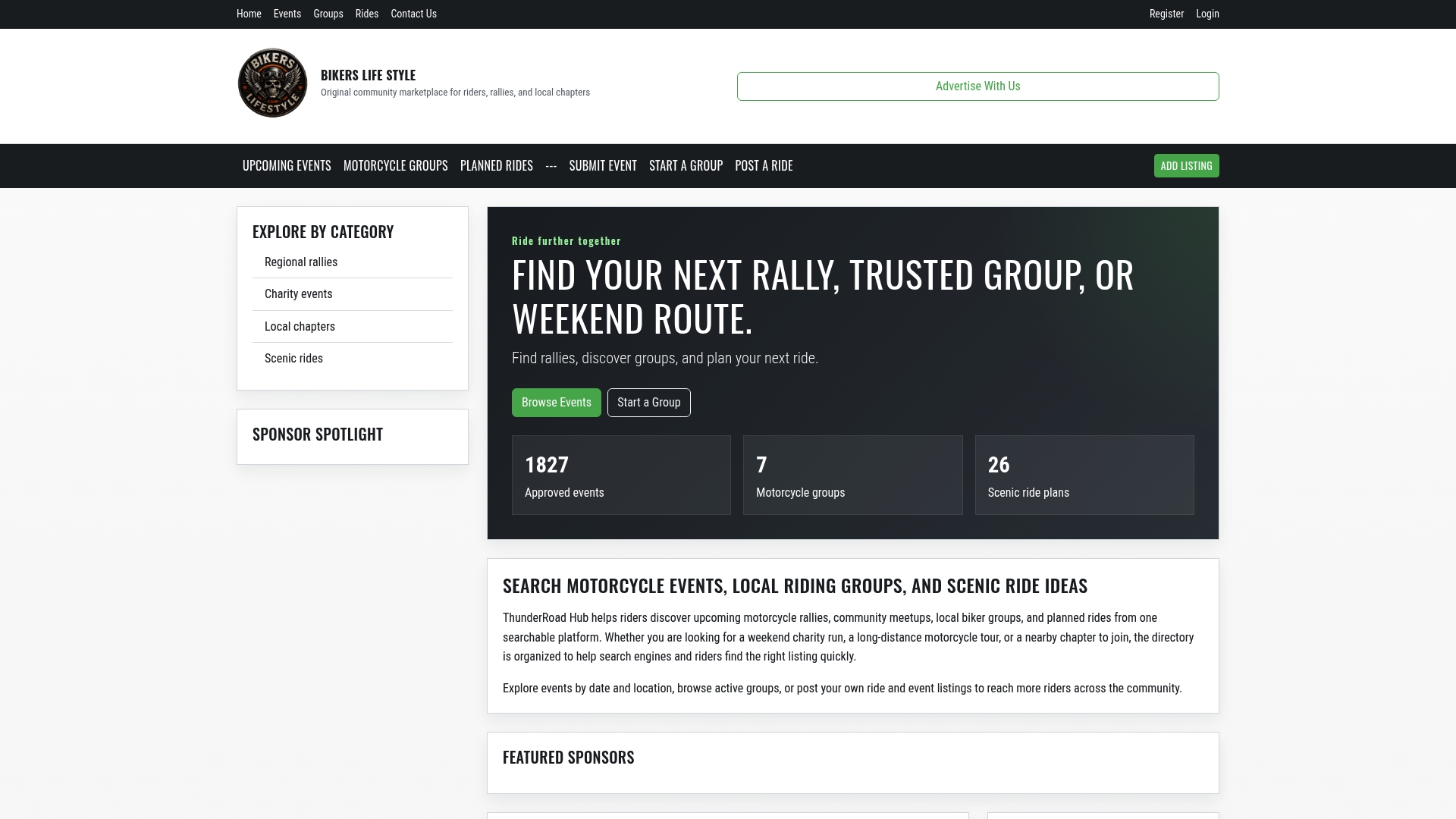
Understanding the social and operational depth of biker culture is the first step. The next one is getting out and experiencing it firsthand. Bikerslifestyle is built specifically for that transition. The platform connects riders with upcoming motorcycle rallies and riding groups in their area, making it straightforward to find a community that fits whether you are a seasoned rider or just getting started.
From the annual scenic spring rally experience to charity rides that put community purpose front and center, Bikerslifestyle lists the events that turn solo riders into connected members of a thriving culture. Browse event calendars, discover local chapters, and find the kind of group rides that build the bonds described throughout this article. The community is out there. Bikerslifestyle makes it findable.
FAQ
What makes biker camaraderie different from other social bonds?
Biker camaraderie forms under shared physical risk and shared purpose simultaneously, which accelerates trust and deepens relationships faster than most social settings. The combination of road vulnerability and group responsibility creates a bond with both emotional and practical dimensions.
How do group ride protocols support camaraderie?
Structured group rides use hand signals, regroup points, and road captain roles to create a shared operational language that reinforces trust among riders. Research confirms that riders adopt protective group behaviors as a community safety net, making the social bond functional as well as emotional.
Why do bikers keep returning to the same rallies?
Recurring events like the Spring Bike Rally, running since 1975, create familiarity and shared identity through repeat interaction over years. Attendees consistently cite camaraderie and the feeling of being among people who understand the riding life as their primary reasons for returning.
How can new riders build meaningful connections within the biker community?
Joining an organized riding group or attending a local rally as a guest is the most direct path. Clubs like HOG chapters offer structured rides with defined roles, giving newcomers an immediate social framework and experienced riders to learn from.
Does camaraderie in riding have documented mental health benefits?
Yes. A 2026 Frontiers review found positive social well-being outcomes in 100% of reviewed studies on group riding activity, including reduced isolation, improved emotional regulation, and stronger community engagement among participants.