
TL;DR:
- The motorcycle wave is a symbol of mutual respect, safety, and shared risk among riders on the road.
- It originated in 1904 and evolved into a cultural tradition representing belonging and solidarity within the riding community.
The motorcycle wave is a recognized gesture of solidarity, safety, and mutual respect shared between riders on the road. Known formally as "motorcycling greetings," this tradition answers the question of why bikers wave to each other with a single truth: riders see each other in a way no car driver ever will. You share the same vulnerability, the same love for the open road, and the same unspoken code. This article breaks down the history, meaning, variations, and etiquette behind the biker wave so you understand exactly what that two-finger salute really means the next time someone throws it your way.
Why bikers wave to each other: the gesture explained
The standard motorcycle wave takes two main forms. The most recognized is the two-finger downward point, performed with the left hand extended low and two fingers aimed at the pavement. The phrase attached to it is "keep the rubber side down," which is rider shorthand for stay safe and stay upright. The second common form is a simple full open-hand wave, low and relaxed, not the frantic overhead wave you'd give a friend across a parking lot.
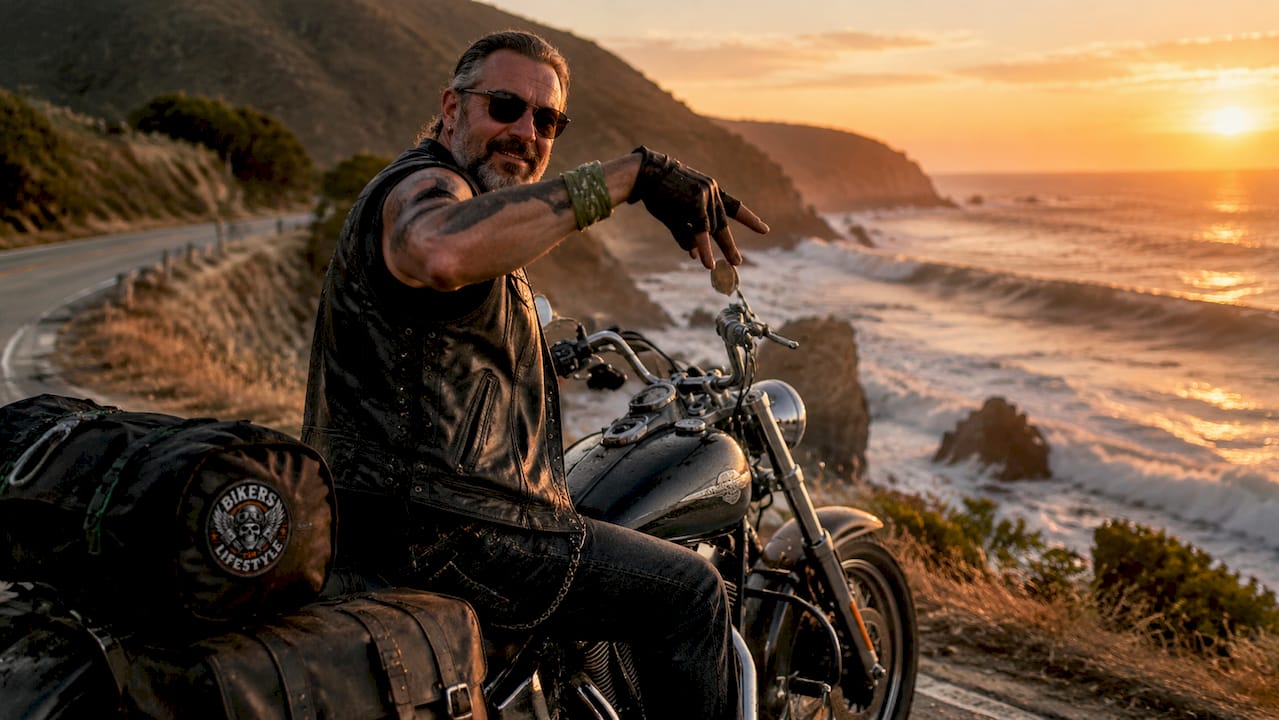
The left hand is the universal choice for this gesture. The right hand controls the throttle, and removing it mid-ride can compromise your speed and stability in an instant. Every experienced rider understands this without being told. The left-hand wave is not just tradition. It is a practical safety decision baked into the ritual from the beginning.
Beyond the wave itself, riders use a broader silent vocabulary on the road. These gestures include:
- Helmet tap: Police or speed trap ahead. Slow down now.
- Circling finger pointed down: Road hazard below, debris or pothole in your path.
- Finger pointed at your bike: Something is wrong with your motorcycle, check it immediately.
- Thumb down: Low fuel, looking for a gas station.
These safety signals at speed supplement the wave and form a nonverbal communication system that works at 60 miles per hour without a single word spoken. The wave is the greeting. These signals are the warnings. Together, they form a language every rider learns.
Pro Tip: If you are new to riding and feel awkward about waving, start with a simple nod. It counts just as much as the two-finger salute, and no experienced rider will judge you for it.
How did the motorcycle wave start?
The origin story most riders repeat traces back to 1904. According to early motorcycling history, Arthur Davidson and William Harley passed each other on the road and exchanged a wave. At the time, motorcycles were so rare that seeing another rider was a genuine event. The wave was a natural acknowledgment between two people who shared something almost nobody else did.
That origin story may be apocryphal, but the cultural logic behind it is real. Here is how the tradition built over time:
- Early 1900s: Motorcycles were novelties. Riders waved because they recognized a fellow member of an extremely small club.
- World War II era: Veterans returning home brought military hand signal habits with them. Many rode surplus motorcycles and transferred their communication discipline into civilian riding culture.
- 1950s and 1960s: Clubs like the Hells Angels and the American Motorcyclist Association grew the riding community. The wave became a marker of belonging within a culture that was starting to define itself.
- 1970s through 1990s: Harley-Davidson's cultural dominance in America cemented the wave as a specifically American biker tradition. Riders on cruisers waved to other cruiser riders as a sign of tribal recognition.
- 2000s to present: The wave expanded across bike types, though some friction between sport bike riders and cruiser riders over who waves to whom persists in certain communities.
The transition from practical signal to symbolic bond is the most important shift in this history. Early riders waved because it was useful. Modern riders wave because it means something. That shift from utility to identity is what turned a hand gesture into a cultural institution.
The cultural and psychological reasons riders wave
The motorcycle wave is a direct response to shared vulnerability. Motorcyclists are statistically among the most exposed road users. You have no crumple zone, no airbag, and no steel cage around you. When another rider passes you going the opposite direction, you both know this. The wave acknowledges that shared reality without a single word.
"The wave acts as a great equalizer, stripping away all social pretenses and affirming the rider's presence and shared reality on the road." — Montreal Rides
That quote captures something real. On a motorcycle, your income, your job title, and your neighborhood are invisible. What is visible is your bike and your gear. The wave crosses those invisible social lines in a way that almost no other public gesture does. A retired schoolteacher on a Honda Gold Wing and a 30-year-old on a Ducati Panigale have almost nothing in common on paper. On the road, they wave at each other.
The psychological function of the wave goes deeper than politeness. Waving builds a rolling community that counters the isolation of solo riding. Long solo rides can feel disconnected from the world around you. Every wave from a passing rider is a brief but genuine reminder that you are not alone out there. That moment of recognition, lasting less than a second, resets your sense of belonging.
The wave also serves a practical social function within biker culture. It signals that you are part of the community, that you know the code, and that you respect the road. New riders who wave get welcomed. Riders who never wave get noticed. The gesture is a membership card you flash at 55 miles per hour.
The motorcycle wave's meaning is ultimately about mutual recognition among people sharing both a risky and deeply rewarding passion. It is not a rigid rule. It is an intention. That distinction matters because it explains why the wave survives even as riding culture fragments across dozens of bike types, riding styles, and regional communities.
Wave variations, etiquette, and when to skip it
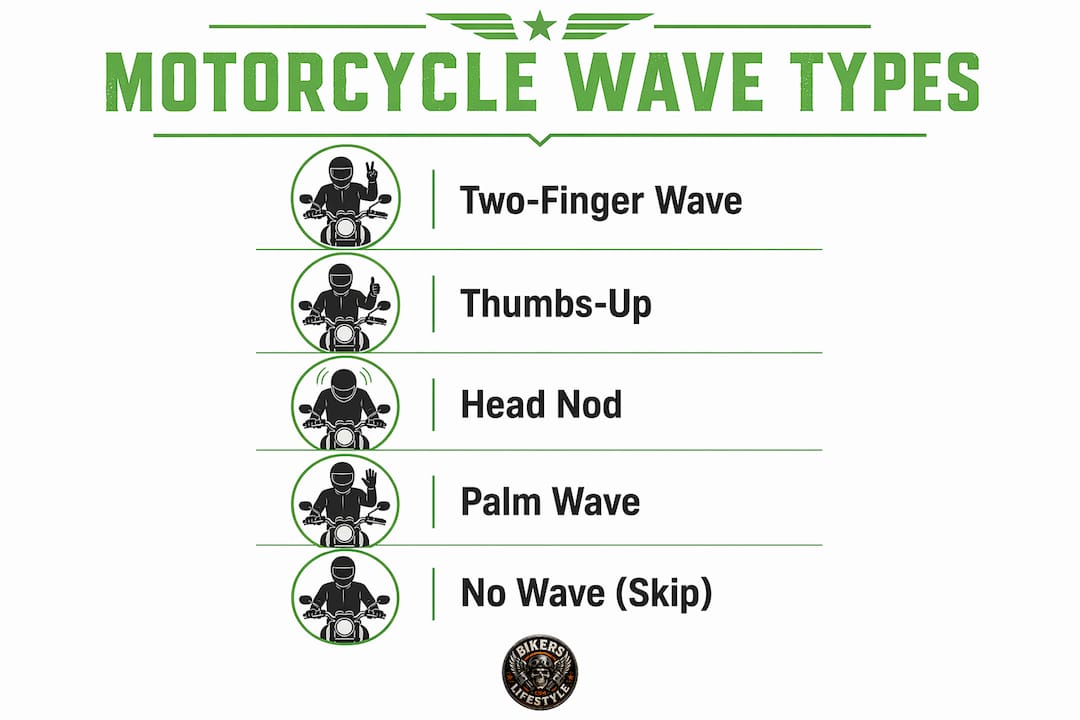
Not every wave looks the same, and not every situation calls for one. The table below breaks down the most common forms and what each one communicates.
| Wave Style | How It Looks | What It Signals |
|---|---|---|
| Two-finger downward point | Left hand low, index and middle finger extended toward road | "Keep the rubber side down," classic safety wish |
| Full open-hand wave | Left hand extended, all fingers open, held low | Friendly greeting, common among touring and cruiser riders |
| Single index finger point | One finger extended downward | Casual acknowledgment, common in sport bike culture |
| Head nod | Brief downward chin dip, no hand movement | Used when hands cannot safely leave controls |
| No wave | No gesture at all | Hands full, complex traffic, or personal preference |
The head nod as a substitute is widely accepted across all riding communities. When you are navigating a tight curve, merging in heavy traffic, or managing a mechanical issue, nobody expects you to take a hand off the bars. The implicit understanding is that safety comes before courtesy, always.
Regional differences are significant. North American riders wave frequently, and skipping the wave can feel like a snub in some communities. In Germany and parts of northern Europe, waving between strangers is far less common, and riders may use a brief nod or no greeting at all without any social penalty. If you are riding abroad, pay attention to local customs before assuming your American wave habit translates directly.
One gesture to avoid: the single middle finger. It means exactly what it means everywhere else. Some riders also debate whether sport bike riders and cruiser riders should wave to each other. The honest answer is yes, they should. The road camaraderie that makes riding special does not belong to one type of motorcycle.
Pro Tip: When riding in an unfamiliar region or country, watch what local riders do for the first few miles before defaulting to your home wave style. Mirroring local customs shows respect and gets you welcomed faster.
There is also a common debate about whether to wave at scooter riders. Opinions vary. Many riders wave at anyone on two wheels as a sign of general road solidarity. Others reserve the wave strictly for motorcycles above a certain engine size. The biker code of conduct on this point is unwritten and genuinely contested. The most defensible position is to wave at anyone sharing your road vulnerability, regardless of what they are riding.
New riders sometimes feel pressure to wave perfectly or worry about missing a wave from a passing rider. Let that go. The wave is not a test. Missing one does not get your license revoked. What matters is the intention behind it, which is the same intention it has always carried: I see you, stay safe out there.
Key takeaways
The motorcycle wave is a universal gesture of mutual recognition, safety, and belonging that every rider carries as part of the unwritten code of the road.
| Point | Details |
|---|---|
| Two-finger wave meaning | The downward two-finger point signals "keep the rubber side down," wishing fellow riders a safe journey. |
| Left hand is always used | The right hand controls the throttle, making the left hand the only safe choice for waving. |
| Origins trace to 1904 | The tradition likely began when early pioneers like Arthur Davidson and William Harley exchanged waves on nearly empty roads. |
| Nods replace waves safely | When hands cannot leave the controls, a head nod carries the same meaning and is universally accepted. |
| Regional customs differ | North American riders wave frequently, while some European countries like Germany use minimal or no greeting gestures. |
The wave means more than you think
I have been riding long enough to remember the first time a stranger on a beat-up Sportster threw me the two-finger salute on a back road in Tennessee. I was maybe three months into riding, nervous about everything, and that small gesture hit differently than I expected. It said: you belong here.
What strikes me most about the wave is how it resists the fragmentation happening everywhere else in riding culture. The debates about cruisers versus sport bikes, old-school versus ADV, American iron versus Japanese imports. All of that noise disappears the moment two riders pass each other going opposite directions. The hand goes down, the fingers extend, and for one second, none of the tribal stuff matters.
The conventional wisdom says the wave is just a friendly habit. I think that undersells it. The wave is a daily practice of acknowledging shared risk. Most people who drive cars never think about the fact that they could die on their commute. Every rider thinks about it, at least a little, every single time they throw a leg over the bike. The wave is how you tell the rider coming the other way: I know what you know. Ride safe.
What I have noticed over the years is that riders who wave consistently tend to be the ones most invested in the broader culture. They show up to rallies, they stop to help strangers with flat tires, they mentor new riders. The wave is a small signal of a larger orientation toward the community. If you want to know whether someone is genuinely part of the riding world, watch whether they wave.
— Trevor
Find your people at Bikerslifestyle
The biker wave is just the beginning of what connects riders on the road. The real depth of that connection happens at rallies, group rides, and community events where the wave turns into a conversation, a shared meal, or a ride you will talk about for years.
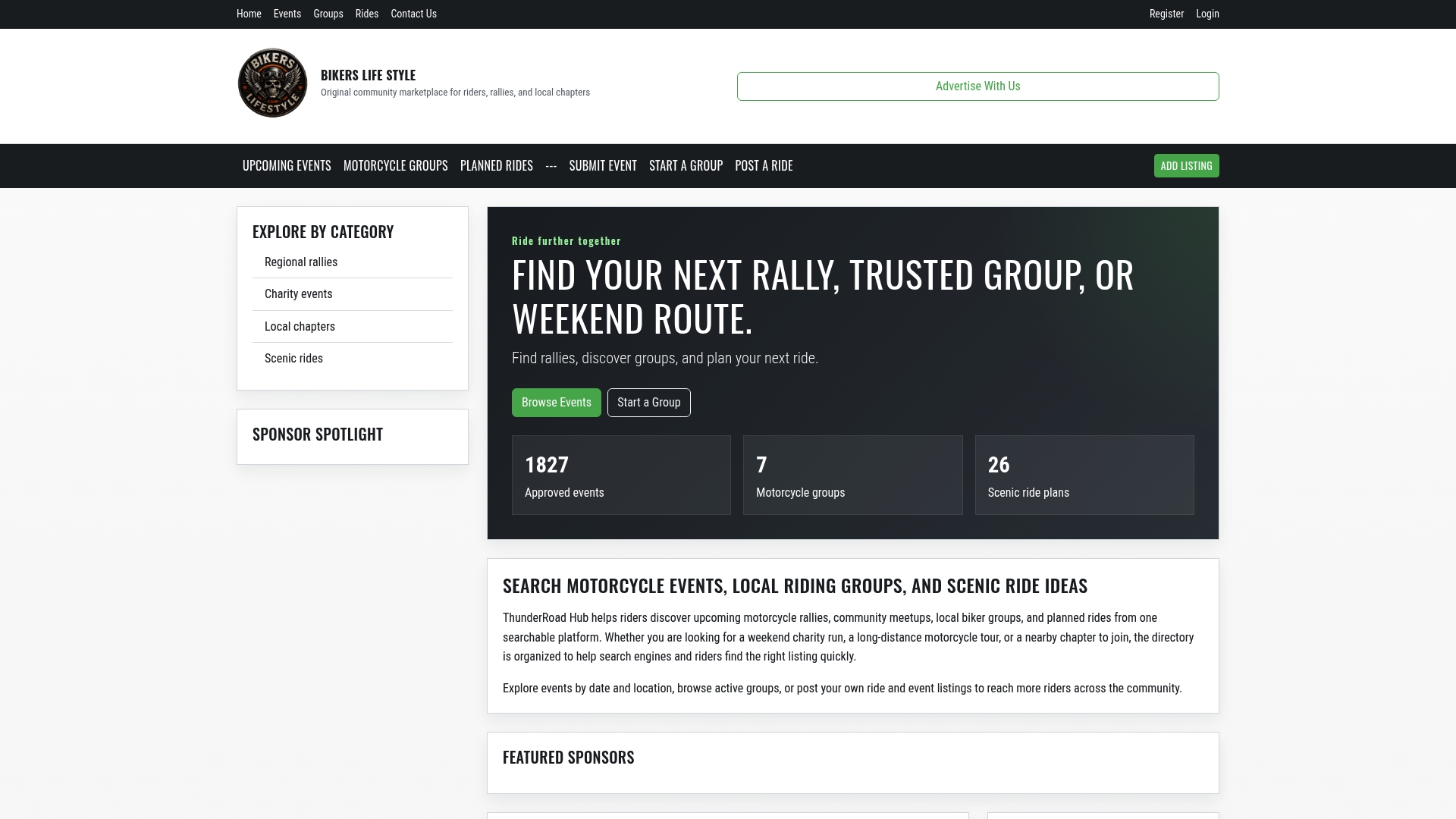
Bikerslifestyle is the platform built for exactly that. Whether you are looking for upcoming motorcycle events, a scenic spring rally ride, or a local group to ride with every weekend, Bikerslifestyle connects you to the community where biker traditions like the wave are lived every day. Check the full event calendar and find your next ride. The road is better when you are not riding it alone.
FAQ
What does the two-finger wave mean on a motorcycle?
The two-finger downward wave signals "keep the rubber side down," which is a rider's way of wishing a fellow motorcyclist a safe journey. It is performed with the left hand pointed low toward the pavement.
Why do bikers use the left hand to wave?
The left hand is used because the right hand controls the throttle. Removing the right hand mid-ride risks losing speed control, so the left hand wave is both tradition and practical safety.
Do all motorcyclists wave at each other?
Most do, but not all. Riders skip the wave during complex maneuvers, heavy traffic, or when local culture does not support it. In some European countries like Germany, waving between strangers is far less common than in North America.
When did the motorcycle wave tradition start?
The wave is commonly traced to 1904, when Arthur Davidson and William Harley reportedly exchanged a wave on the road. The tradition grew significantly after World War II as veterans brought hand signaling habits into civilian riding culture.
Is a head nod the same as a wave?
Yes. A head nod carries the same meaning as a hand wave and is the accepted substitute when taking a hand off the controls is unsafe or impractical. Experienced riders recognize and respect the nod as a full greeting.